Installation guide
 Owner’s manual
 Error Codes



What fridge to stay away from?
If you want fewer headaches, we recommend staying away from refrigerators with lots of complex features (especially complicated ice makers and in-door dispensers) and focusing on simpler, proven designs. For a Frigidaire top-mount like model FFTR1821QW1, reliability is usually best when you keep the setup basic and maintain good door sealing and airflow; see the FFTR1821QW1 owner’s manual for the operating and setup basics.
What to avoid (practical buying rules)
- In-door ice and water dispensers with multiple valves and long water lines
- “Smart” features you will not use (more electronics, more failure points)
- Ultra-tight built-ins with poor ventilation clearance
- Models with known chronic ice maker freezing or leaking complaints
- Units with hard-to-find parts support or limited service coverage
What to choose instead
A simple top-mount or bottom-freezer refrigerator with straightforward controls is typically the safest bet for long-term ownership.
| Feature choice | Typical repair risk | Why |
|---|---|---|
| Basic top-mount, no dispenser | Lower | Fewer water and control components |
| External ice maker kit only | Medium | Adds water parts, but simpler than in-door |
| In-door dispenser + ice | Higher | More valves, switches, seals, and leak points |
Why it matters
Most “problem fridges” are not bad because they cannot cool; they become expensive because extra systems (ice maker, dispenser, control boards, door seals) add more parts that can leak, freeze up, or fail.
Tips that prevent common refrigerator problems
- Level the cabinet so doors close and seal consistently (a slight backward tilt helps)
- Keep the condenser area clean and allow airflow around the cabinet
- Do not overload door bins; sagging can stress hinges and gaskets
- If you do not connect water, keep the ice maker turned off
- If the door does not seal, address it early; a leaking gasket wastes energy and causes frost
For door-seal issues, we use the same approach on many Frigidaire units: clean the sealing surfaces, confirm the cabinet is level, and replace the gasket if it is torn or permanently warped; the how to fix a fridge door seal guide walks through the common fixes.
Last updated: February 2026
How do I find the model number on my FFTR1821QW1?
On a Frigidaire top-mount refrigerator like model FFTR1821QW1, the model number is printed on the appliance’s rating label. Check the inside walls near the fresh food compartment opening first; if you do not see it there, check the freezer compartment and the door frame areas. Use the FFTR1821QW1 owner's manual as a reference for label locations and identification details.
Where to look (fast checklist)
- Open the fresh food (refrigerator) door and inspect the side walls near the front edge
- Check the door jamb (the frame the door seals against)
- Look along the ceiling area inside the fresh food compartment
- Open the freezer door and check the side walls and door frame
- If your unit has a lower toe grille, check behind it for additional product labels
What you should write down
Record the information exactly as shown on the label:
- Model number (example: FFTR1821QW1)
- Serial number
- Electrical ratings (useful for service diagnostics)
| Label item | Why it matters |
|---|---|
| Model number | Ensures diagrams and replacement parts match your exact refrigerator |
| Serial number | Helps identify production details and correct revisions |
| Electrical ratings | Helps confirm correct components during troubleshooting |
Why it matters
Frigidaire often uses similar-looking cabinets across multiple model variations. Using the exact model number prevents ordering the wrong door gasket, shelf trim, or control parts and helps match the correct wiring and temperature control setup.
Last updated: March 2026
What replacement parts are most commonly needed for the FFTR1821QW1?
The most commonly replaced parts on the Frigidaire FFTR1821QW1 top-mount refrigerator are door sealing and interior storage items (gaskets, shelves, bins), plus cooling-system service parts used during repairs (defrost heater, temperature sensor, fan blade, control board). For part diagrams and exact fit by location, use the FFTR1821QW1 installation guide.
Commonly needed replacement parts (by symptom)
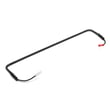
- Warm refrigerator or frost buildup: defrost components such as the refrigerator defrost heater 242044008
- Temperature swings: the refrigerator temperature sensor 240597220
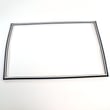
- Door not sealing, moisture, or warm spots: door gaskets such as the Frigidaire refrigerator door gasket (white) 242193206
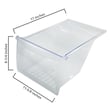
- Broken or missing storage: the crisper drawer - refrigerator storage component by Frigidaire 240337103 or shelf/rail pieces
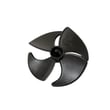
- Fan noise or weak airflow: the refrigerator evaporator fan blade 242219302
Quick “what it does” guide
| Part type | What it affects | Common signs it needs replacement |
|---|---|---|
| Door gasket | Sealing, efficiency | Condensation, warm temps, door pops open |
| Defrost heater | Defrost cycle | Heavy frost on back wall, poor cooling |
| Temperature sensor | Temperature control | Temps too warm or too cold, short cycling |
| Fan blade | Air circulation | Rattling, buzzing, uneven cooling |
| Crisper/drawer parts | Storage function | Cracked plastic, drawers won’t slide |
Why it matters
Replacing the correct part restores proper airflow, sealing, and defrost performance. That protects food temperatures, reduces run time, and prevents repeat issues like frost buildup or moisture around the doors.
Last updated: March 2026