Owner’s manual
 Error Codes




How old is my Amana refrigerator by serial number?
For Amana model ACD2238HTS, we date the refrigerator by decoding the serial number: the first 2 digits are the year it was built, and the next 2 digits are the week of that year. This tells you the manufacturing date, which is the best way to estimate age.
How to find and decode the serial number
You will typically find the model and serial tag inside the fresh food compartment (often on a side wall or ceiling area). Use this quick decode:
- Write down the full serial number exactly as shown
- Take the 1st and 2nd digits as the year (example:
09= 2009) - Take the 3rd and 4th digits as the week (example:
15= 15th week) - Convert the week to an approximate month (week 1-4 = January, 5-8 = February, etc.)
- Use the manufacturing date to estimate age (manufacture date to today)
Example serial number decode
| Serial number starts with | Year | Week | Approximate build date |
|---|---|---|---|
0915... |
2009 | 15 | Mid-April 2009 |
1427... |
2014 | 27 | Early July 2014 |
2003... |
2020 | 3 | Mid-January 2020 |
Why it matters
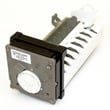
Knowing the build week and year helps us match the correct refrigerator parts (like an ice maker, water inlet valve, or light switch) and it also helps set realistic expectations for maintenance items such as door gaskets and water filtration.
Helpful tip for ACD2238HTS owners
If you are also troubleshooting cooling performance, our ACD2238HTS owner's manual includes the recommended initial temperature control settings (commonly starting at 4 and allowing 8 to 12 hours to stabilize).
Last updated: February 2026
What is the average lifespan of an Amana refrigerator?
Most Amana refrigerators, including the Amana ACD2238HTS side-by-side, last 10 to 15 years with normal household use and basic maintenance. Keeping temperatures in range, maintaining airflow, and staying ahead of wear items (like door gaskets and ice maker components) helps you reach the high end of that range.
Typical lifespan and what affects it
A refrigerator’s service life depends most on heat removal, door sealing, and how hard the sealed system has to work.
- Condenser cleanliness: Dusty coils make the compressor run hotter and longer.
- Door seal condition: Leaks add moisture and force longer run times.
- Temperature settings and loading: Overcrowding reduces airflow and causes uneven cooling.
- Room conditions: Heat, direct sunlight, and tight clearances increase run time.
- Water and ice use: Heavy ice maker use can expose water valve and ice maker wear sooner.
Quick maintenance checklist (best ROI)
Use these habits to extend life and reduce common cooling complaints.
- Keep fresh food temps 34 to 40°F (target 37°F) and verify with a thermometer in a glass of water (per the ACD2238HTS owner's manual).
- Avoid overpacking shelves; good airflow prevents warm spots and long run times.
- Clean condenser coils regularly (typical homes: every 6 to 12 months).
- Inspect and clean door gaskets; correct gaps before frost or sweating starts.
- If you have water and ice, replace filters on schedule and purge air after service.
Parts that commonly drive “end of life” decisions
These are the components that most often turn a minor issue into a major repair decision.
| Component | What you notice first | Example part for ACD2238HTS |
|---|---|---|
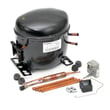
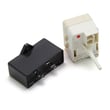
| Compressor/start components | Clicking, warm fridge, long run times | Refrigerator start device W10613606 |
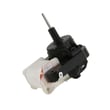
| Evaporator fan system | Warm fridge, noisy freezer, weak airflow | Evaporator motor WPW10128551 |
| Ice maker system (if equipped) | No ice, small cubes, leaking | Refrigerator ice maker D7824706Q |
Why it matters
A refrigerator that runs warmer than recommended or struggles with airflow uses more energy and puts extra stress on the compressor. Keeping temps in range and airflow clear is the simplest way to protect the most expensive components.
Last updated: February 2026
Are Amana refrigerators good quality?
Yes. Amana refrigerators like model ACD2238HTS are a solid, budget-friendly choice when you want dependable cooling and straightforward features. They are built to do the basics well, and the simpler design typically means fewer “extra feature” failures over time (use the ACD2238HTS owner's manual for operating and care details).
What “good quality” means for Amana
Amana is best described as practical value: reliable temperature control, usable storage space, and fewer high-tech components to maintain.
Common strengths
- Consistent everyday cooling for fresh food and freezer sections
- Simple controls and fewer complex electronics
- Good capacity for the price point
- Normal operating sounds are expected as the compressor cycles and during defrost (clicking and similar noises can be normal)
Common tradeoffs
- More basic feature set than premium brands (fewer specialty drawers and “smart” features)
- Some interior components (bins, drawers) can feel lighter-duty than higher-end models
- Ice and water systems add maintenance needs (filters, valves, ice maker components)
How to judge your specific refrigerator’s condition
If your ACD2238HTS holds safe temperatures and runs without constant cycling, it is performing like a quality refrigerator.
- Fresh food target: 34°F to 40°F (optimum about 37°F)
- Freezer target: 0°F to 2°F
- Check with an appliance thermometer in a glass of water; verify after 24 hours
Quick performance checklist
- Doors close fully and seal without gaps
- Condenser coils are kept clean
- Shelves are not overcrowded (airflow matters)
- Temperatures match the targets above
- Ice maker and dispenser flow are steady (if equipped)
Parts that commonly affect “quality” day to day
When a refrigerator seems “low quality,” it is often a single worn part causing noise, warm temps, or ice issues.
| Symptom | Often related to | Example part for ACD2238HTS |
|---|---|---|
| No ice or small cubes | Ice maker or water supply issue | Refrigerator ice maker D7824706Q |
| Warm fresh food section | Evaporator airflow problem | Evaporator motor WPW10128551 |
| Clicking, won’t start cooling | Start components | Refrigerator start device W10613606 |
Why it matters
A “good quality” refrigerator is one that maintains stable temperatures, seals well, and moves air correctly. Those basics protect food, reduce energy waste, and prevent avoidable repairs.
Last updated: February 2026