Installation guide
 Owner’s manual
 Error Codes


Where is the model number on a Kenmore side by side refrigerator?
On Kenmore side-by-side refrigerator model 10652569100, the model number is printed on the model and serial number label located on the inside wall of the refrigerator (fresh food) compartment. Open the refrigerator door and look along the interior side wall for the label.
How to find the label quickly
- Open the refrigerator door (not the freezer door).
- Look on the inside left or right wall of the fresh food compartment.
- Check near the crisper area and along the wall behind the shelves.
- Use a flashlight; the label can be easy to miss in low light.
- Write down both the model number and serial number for parts lookup and service.
What you should see on the label
The label typically includes both identifiers. Use this as a quick reference:
| Item on label | What it’s used for | Example format |
|---|---|---|
| Model number | Matching parts and diagrams | 10652569100 |
| Serial number | Identifying production run/date | Letters and numbers |
Why it matters
Using the exact model number ensures we match the correct Kenmore parts (like a water filter, inlet valve, or door gasket) to your refrigerator’s design changes and revisions.
For diagrams and additional identification details, use the owner's manual.
Last updated: February 2026
What is the life expectancy of a Kenmore refrigerator freezer?
Most Kenmore refrigerator-freezer units, including the Kenmore 10652569100 side-by-side refrigerator, typically last 12 to 15 years with normal household use. Consistent cleaning, good airflow around the cabinet, and keeping the doors sealing properly are the biggest factors that help you reach (or beat) that range.
What affects lifespan the most
- Condenser cleanliness: Dust buildup makes the compressor run hotter and longer.
- Ventilation space: Blocked airflow around the refrigerator increases wear on the sealed system.
- Door gasket condition: Leaky gaskets cause long run times and temperature swings.
- Defrost performance: Frost buildup can strain the evaporator fan and reduce cooling.
- Water and ice system health: Leaks or restricted flow can lead to nuisance issues and downtime.
Quick maintenance checklist (best payoff)
- Vacuum condenser area and surrounding floor space regularly.
- Keep food from blocking interior air vents in the fresh food and freezer sections.
- Clean sticky or dirty door gaskets with mild soap and water; dry thoroughly.
- Replace the water filter on schedule to maintain flow and ice maker performance.
- Confirm doors close fully every time; adjust leveling if doors drift open.
Common “wear items” vs. “major system” parts
| Category | Examples | Why it matters |
|---|---|---|
| Wear/maintenance | Water filter, door gaskets, door closer cam | Helps prevent leaks, warm temps, and long run times |
| Cooling/defrost | Defrost heater, defrost bi-metal, evaporator fan blade | Prevents frost buildup and airflow loss |
| Major sealed system | Compressor, evaporator | Typically higher-cost repairs; good maintenance reduces strain |
Why it matters
A refrigerator that runs longer than it should (from dirty coils, poor airflow, or a weak door seal) puts extra stress on the compressor and sealed refrigeration system. Keeping those basics in shape is the most reliable way to extend service life.
For model-specific care and cleaning guidance, follow the owner's manual.
Last updated: February 2026
What are the most common problems with Kenmore refrigerators?
The most common problems we see on Kenmore refrigerators like model 10652569100 are weak or no cooling, ice maker not making enough ice, water leaks, excess frost, moisture buildup, and unusual noises. Many of these trace back to airflow issues, dirty condenser coils, or door sealing problems (see the owner's manual).
Most common symptoms and what usually causes them
- Not cooling or temperature too warm: blocked air vents, controls not set for conditions, doors opened often, or a reset needed on digital controls
- Runs too long: dirty condenser coils, doors opened frequently, or door not closing fully
- Ice maker not producing enough ice: new install needs time, freezer not cold enough, or ice bin/bucket not seated correctly
- Moisture buildup inside: frequent door openings, high room humidity, or unwrapped food
- Noisy operation: normal operating sounds, or a fan/airflow issue if noise is new or loud
Quick checks we recommend first (fast, no parts)
- Make sure air vents are not blocked in either compartment.
- Clean the condenser coils; dirty coils make the compressor work harder.
- Confirm the doors close firmly and the gasket seals all the way around.
- If you have digital controls, turn the refrigerator OFF then ON to reset.
- For a newly installed ice maker, allow 72 hours for full ice production.
Common problems and best next step
| Problem you notice | What to check first | What you may replace if needed |
|---|---|---|
| Refrigerator too warm | Vents blocked, door openings, control settings | Airflow parts such as an air baffle (model-specific) |
| Runs constantly | Dirty condenser coils, doors not closing | Door sealing parts such as door gaskets |
| Ice maker low output | 72-hour wait, freezer temp, bin alignment | Ice maker components (model-specific) |
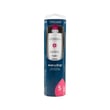
| Water dispenser/ice issues | Filter condition, water supply, valve function | Refrigerator inlet valve W10408179 or refrigerator water filter EDR5RXD1 |
Why it matters
Cooling, ice production, and energy use all depend on steady airflow and a tight door seal. Simple fixes like clearing vents and cleaning coils often restore normal temperatures and reduce compressor run time.
Last updated: February 2026
What causes a side-by-side refrigerator to stop cooling?
If your Kenmore 10652569100 side-by-side refrigerator stops cooling, the most common causes are loss of power, controls set to OFF or needing a reset, blocked air vents that prevent airflow, or the unit being in a normal defrost cycle. Use the checks in the owner's manual to pinpoint the issue fast.
Quick checks (start here)
- Confirm the power cord is fully plugged into a grounded 3-prong outlet.
- Check the house fuse or reset the circuit breaker.
- Make sure the refrigerator and freezer controls are not set to OFF.
- If you have digital controls, turn the unit OFF, then ON to reset.
- Wait 30 minutes and recheck; the refrigerator runs an automatic defrost cycle.
- Look for blocked vents in either compartment; move packages away from vent openings.
Airflow and loading problems that mimic “no cooling”
Cold air has to move from the freezer into the fresh food section. When vents are blocked or doors are opened frequently, temperatures rise and it can look like the refrigerator “quit.”
What to look for
- Items pushed tight against the back wall or vent tower
- Overpacked shelves that stop air circulation
- Doors not closing fully because bins or food packages are in the way
When water and ice symptoms point to a cooling issue
Sometimes the first clue is weak dispenser flow or ice problems rather than warm temps.
| Symptom | Common cause | What to do next |
|---|---|---|
| Refrigerator warm, freezer also warming | Power/control issue or defrost-related | Verify power, confirm controls, reset if digital, wait 30 minutes |
| Fresh food warm but freezer colder | Airflow blocked | Clear vents and avoid overpacking |
| Water flow slows at dispenser | Filter full or installed wrong | Remove and reinstall or replace the refrigerator water filter EDR5RXD1 |
Why it matters
Running warm can lead to food spoilage and can also force the compressor and evaporator fan to run longer than normal. Catching a simple cause (power, settings, airflow, filter restriction) prevents unnecessary part replacement.
Last updated: February 2026