Installation guide
 Owner’s manual
 Error Codes

How to reset a Kenmore 11024722300 washer?
To reset your Kenmore 11024722300 washer, we recommend stopping the cycle with the Cycle Control knob, then restoring power with a brief unplug. This clears many “stuck” conditions caused by a pause, an open lid, or an interrupted cycle; then you can restart normally.
Quick reset steps (most common)
- Push in the Cycle Control knob to stop the washer.
- Make sure the lid is fully closed.
- Unplug the washer (or switch off the breaker) for 1 minute.
- Plug it back in (or turn the breaker on).
- Select a cycle; pull out the Cycle Control knob to start.
For the exact stop and restart procedure for this model, follow the 11024722300 owner's manual.
If it still will not start, agitate, spin, or drain
These checks fix the most common “won’t run” symptoms after a reset:
- Confirm you are not using an extension cord (plug directly into the outlet).
- Wait through normal cycle pauses (some pauses last about 2 minutes).
- Reduce the load size if the washer is overloaded.
- Verify the drain hose is not clogged and is not higher than 96 inches above the floor.
- Level the washer and balance the load; an unbalanced load can stop or interrupt operation.
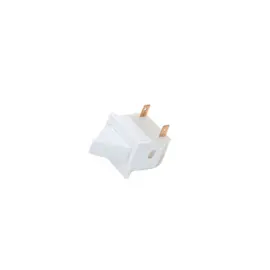
If the washer will not spin with the lid closed, a failed lid switch is a common cause on this style of Kenmore top-load washer; see the washer lid switch WP3949238.
What “reset” does and does not do
| What it does | What it does not do |
|---|---|
| Clears a paused or interrupted cycle | Fix a broken lid switch, drain pump, or motor coupling |
| Restarts the timer/controls after a power interruption | Correct an installation issue (leveling, drain height) |
| Lets you reselect a cycle and restart | Remove clogs or repair leaks |
Why it matters
A proper reset prevents repeated stop-start behavior that can strain parts like the drain pump, motor coupling, and clutch. It also helps you confirm whether the issue is a simple cycle interruption or a part failure.
Last updated: February 2026
Does my Kenmore top load washer have a filter?
Yes; Kenmore top-load washers like model 11024722300 typically do not use a user-cleanable “lint filter” like a dryer. Instead, they rely on the drain pump and the inlet valve screens to catch debris, plus good loading and detergent habits to prevent clogs. See the 11024722300 owner's manual for your model’s care and troubleshooting guidance.
What “filter” means on this washer
Most customers mean one of these:
- Inlet valve screens: tiny screens where the hot and cold fill hoses connect
- Drain pump inlet area: where coins, socks, and debris can restrict draining
- Tub and basket flow path: lint is carried away with the wash water rather than trapped in a removable filter
Quick checks you can do safely
Before checking anything, unplug the washer and turn off both water faucets.
- If filling is slow, check for clogged inlet screens at the hose connections
- If it will not spin or agitate, confirm the lid is fully closed (a lid switch issue can stop operation)
- If it will not drain, check the drain hose for kinks and confirm the standpipe height is within typical limits (many top-loaders max out around 96 inches)
- If you see excessive suds, reduce detergent; too many suds can cause poor draining and spinning
Common symptoms and the most likely “filter-related” cause
| Symptom | Most likely cause | What to check first |
|---|---|---|
| Slow or no fill | Inlet valve screens clogged | Hose connections at the inlet valve |
| Won’t drain | Pump restriction or drain hose issue | Drain hose routing, then pump |
| Won’t spin with lid closed | Lid switch not sensing closed lid | Lid strike alignment, then switch |
| Poor agitation | Worn agitator dogs | Agitator movement and ratcheting |
Parts that often solve the underlying problem
If troubleshooting points to a failed component, these are common on this model:
- Washer drain pump WP3363394 (draining problems, humming, slow drain)
- Washer lid switch WP3949238 (won’t spin or agitate with lid closed)
- Agitator dog 80040 (agitator slips or does not “grab” during wash)
Why it matters
Top-load washers without a removable filter depend on clear water flow. Keeping inlet screens clean, using the right detergent amount, and correcting drain hose setup prevents no-fill, no-drain, and no-spin complaints.
Last updated: February 2026
What is the average lifespan of a Kenmore washer?
Most Kenmore washers last 10 to 15 years with normal household use and basic maintenance. For Kenmore model 11024722300, following the care and operating guidance in the 11024722300 owner's manual helps you reach the typical lifespan by reducing wear on the drive system, pump, and tub.
Typical lifespan and what affects it
A washer’s service life depends mainly on load size, cycle frequency, water quality, and how well the machine is installed and leveled.
- Load habits: overloading strains the clutch, drive block, and motor coupling
- Installation: an unlevel washer increases vibration and suspension wear
- Water conditions: hard water and sediment can shorten inlet valve life
- Environment: freezing temps can damage components if not winterized
- Maintenance: routine cleaning reduces odor, residue, and corrosion
What “end of life” usually looks like
These symptoms often show up as a washer approaches the end of its typical lifespan:
| Symptom | Common cause | Often repairable? |
|---|---|---|
| Won’t drain or drains slowly | Clogged or failing drain pump | Yes |
| Won’t spin | Lid switch, clutch, motor coupling | Yes |
| Loud banging or walking | Suspension issues, unlevel floor | Yes |
| Agitator not moving correctly | Worn agitator dogs | Yes |
If your washer won’t spin or stops mid-cycle, the washer lid switch WP3949238 and washer motor coupling 285753A are two common wear items to check on this style of Kenmore top-load washer.
Maintenance that extends washer life
We recommend these practical habits to keep a Kenmore washer running longer:
- Keep loads balanced and allow items to move freely
- Use the right amount of detergent to prevent buildup
- Periodically inspect fill hoses and clean inlet screens
- Level the washer on a sturdy floor (helps reduce vibration)
- Protect the washer from freezing temperatures and winterize when needed
Why it matters
A washer that is installed correctly and not overloaded typically avoids the most common early failures (drain, spin, and agitation problems). That means fewer breakdowns and better cleaning performance over the life of the machine.
Last updated: February 2026
How many cubic feet is a Kenmore Model 11024722300 washer?
The exact tub capacity (cubic feet) for Kenmore model 11024722300 is listed in the product specifications section of the 11024722300 owner's manual. Most Kenmore 110-series top-load washers of this design typically fall in the 3.2 to 3.5 cu. ft. range.
How to find the exact capacity for model 11024722300
We recommend using the model-specific documentation because capacity can vary by tub and basket design.
- Check the specifications or features pages in the 11024722300 owner's manual
- Look under the washer lid for the model and serial label (helpful when matching documentation)
- If you are comparing to a replacement washer, measure your typical load size (bedding, towels) and match to capacity
- If your basket has been replaced, confirm the basket style before assuming capacity
Typical capacity guidance (what the numbers mean)
Here is a practical way to interpret common top-load capacity ranges:
| Capacity range | Best for | What you can expect |
|---|---|---|
| 3.0 to 3.3 cu. ft. | Medium loads | Towels, jeans, everyday laundry |
| 3.4 to 3.6 cu. ft. | Medium to large loads | Better for bulkier items |
| 3.7+ cu. ft. | Large loads | More room for comforters and bedding |
Why it matters
Capacity affects cleaning performance and wear on drive components. Overloading can lead to poor agitation, out-of-balance spinning, and extra strain on parts like the washer motor coupling 285753A and clutch 285785.
Last updated: February 2026
How to identify a Kenmore washer model?
For Kenmore washer model 11024722300, the model number and serial number are printed on the model and serial number label located under the washer lid. Using the exact model number is the fastest way to match the correct replacement parts and service information.
Where to look on Kenmore washers
On this Kenmore top-load washer, start by lifting the lid and checking the label area around the opening.
- Lift the lid and look for a model and serial number label under the lid
- Write down the full model number (for example, 11024722300) and the serial number
- Take a clear photo of the label for reference when ordering parts
- Use the full model number when searching for parts like a lid switch, drain pump, or inlet valve
What the model number looks like
Many Kenmore washers use a model number that starts with 110 followed by additional digits.
| What you see on the label | What it means | Why it matters |
|---|---|---|
| Model number (example: 11024722300) | Identifies the exact washer design | Ensures parts fit and wiring matches |
| Serial number | Identifies the production unit | Helps with service history and support |
| Purchase date (if recorded) | When the washer was bought | Useful for warranty and maintenance records |
Tips to avoid ordering the wrong part
Even one digit off can point to a different Kenmore design.
- Match every digit in the model number
- If the label is worn, use a flashlight and take a close-up photo
- Confirm the model before ordering common fit-sensitive parts like the washer lid switch WP3949238
Why it matters
Kenmore washers share similar styling across many model series, but internal parts (like the lid switch, motor coupling, and drive system) can vary by model. Using 11024722300 keeps your part selection accurate and prevents returns.
For label location details and how to record the information, use the 11024722300 owner’s manual.
Last updated: February 2026
Is it worth repairing a Kenmore washing machine?
Yes, repairing a Kenmore washer is usually worth it when the fix restores reliable washing and spinning for far less than replacing the machine. For Kenmore model 11024722300, common wear items (like the lid switch, motor coupling, or agitator dogs) are often affordable and can extend the washer’s usable life.
How we decide if repair makes sense
We use a simple cost and condition check:
- Compare the repair cost to the price of a comparable new washer
- Consider the washer’s overall condition (rust, leaks, excessive vibration)
- Prioritize repairs that address core functions (fill, agitate, drain, spin)
- Favor repairs with common, proven parts availability
- Use the troubleshooting and safety guidance in the 11024722300 owner’s manual
Typical “worth it” repairs on this model
These are frequent, high-impact fixes on direct-drive Kenmore top-load washers:
- No spin or no drain due to a failed lid switch: washer lid switch WP3949238
- Agitates poorly or “ratchets” in one direction: agitator dog 80040
- Won’t agitate or spin, motor runs but basket does not: washer motor coupling 285753A
- Won’t drain or drains slowly: washer drain pump WP3363394
Quick cost-to-benefit guide
| Situation | Usually worth repairing? | Why |
|---|---|---|
| Single failed switch, pump, or coupling | Yes | Low parts cost, restores basic operation |
| Repeated out-of-balance shaking | Often | Springs and drive components can correct it |
| Major gearcase or tub damage | Sometimes | Higher parts cost; weigh against overall condition |
Why it matters
A washer that fills, agitates, drains, and spins correctly protects clothing and prevents secondary damage (like motor strain or water leaks). Fixing a small failure early often prevents a bigger, more expensive breakdown later.
Last updated: February 2026