 Installation guide
 Owner’s manual



Is GE profile considered high end?
Yes. GE Profile is generally considered GE’s higher-end lineup, positioned above standard GE models with more premium features, finishes, and design. For your GE dishwasher model GDT695SSJ4SS, the exact feature set is best confirmed in the GDT695SSJ4SS owner’s manual.
GE Profile typically focuses on upgrades that improve performance, convenience, and appearance, such as:
- More advanced wash and dry options (better soil sensing, targeted spray patterns)
- Quieter operation compared with many base models
- More premium exterior styling and controls
- Added convenience features (rack adjustability, specialized zones)
- More diagnostic capability for troubleshooting
Model numbers and feature packages vary by series, even within GE and GE Profile. Use these quick checks:
- Compare cycle options and drying features listed on the control panel
- Check for noise rating information in the product specs section
- Look for rack features like adjustable upper rack or dedicated spray zones
- Review any error or service codes if you are troubleshooting
If you are seeing a code or unusual behavior, use GE dishwasher error codes to match symptoms to likely causes.
| Feature area | Standard models often have | Higher-end lines often add |
|---|---|---|
| Cleaning | Basic spray coverage | More targeted spray, better filtration |
| Drying | Basic heated or air dry | Enhanced drying options and venting |
| Noise | Louder average | Quieter insulation and motor control |
| Racks | Fixed layout | More adjustability and specialty holders |
Knowing whether a unit is in a higher-end line helps set expectations for cycle time, noise level, and repair decisions. Premium models can use more advanced electronics, so accurate model-based troubleshooting is important before replacing parts.
Last updated: January 2026
What is the average lifespan of a GE dishwasher?
A GE dishwasher typically lasts 10 to 12 years. For your GE GDT695SSJ4SS, consistent cleaning and correct loading help you reach that range; heavy daily use and hard water scale are the most common reasons lifespan drops closer to 8 to 10 years. See the GDT695SSJ4SS owner's manual for model-specific care and cleaning guidance.
- Hard water buildup (scale on the heating system and internal passages)
- Food soil left in the tub (odor, redeposit, and pump strain)
- Overloading or blocking spray paths (forces longer cycles and poorer cleaning)
- Heat and drying performance (poor drying can indicate heating issues)
- Wear items such as racks, seals, and wash components
- Run a monthly cleaning cycle using a dishwasher cleaner or a vinegar-based routine recommended in the manual.
- Keep the spray arms clear; remove debris from the holes and confirm they spin freely.
- Use the right detergent amount for your water hardness; too much can leave residue, too little reduces cleaning.
- Scrape, do not pre-wash; heavy pre-washing can reduce detergent effectiveness on modern cycles.
- Address leaks quickly; a worn tub seal can shorten the life of electrical parts.
| Symptom | Most common cause | What to check first |
|---|---|---|
| Not drying well | Heating or venting issue | Cycle selection, rinse aid, then heating performance |
| Not cleaning well | Spray or circulation issue | Spray arm clogs, loading, water temperature |
| Won’t start | Door latch or control issue | Door closes firmly, then control response |
| Not draining | Drain path restriction or pump issue | Filter area, drain hose routing |
Knowing the typical lifespan helps you decide when maintenance is the best investment versus when a major repair (like a control or pump) may not be cost-effective for an older dishwasher.
Last updated: January 2026
What is the most common problem with GE dishwashers?
The most common GE dishwasher problems are drainage issues (water left in the tub), no-start conditions, and poor cleaning. On the GE GDT695SSJ4SS, these symptoms usually trace back to a clogged drain path, a door-latch issue, or a wash system problem such as a restricted spray arm.
- Not draining: standing water after the cycle, gurgling, or a “drain” sound with little water movement
- Won’t start: lights on but no cycle, or it stops immediately after pressing Start
- Not cleaning well: gritty dishes, food left on the top rack, or weak spray action
- Not drying: wet dishes at end of cycle, especially plastics
- Leaks or odors: water at the toe-kick area, or a sour smell from buildup
Use the steps in the GDT695SSJ4SS owner’s manual for your exact control settings and indicator meanings.
- Clean the filter area and remove debris from the sump
- Confirm the sink/disposer drain connection is clear (new disposer plugs are a common cause)
- Check the drain hose routing for kinks and make sure it has a proper high loop
- Verify the door closes firmly and latches every time
- Spin the spray arms by hand; they should turn freely and not be blocked by tall items
If troubleshooting points to a failed component, these model-matched parts are common fixes:
| Symptom | Common suspect | Example model-matched part |
|---|---|---|
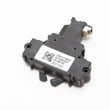
| Won’t start or stops mid-cycle | Door not latching | GE dishwasher door latch lock WD21X10490 |
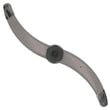
| Poor cleaning, weak spray | Clogged or damaged spray arm | Dishwasher spray arm, lower WD22X33499 |
| Not draining | Drain pump or drain restriction | Drain pump asm WD19X24829 |
Drain and wash issues often start as simple clogs (filters, hose, disposer inlet). Fixing those early helps prevent pump strain, repeat cycle failures, and persistent odors.
Last updated: January 2026
Can a clogged drain cause an FTD error?
Yes. On the GE GDT695SSJ4SS dishwasher, an FTD (fail to drain) error commonly happens when the drain path is restricted, so the drain pump cannot push water out fast enough. Clearing the filter area, drain hose, and sink connection usually resolves it; see the GDT695SSJ4SS owner’s manual for model-specific checks.
- Cancel the cycle and let the unit attempt to drain again.
- Remove standing water (cup or wet/dry vac) so you can inspect the sump area.
- Clean the filter and sump area; remove labels, glass, seeds, and food debris.
- Inspect the drain hose for kinks, pinches, or a clog.
- Check the sink drain/disposal inlet where the dishwasher hose connects; clear buildup.
- Confirm the drain hose has a proper high loop (or air gap if used) to prevent backflow.
If the drain path is clear but the dishwasher still shows FTD, a weak or jammed pump or a restriction downstream is likely.
| Symptom | Most likely cause | What we do next |
|---|---|---|
| Hums but drains slowly | Partial clog or pump impeller obstruction | Recheck filter/sump; inspect hose and inlet |
| No drain sound at all | Drain pump not running or control issue | Check wiring, then test components |
| Drains but water returns | No high loop, sink/disposal blockage | Correct routing; clear sink connection |
Model-matched parts to consider:
- Drain pump asm WD19X24829 (if the pump is noisy, seized, or not moving water)
- Dishwasher drain hose WD24X10062 (if the hose is kinked, split, or internally clogged)
FTD is a protection signal. If water cannot leave the tub, the dishwasher can stop mid-cycle, leave dirty water behind, and sometimes trigger leaks or odors from stagnant water.
- GE electronic dishwasher error codes (to confirm what FTD means and what checks to prioritize)
- Dishwasher not draining video (step-by-step drain path troubleshooting)
Last updated: January 2026





