Owner’s manual



What is the capacity of the Maytag MEDE300VW0?
The Maytag MEDE300VW0 is a full-size 29-inch electric dryer with a 7.0 cu. ft. drum capacity, which is designed to handle larger loads like towels, jeans, and bedding in fewer cycles. For cycle and feature details, use the MEDE300VW0 owner's manual.
A 7.0 cu. ft. Maytag dryer capacity is considered large for a standard residential dryer. It typically works well for:
- A full basket of everyday mixed laundry
- A set of towels (including bath towels)
- Jeans and heavier cotton loads (allow extra time)
- Queen-size sheets (dry best with room to tumble)
- Medium comforters (check the care label and avoid overloading)
Use this as a practical reference when loading the MEDE300VW0.
| Load type | Typical fit in 7.0 cu. ft. | Best practice |
|---|---|---|
| Everyday mixed clothes | Yes | Fill drum about 1/2 to 2/3 |
| Towels | Yes | Shake out towels; avoid packing |
| Sheets | Yes | Dry 1 set at a time for better tumbling |
| Comforter | Sometimes | Keep below 2/3 full; stop and reposition |
Correct loading helps the dryer heat and move air properly, so clothes dry faster and more evenly. Overloading can increase dry time and strain wear parts like the belt, drum rollers, and idler.
If the dryer starts taking longer to dry or airflow seems weak, these model-compatible parts are commonly involved:
- Screen W10120998 (lint screen)
- Dryer blower wheel WP697772 (moves air through the drum and vent)
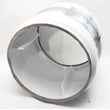
- Air duct WP3387911 (internal ducting that can collect lint)
Last updated: January 2026
What is the most common problem with Maytag dryers?
For Maytag dryers like model MEDE300VW0, the most common problems are no heat or long dry times caused by restricted airflow (lint buildup or a clogged vent) and no-start symptoms caused by an overheated safety circuit (often tied to poor venting). Confirm your model’s maintenance and troubleshooting steps in the MEDE300VW0 manual.
- Dryer runs but clothes stay damp (weak heat or poor airflow)
- Dryer takes multiple cycles to dry
- Dryer will not start or stops mid-cycle
- Burning smell or cabinet feels unusually hot
- Loud rumbling, squealing, or thumping while tumbling
Airflow problems are the root cause in many dryer complaints because they raise operating temperature and reduce moisture removal.
- Lint screen clogged or coated with residue
- Vent hose crushed, kinked, too long, or packed with lint
- Outside vent hood stuck closed or blocked
- Worn drum support parts causing drag and noise
- Heating circuit parts failing after repeated overheating
- Clean the lint screen before every load; wash it with mild soap and water if it looks “waxy.”
- Run a timed dry cycle and check airflow at the outside vent; it should be strong and steady.
- Inspect the vent path from dryer to wall to outside; remove lint and fix kinks.
- Avoid overloading; heavy loads restrict tumbling and slow drying.
- If the dryer is noisy, inspect drum support and belt-drive components.
| Symptom | Common area | Example part for this model |
|---|---|---|
| Rumbling/thumping | Drum support | Support WPW10314173 |
| Squealing or drum not turning well | Belt tension system | Dryer idler pulley 279640 |
| No heat/poor heat | Heating circuit | Dryer heating element WP8544771 |
| Long dry times (even with heat) | Air movement | Dryer blower wheel WP697772 |
Restricted venting does more than slow drying; it overheats internal components, increases energy use, and can trigger repeated part failures. Fixing airflow first prevents “new part, same problem” repairs.
Last updated: January 2026
What's the life expectancy of a Maytag dryer?
A Maytag dryer typically lasts 10 to 15 years with normal household use and basic maintenance. For your Maytag MEDE300VW0, keeping airflow strong and fixing wear items early often helps it reach the upper end of that range; see the MEDE300VW0 owner's manual for model-specific care and cleaning guidance.
Most dryers fail early due to heat and airflow stress, not age alone. These factors have the biggest impact:
- Venting that is long, crushed, or clogged (overheats the heater and thermostats)
- Overloading the drum (stresses the belt, rollers, and motor)
- Skipping lint screen and cabinet lint cleaning (reduces airflow)
- Running high heat constantly (more thermal cycling on the heating circuit)
- Ignoring new noises (small wear turns into bigger damage)
We recommend these habits for Maytag electric dryers like the MEDE300VW0:
- Clean the lint screen every load; replace a damaged screen such as screen W10120998
- Check airflow at the outside vent hood; strong, steady flow matters
- Clean the vent duct at least yearly (more often with pets or long vent runs)
- Level the dryer to reduce vibration and drum wear
- Address squealing or thumping early; a kit like dryer repair kit 4392067 often covers common wear parts
| Symptom | Common cause | What to check next |
|---|---|---|
| Squealing | Worn drum support rollers or idler pulley | Roller such as WPW10314173; idler pulley 279640 |
| Thumping | Flat-spotted roller or damaged drum baffle | Rollers; drum/baffle condition |
| Long dry times | Restricted venting or weak airflow | Vent path, blower wheel, lint buildup |
| No heat | Heating circuit issue | Heating element, thermostats, wiring |
A dryer that runs hot or with poor airflow dries slower, uses more electricity, and shortens the life of the heating element, high-limit thermostat, and motor. Preventive cleaning and fast repairs protect the most expensive components.
Last updated: January 2026