Owner’s manual



How many cubic feet is a Samsung WF448AAP washer?
The Samsung WF448AAP washer has an extra-large capacity of 4.5 cubic feet. That capacity helps you wash bulky items (like bedding) in fewer loads while saving time, water, and energy; see the capacity and specifications section in the WF448AAP owner's manual.
Quick specs for this washer
| Spec | Value |
|---|---|
| Capacity | 4.5 cu. ft. |
| Width | 27 in. |
| Overall height | 39 in. |
| Max spin speed | 1300 rpm |
Why capacity matters
A 4.5 cu. ft. front-load washer is designed for larger loads, which can reduce the number of cycles you run each week. It also helps when washing bulky items that need room to tumble for proper cleaning and rinsing.
Tips to get the best results with a large-capacity front-load washer
- Load items loosely so they can tumble; do not pack the drum tight.
- Mix large and small items to help balance during spin.
- Use HE detergent and measure carefully to prevent oversudsing.
- Run a cleaning cycle regularly to reduce odor and residue buildup.
- Check pockets and remove small items that can end up in the drain system.
If your washer seems “too full” or “too small”
Capacity is the internal drum volume, not a guarantee that every load should be filled to the top. For best cleaning and fewer vibration issues, keep loads to a level that still allows free tumbling.
Last updated: February 2026
What is the most common problem with Samsung washing machines?
On the Samsung WF448AAP washer, the most common day-to-day problem we see is the machine not finishing the spin properly because the load is unbalanced or the washer cannot drain fast enough. That shows up as wet clothes, shaking, and information codes tied to balance or draining (see the owner's manual).
What you’ll usually notice first
- Clothes come out wetter than normal after the cycle.
- The washer pauses or stops before the final spin.
- Excessive vibration or “walking” during spin.
- Slow draining or standing water in the tub.
- An information code appears on the display.
Quick checks that fix most “common problems”
- Rebalance the load: Mix large and small items; avoid washing one heavy item by itself.
- Check draining: Clean the drain pump filter area and remove lint, coins, or debris.
- Verify water fill basics: Make sure faucets are fully open, hoses are not kinked, and inlet screens are clear.
- Reduce suds: Too much detergent can trigger suds-related holds and poor spinning; use less HE detergent.
Parts that commonly relate to these symptoms
If the washer still struggles after the checks above, these model-matched parts are often involved:
| Symptom | Common area | Example part for WF448AAP |
|---|---|---|
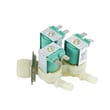
| Won’t fill or fills slowly | Water inlet system | Washer water inlet valve DC62-30314K |
| Drain issues, small clogs | Drain pump filter | Washer drain pump filter DC63-00909A |
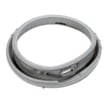
| Leaks at the door opening | Door boot and clamps | Washer door boot DC64-01570A |
Why it matters
An unbalanced load or restricted drain forces the washer to protect itself by limiting or stopping spin. Fixing balance, drainage, and oversudsing early helps prevent repeat interruptions, excess vibration, and wear on the tub and drive system.
Last updated: February 2026
What does AP mean on a Samsung washing machine?
On a Samsung WF448AAP washer, “AP” typically indicates Access Point mode, meaning the washer’s Wi-Fi feature is broadcasting a setup signal so a phone can connect and complete wireless setup. If your washer is not a Wi-Fi model, “AP” is usually a display mode, not a wash failure.
What to do when “AP” shows
- Wait 1 to 2 minutes to see if it exits on its own after setup times out.
- Press Power to turn the washer off, then turn it back on.
- If you were trying to connect the washer, complete the Wi-Fi setup steps in the owner's manual.
- If “AP” appears during a cycle and the washer stops responding, unplug the washer for 2 minutes, then restore power.
- If the washer will not fill or drain after “AP” appears, check for a separate error code (for example, fill or drain related codes) and troubleshoot that code.
“AP” vs. common washer error codes (quick comparison)
| Display | What it usually means | What you should check first |
|---|---|---|
| AP | Wi-Fi setup / access point mode | Finish setup or power-cycle |
| NF | Not filling | Water faucets open, inlet screens, hoses |
| ND | Not draining | Drain hose routing, pump filter, clogs |
| DC | Out of balance / door related | Load balance, door closure |
Why it matters
Access Point mode is meant for connectivity, but it can look like an “error” if it appears unexpectedly. Separating “AP” from true fault codes helps you avoid unnecessary part replacement and focus on the real symptom (no fill, no drain, won’t start, etc.).
Last updated: February 2026