Installation guide
 Owner’s manual
 Error Codes



How long should a Jenn-Air oven last?
A Jenn-Air electric range oven like model JES1750ES0 typically lasts 15 to 20 years with normal household use. Keeping the oven clean, protecting the control area from heat and spills, and fixing heating issues early helps you get the full expected lifespan.
Typical lifespan and what affects it
Most premium electric ranges reach the 15 to 20 year range; the biggest differences come down to heat stress, cleaning habits, and how often the oven runs at high temperatures.
Common factors that shorten lifespan:
- Heavy daily baking or frequent self-clean cycles
- Poor airflow around the range (heat buildup behind the control area)
- Spills that carbonize on the oven floor or around the door seal
- Repeated overheating events (long preheats, running broil for extended periods)
- Delayed repairs when temperatures become uneven
Parts that most often drive “repair vs. replace” decisions
On an electric range, the oven can keep going for years, but certain parts tend to be the ones that fail first.
| Symptom | Most likely area | Example part for JES1750ES0 |
|---|---|---|
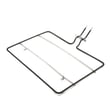
| Oven will not heat or heats unevenly | Bake heating circuit | Bake element W10779716 |
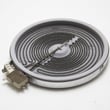
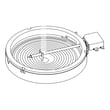
| Cooktop element not heating correctly | Radiant element or switch | Range dual radiant surface element W11517959 |
| Oven light out | Lamp or lens | Light bulb 8009 |
Maintenance that extends oven life
Use these habits to reduce wear on heating and electronic components:
- Wipe up spills after the oven cools; avoid letting grease bake onto surfaces
- Use cookware that fits the rack and does not block airflow
- Avoid slamming the oven door; it stresses hinges and door alignment
- Keep the cooktop clean to prevent heat reflecting into the control area
- If preheat times suddenly increase or baking becomes uneven, troubleshoot and repair early
Why it matters
A range that is still structurally solid (door closes well, racks sit level, cooktop is intact) often gets many more years of service once common wear parts like a bake element or surface element are replaced. For model-specific care and operating tips, follow the cleaning and use guidance in the owner's manual.
Last updated: February 2026
Is Jenn-Air considered high end?
Yes. Jenn-Air is widely considered a high-end (premium) kitchen appliance brand, and your Jenn-Air electric range model JES1750ES0 fits that premium category in terms of design focus, features, and overall positioning.
What “high end” means for a range like JES1750ES0
High-end ranges typically emphasize a mix of performance, fit and finish, and feature set. In day-to-day use, that usually shows up as:
- More design-forward styling and premium materials
- More precise cooking controls and specialty modes (varies by model)
- Higher-cost components and assemblies when repairs are needed
- More model-specific parts (control panels, displays, harnesses)
- A stronger focus on built-in or coordinated kitchen suites
For model-specific features and operating details, we use the JES1750ES0 owner's manual.
Parts and repair cost expectations (typical)
Premium ranges often have higher part costs because more assemblies are electronic or model-specific. Here are examples of common repair categories for this Jenn-Air range:
| Repair need | What you might replace | Example part on this model |
|---|---|---|
| Oven not heating | Bake element | Bake element W10779716 |
| Cooktop burner not heating | Radiant surface element | Range dual radiant surface element W11517959 |
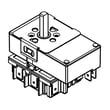
| Burner heat won’t regulate | Infinite switch | Range infinite switch W10917724 |
| Display or touch issues | Keypad or display | Keypad W11025616 |
Why it matters
Knowing Jenn-Air is high end helps set expectations for ownership: you often get premium styling and features, and when something fails (like a surface element, control switch, or keypad), using the correct model-matched part is the key to restoring performance.
Last updated: February 2026
What are common problems with Jenn-Air stoves?
Common problems on a Jenn-Air electric range like model JES1750ES0 include a surface element that will not heat, an oven that will not bake or broil evenly, a hot surface indicator that stays on, a dead or glitchy display/keypad, and an oven light that fails. Many issues trace back to a failed heating element, switch, wiring connection, or control.
Most common symptoms and what usually causes them
- Oven will not heat or heats weakly: failed bake element, control board issue, or loose/burned wiring
- One cooktop burner not heating: failed radiant surface element or a bad infinite switch
- Dual burner ring not working correctly: failed dual radiant element or control switch problem
- Hot surface light stays on: stuck hot surface indicator circuit or a sensor issue in the element circuit
- Display or touchpad not responding: keypad failure, display issue, or harness/connection problem
- Oven light out: burned-out bulb or damaged lens
Parts that commonly fix these problems (JES1750ES0)
If troubleshooting points to a failed component, these are common replacements for this model:
- Bake element W10779716 (oven not heating)
- Range dual radiant surface element W11517959 (dual cooktop zone not heating)
- Range radiant surface element W11171119 (single cooktop zone not heating)
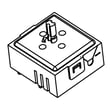
- Range infinite switch W10917724 (burner heat level erratic or stuck)
- Keypad W11025616 (buttons not responding)
- Light bulb 8009 (oven light out)
| Problem you see | Most likely area to check first | Typical next step |
|---|---|---|
| Oven not heating | Bake circuit | Inspect/replace bake element |
| One burner dead | Element or switch | Swap-test control, then replace failed part |
| Heat level jumps | Infinite switch | Replace switch |
| No response from keys | Keypad | Replace keypad |
Quick checks we recommend before replacing parts
- Verify the range has power (check the double breaker; electric ranges often need 240V).
- For cooktop issues, test a different burner and try a different knob setting.
- Look for signs of overheating at terminals (discoloration, melted connectors, burnt smell).
- If the oven heats but is slow, allow full preheat time and confirm settings in the owner's manual.
Why it matters
Heating and control problems can start as intermittent issues and progress to no-heat conditions. Catching a weak bake element, failing infinite switch, or loose connection early helps prevent uneven cooking and reduces the chance of additional wiring damage.
Last updated: February 2026