Owner’s manual
 Error Codes


How do I find the cubic feet of my Whirlpool refrigerator?
For your Whirlpool GX5SHDXVB01 bottom-mount refrigerator, the most accurate way to find cubic feet (capacity) is to look it up by model number in the product specifications section of the GX5SHDXVB01 owner's manual. If you only need an estimate, you can measure the usable interior space and calculate it.
Fast ways to get the capacity
- Check the manual/specs: Capacity is typically listed as “total capacity” in cubic feet in the GX5SHDXVB01 owner's manual.
- Look for the rating label: Some refrigerators list capacity on the model and serial tag (often inside the fresh food compartment).
- Measure and calculate (estimate): Multiply interior width x height x depth (in inches) and divide by 1,728.
How to measure for a good estimate
To keep your estimate realistic, measure the usable space, not the outside cabinet.
- Measure the fresh food compartment interior width, height, and depth.
- Measure the freezer compartment interior width, height, and depth.
- Subtract obvious non-usable areas (large air ducts, thick interior housings) if they take up significant space.
- Convert each compartment to cubic feet, then add them together.
Quick formula
| What you measure | Math | Result |
|---|---|---|
| Inches (W x H x D) | (W x H x D) ÷ 1,728 | Cubic feet |
Why it matters
Knowing cubic feet helps us match the right refrigerator parts and accessories (like shelves, door bins, and drawers) and it also helps when comparing replacement models by storage capacity.
Last updated: February 2026
What's the average lifespan of a Whirlpool refrigerator?
Most Whirlpool refrigerators, including the Whirlpool GX5SHDXVB01 bottom-mount style, typically last 10 to 18 years with normal household use. Regular maintenance (airflow, clean coils, good door sealing) is what most often determines whether you land closer to 10 years or closer to 18.
Typical lifespan and what to expect
Here’s a practical way to think about service life for a Whirlpool refrigerator:
| Condition | Typical outcome | What you’ll notice |
|---|---|---|
| Well maintained, good ventilation | 15 to 18 years | Steady temps, fewer repairs |
| Average maintenance | 10 to 15 years | Occasional part replacements |
| Poor airflow, dirty coils, weak seals | 7 to 12 years | Longer run times, warm spots |
What shortens (or extends) refrigerator life
We see these factors make the biggest difference:
- Dirty condenser coils: forces the compressor to run hotter and longer
- Door gasket leaks: adds moisture, causes frost, increases run time
- Overpacked compartments: blocks airflow to the evaporator and vents
- Warm room or tight cabinet fit: reduces heat rejection and stresses the sealed system
- Skipped filter changes (if equipped): can reduce water flow and strain the inlet valve
Maintenance that pays off the most
Use these habits to keep a Whirlpool bottom-mount running longer:
- Vacuum and brush the condenser area regularly
- Keep a little space between the refrigerator and the wall for airflow
- Confirm doors close fully and don’t “bounce” back open
- Keep freezer drawers sealing flat and free of ice buildup
- Follow the care and cleaning schedule in the GX5SHDXVB01 owner's manual
When a repair makes sense vs. replacement
A simple rule we use:
- Worth repairing: ice maker, fan motor, inlet valve, temperature sensor, door gasket
- Bigger decision: compressor or electronic control issues, especially on older units
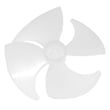
If you’re troubleshooting cooling or ice production, model-matched parts like the refrigerator evaporator fan motor WPW10128551 are common wear items that can restore performance without replacing the whole refrigerator.
Why it matters
A refrigerator that’s nearing end-of-life often still “runs,” but it runs longer, uses more energy, and struggles to hold safe temperatures. Staying ahead of airflow and sealing issues helps protect food and reduces expensive breakdowns.
Last updated: February 2026
What is the biggest problem in a Whirlpool refrigerator?
The biggest problem we see in Whirlpool refrigerators like model GX5SHDXVB01 is poor cooling (fresh food too warm, freezer not holding temperature). The most common root causes are restricted airflow from dirty condenser coils, a defrost drain issue leading to ice buildup, or a failed evaporator fan that cannot circulate cold air.
Most common symptoms and what they usually point to
- Refrigerator warm, freezer OK: airflow problem (evaporator fan, damper, frost buildup)
- Both sections warm: condenser coils dirty, condenser fan/compressor start issue, control problem
- Ice on freezer back wall: defrost system or airflow restriction
- Water under crisper or on floor: clogged/iced defrost drain
- Ice maker not making ice: water supply/valve issue or ice maker failure
Quick checks we recommend first (no parts needed)
- Set temps to typical targets: 37°F fresh food, 0°F freezer.
- Clean condenser coils and confirm the unit has good airflow around it.
- Check door sealing and closing; a poor seal causes long run times and warm temps.
- Look for frost buildup on the freezer rear panel (a strong clue of a defrost/airflow issue).
- If you have a dispenser or ice maker, confirm household water supply is fully on.
Common causes and likely fixes (at-a-glance)
| What you notice | Most likely cause | Typical next step |
|---|---|---|
| Warm temps, little airflow | Evaporator fan not running | Inspect/replace fan motor or blade |
| Puddles inside fridge | Defrost drain clogged | Clear drain and check drain tube |
| No ice, no water fill | Water inlet valve not opening | Test/replace inlet valve |
| Random temp swings | Sensor/control issue | Check thermistor and control board |
Parts that commonly solve “biggest problem” complaints on GX5SHDXVB01
If your troubleshooting points to a failed component, these model-matched parts are common fixes:
- Refrigerator evaporator fan motor WPW10128551 (no airflow, warm fresh food)
- Refrigerator water inlet valve assembly WP2315576 (ice maker not filling)
- Refrigerator temperature sensor 12002355 (temperature swings)
Why it matters
Cooling problems are the fastest way to lose food and overwork the compressor. Catching airflow, drain, or water-supply issues early helps your Whirlpool refrigerator run colder, quieter, and more efficiently.
For model-specific operating details and temperature recommendations, use the GX5SHDXVB01 owner's manual.
Last updated: February 2026