Owner’s manual
 Error Codes


Where to find model number on Kenmore 79578542804 Elite fridge?
On Kenmore Elite model 79578542804, the model and serial number are printed on an identification label inside the fresh food (refrigerator) compartment, on the right-hand side wall. Use that label any time you order parts or look up service information in the owner's manual.
Common places to check on this refrigerator
Look in these spots in order (most likely first):
- Inside the refrigerator compartment, right-hand side wall (ID label with model and serial)
- Inside the refrigerator section near the crisper area (some units place labels lower on the liner)
- Behind the lower front grille (kick plate) if you do not see it inside right away
- Inside the freezer compartment (less common, but worth a quick check)
What the ID label looks like and what to copy
The label typically includes both numbers; copy them exactly.
| Item on label | What it’s used for | Example format |
|---|---|---|
| Model number | Matching parts and diagrams | 795.7854xxxx |
| Serial number | Identifying production run for service | Letters and numbers |
Why it matters
We use the model number to match the correct Kenmore Elite bottom-mount refrigerator parts (like door bins, sensors, switches, and water system components). Even small model variations can change which parts fit.
Quick tips before you write it down
- Wipe the label gently with a damp cloth if it’s hard to read.
- Take a clear photo of the label for future reference.
- Record both model and serial; they are often needed together.
Last updated: February 2026
What are the common problems with Kenmore 79578542804 Elite refrigerators?
Common problems we see with the Kenmore Elite 79578542804 bottom-mount refrigerator include weak or uneven cooling, frost buildup, water leaks, door-closing issues, and ice maker or dispenser complaints. Many of these trace back to airflow restrictions (dirty condenser coils), defrost system faults, or door seal and alignment problems; use the owner's manual troubleshooting section to match symptoms to checks.
Most common symptoms and what they usually point to
- Not cooling well or temperature swings: dirty condenser coils, evaporator fan issue, temperature sensor issue
- Frost or ice crystals on frozen food: door not closing fully, frequent door openings, gasket sealing problems
- Water on the floor or puddles: clogged/iced drain path, drain tube issue
- Ice tastes bad or smells: old ice, unwrapped food odors, new ice maker startup batches
- Lights or dispenser behavior is odd: door switch or dispenser switch problems
Quick checks we recommend first (safe, no parts guessing)
- Clean the condenser coils (dust buildup is a top cause of poor cooling and noise).
- Confirm doors seal and close fully; check for bins or drawers blocking closure.
- Reduce door openings for 24 hours and recheck freezer performance.
- Discard old ice and make a fresh batch if taste or odor is the issue.
- After a power interruption, allow time for temperatures to stabilize and verify settings.
Parts that commonly solve these symptoms (when diagnosis confirms)
If your symptom matches and testing points to a failed component, these model-compatible parts are commonly involved:
| Symptom | Common part involved | Example part for this model |
|---|---|---|
| Interior light stays off or door alarm issues | Door switch | Lg refrigerator door switch 6600JB1010A |
| Dispenser won’t actuate | Dispenser switch | Lg refrigerator dispenser switch 6600JB3001C |
| Frost buildup, warm freezer | Defrost system component | Refrigerator defrost heater 5300JK1005D or refrigerator defrost sensor assembly 6615JB2005H |
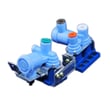
| Water dispenser/ice maker not filling | Water inlet valve | Lg refrigerator water inlet valve 5221JB2006K |
| Water pooling under unit | Drain path component | Refrigerator drain tube 5251JA3003D |
Why it matters
Cooling, frost, and leak symptoms often get worse over time. Cleaning coils and fixing door sealing early helps protect food, reduces compressor run time, and prevents recurring ice buildup and puddles.
Last updated: February 2026
What is the average lifespan of a Kenmore 79578542804 Elite refrigerator?
A Kenmore Elite 79578542804 bottom-mount refrigerator typically lasts 10 to 15 years. Regular upkeep (especially cleaning condenser coils and keeping door gaskets sealing well) helps you reach the high end of that range and reduces the chance of expensive sealed-system repairs.
Typical lifespan and what affects it
Most refrigerators in this class land in the 10 to 15 year window. The biggest factors that move lifespan up or down are maintenance, installation conditions, and how hard the unit has to work to hold temperature.
Common lifespan drivers
- Dirty condenser coils causing higher run time and heat stress
- Worn or leaking door gaskets letting warm air and moisture in
- Poor airflow around the cabinet (tight enclosure, blocked vents)
- Heavy ice maker and dispenser use (more load on water system parts)
- Power interruptions and frequent door openings
Maintenance that extends life (high impact)
The Use & Care Guide for this model includes routine care topics like cleaning and condenser coil care; following those basics is the most reliable way to extend service life. See the owner's manual.
We recommend this routine
- Vacuum and brush the condenser coil area on a regular schedule
- Clean and inspect door gaskets; keep them free of sticky residue
- Keep vents inside the fresh food and freezer sections unblocked
- Confirm doors close fully every time; adjust loading if needed
- Address water leaks quickly to prevent corrosion and ice buildup
Quick “repair vs. replace” rule of thumb
Use age plus symptom severity to decide what makes sense.
| If your refrigerator is… | And you’re seeing… | Usually makes sense to… |
|---|---|---|
| Under 8 years | Minor issues (switches, rails, bins) | Repair |
| 8 to 12 years | Moderate issues (fans, sensors, defrost parts) | Repair if cost is reasonable |
| 12+ years | Cooling problems tied to sealed system | Compare repair cost vs. replacement |
Why it matters
Lifespan is mostly about how long the compressor and sealed refrigeration system can run efficiently. Keeping coils clean and airflow clear lowers operating temperature and run time, which directly reduces wear on the compressor and fans.
Last updated: February 2026
Why is the bottom freezer not freezing?
If the bottom freezer on your Kenmore Elite 79578542804 is not freezing, the most common causes are interrupted airflow (blocked vents or overpacked drawers), a door that is not sealing or closing fully, or a defrost problem that leaves frost/ice on the evaporator area. Use the temperature controls and airflow checks in the owner's manual first.
Quick checks that fix most “not freezing” complaints
- Confirm the freezer is set to 0°F (-18°C) and allow 24 hours for temperatures to stabilize after changes.
- Make sure food packages are not blocking the cool air vents; blocked vents interrupt circulation between freezer and fresh food sections.
- Avoid overpacking; leave space around packages so cold air can move.
- Check that nothing is holding the freezer drawer open; a small gap can warm the compartment quickly.
- If your model has it, turn on Ultra Ice for 24 hours to boost freezer cooling.
What to check next (airflow, seals, and frost)
Proper air circulation is required for the freezer to stay cold; air enters at the top of the freezer, circulates down, then returns upward through the refrigerator section.
- Inspect door gaskets for gaps, tears, or areas that do not contact the cabinet evenly.
- Look for heavy frost or ice buildup that can restrict airflow (a sign of a defrost issue).
- Clean dust from the condenser area; dirty coils can reduce cooling performance.
Common symptoms and likely causes
| Symptom | What it usually points to | What to do first |
|---|---|---|
| Freezer warm, fridge also warming | Airflow blocked or cooling system struggling | Clear vents, reduce load, clean condenser |
| Freezer warm, fridge OK | Freezer airflow restriction or defrost frost buildup | Check vents, look for frost/ice |
| Temps changed recently | Normal stabilization time | Wait 24 hours, then recheck |
Parts that can be involved (when checks do not solve it)
If you confirm settings and airflow are correct but freezing is still weak, these model-compatible parts are commonly involved in cooling and defrost performance:
- Refrigerator defrost sensor assembly 6615JB2005H
- Lg refrigerator defrost heater 5300JK1005D
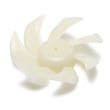
- Refrigerator evaporator fan blade 5901JA1021A
- Refrigerator temperature sensor 6500JB2001B
Why it matters
A bottom freezer that is not freezing is usually an airflow or defrost-related issue; fixing it quickly helps prevent food spoilage and reduces strain on the compressor and fans.
Last updated: February 2026
Why is my Kenmore 79578542804 Elite refrigerator leaking water out of the bottom?
Water leaking from the bottom of your Kenmore Elite 79578542804 refrigerator is usually caused by a defrost drain problem (water cannot reach the drain pan), a leak in the dispenser/ice maker water line, or condensation overflow from heavy frost buildup. Use the owner's manual to locate access points and cleaning guidance.
Quick checks we recommend (most common first)
- Look for a sheet of ice or standing water on the freezer floor; this points to a clogged or frozen defrost drain.
- Check for water only after using the dispenser or ice maker; this points to a supply line or valve leak.
- Inspect the door gaskets for gaps or tears; warm air leaks can create excess frost and meltwater.
- Verify the refrigerator is level; a tilt can cause water to miss the drain pan.
- Pull the unit out and look for water trails near the back bottom panel.
What to do based on where you see water
| Where the water shows up | Most likely cause | What to do next |
|---|---|---|
| Under the freezer drawer / inside freezer bottom | Clogged or frozen defrost drain | Thaw ice, then flush the drain with hot water and clear debris from the drain opening and tube |
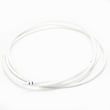
| Front floor near dispenser side | Cracked/loose water tubing or fitting | Inspect tubing connections; replace damaged line such as refrigerator water tubing MJU62070602 |
| Back bottom near wall | Water inlet valve seep or loose supply connection | Tighten fittings; if valve body leaks, replace lg refrigerator water inlet valve 5221JB2006K |
| Random puddles after long run times | Frost buildup from air leak or defrost issue | Check gaskets, vents, and defrost components; consider testing refrigerator defrost sensor assembly 6615JB2005H |
Why it matters
A small leak can turn into floor damage, ice buildup in the freezer, and poor cooling. The manual notes that water normally runs into the drain pan during defrost; when the drain path is blocked, that water ends up where it should not.
Safety and damage prevention
- Unplug the refrigerator before removing panels or working near wiring.
- Turn off the household water supply before inspecting the inlet valve or tubing.
- If your kitchen area can drop below freezing, have the water supply system drained to prevent ruptured lines (a common cause of sudden leaks).
Last updated: February 2026