Owner’s manual
 View engine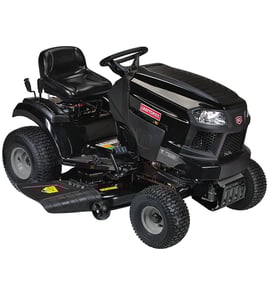




What year did Craftsman make the 917273135?
Craftsman model 917273135 was produced during the LT1000-era of Craftsman front-engine lawn tractors, which is typically late 1990s through mid-2000s. For the exact build year of your specific tractor, use the identification and documentation details in the 917273135 owner's manual.
How to pinpoint the exact year for your tractor
Use these quick checks; they work even when the model family spans multiple years:
- Look for the product identification label (commonly under the seat or on the frame near the rear fender pan).
- Record the serial number exactly as shown.
- Compare the tractor’s configuration to the illustrated parts lists in the manual (chassis, steering, seat, decals).
- Match major assemblies that often changed over time (deck style, hood/dash layout, wiring harness routing).
- If you are replacing wear items, confirm the part by model before ordering (blade, belt, mandrel).
What the manual confirms for this model
The documentation we have is explicitly labeled for TRACTOR, MODEL NUMBER 917.273135 and includes detailed parts breakdowns (for example: chassis and enclosures, steering assembly, seat assembly, decals, and lift assembly). That confirms you are working from the correct model family documentation when you cross-check your tractor’s ID tag and configuration.
Common “year” clues vs what they mean
| What you find | What it usually tells you | What to do next |
|---|---|---|
| Model number 917273135 | Identifies the model family/configuration | Use serial number to narrow the build year |
| Serial number on frame/under seat | Best indicator of production run | Use it with the manual’s identification section |
| Deck/blade type | Helps confirm deck size and setup | Verify blade and belt match your deck |
Why it matters
The exact year affects parts compatibility for items like the mower deck, drive system, and electrical/safety interlocks. Confirming the build year and configuration helps you avoid ordering the wrong blade, V-belt, or mandrel components.
Last updated: February 2026
What kind of oil do you use in a Craftsman lawn tractor?
For the Craftsman lawn tractor model 917273135, we use a high-quality detergent 4-cycle engine oil that meets API service classification SF-SJ, and we choose the SAE viscosity based on the outdoor temperature (the manual includes an oil viscosity chart). See the 917273135 owner's manual for the exact viscosity recommendation for your season.
Recommended oil type and viscosity
Use oil that matches these requirements:
- 4-cycle (4-stroke) engine oil (not 2-cycle mix)
- High-quality detergent oil
- API rating: SF through SJ
- SAE viscosity: pick based on expected operating temperature (warm weather vs. cold weather)
If you mow in colder weather, switching to a lighter winter-grade oil helps with easier starting (as shown in the manual’s viscosity chart).
Quick oil-check and change basics (model 917273135)
The owner’s manual for this tractor calls out these best practices:
- Check oil with the tractor on level ground
- Wipe the dipstick, reinsert it, then read the level
- Fill only to the FULL mark; do not overfill
- Check oil before starting and about every 8 hours of operation
- Change oil every 50 hours of operation or at least once a year
Oil selection guide (simple)
| Your mowing conditions | What to do | Why |
|---|---|---|
| Typical spring and summer mowing | Use the manual’s warm-weather viscosity | Protects the engine at higher temps |
| Late fall or cold-weather use | Use the manual’s cold-weather viscosity | Improves starting and lubrication |
| Tractor sits for long periods | Change oil at least annually | Removes moisture and contaminants |
Why it matters
Using the correct API-rated oil and the right viscosity helps your 17.0 HP engine stay lubricated, run cooler, and resist wear. It also reduces hard-start complaints that often show up when oil is too thick for the temperature.
Last updated: February 2026
What are the essential tractor parts?
For the Craftsman 917273135 front-engine lawn tractor, the essential parts are the systems that make it start, move, stop, and cut safely: engine and fuel delivery, drive and steering, electrical and safety interlocks, and the mower deck (blades, belts, and spindles). See the 917273135 owner's manual for your control locations and safety steps.
Essential systems to keep in good shape
These are the parts and assemblies that most directly affect reliability and cut quality:
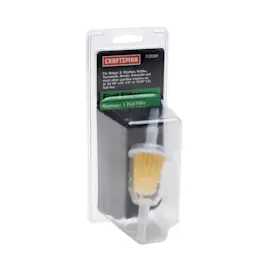
- Engine and fuel system: fuel tank, fuel line/filter, carburetor, spark plug, air filter, engine oil
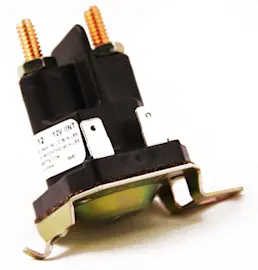
- Electrical and starting: battery, ignition switch/key, starter/solenoid, wiring connections
- Drive and braking: transaxle/transmission, ground drive belt, clutch/brake pedal linkage, parking brake
- Steering and front axle: steering wheel/shaft, tie rods, axle bearings/bushings
- Mower deck and blade drive: deck belt, idler pulleys/springs, mandrel (spindle) assemblies, blades
- Tires and wheels: tires, rims, valve stems, tire pressure
Model-specific examples of “essential” wear parts
These are common maintenance or failure items we see on 42-inch deck tractors like model 917273135.
| System | What it does | Example part for this model |
|---|---|---|
| Blade drive | Transfers power to spin blades | V-belt 532138255 |
| Cutting | Cuts grass; affects cut quality | Lawn tractor 42-in deck high-lift blade 532138971 |
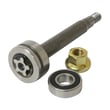
| Spindle/mandrel | Supports blade and pulley; reduces vibration | Husqvarna lawn tractor mandrel assembly 532130794 |
| Starting/security | Lets you start the tractor | Molded ignition key 532140403 |
Quick checks we recommend before each mow
Your manual calls out several basics that prevent no-starts, poor cutting, and premature belt wear:
- Check engine oil level and add oil if needed
- Use fresh regular unleaded gasoline
- Confirm tires are properly inflated (important for deck leveling)
- Verify the mower deck is level side-to-side and front-to-rear
- Inspect mower and drive belts for cracking, glazing, or misrouting
- Look over wiring connections to make sure they are secure and clamped
Why it matters
Most “tractor problems” trace back to a few essentials: low battery or loose wiring (no crank), stale fuel (won’t start), worn belts or mandrel bearings (poor cut and vibration), or out-of-adjustment brakes (unsafe operation). Keeping these core parts maintained saves time and protects the transaxle and deck.
Last updated: February 2026
What are the parts of a tractor engine?
For the Craftsman tractor model 917273135, the engine parts are grouped by system so you can identify what you need quickly: fuel delivery, starting, lubrication, exhaust, and internal engine components such as the cylinder head, valves, and crankshaft. Use the 917273135 owner's manual to match the exact diagram and key number.
Major tractor engine systems (what you will see in parts diagrams)
These are the main assemblies typically listed for a front-engine riding lawn tractor engine:
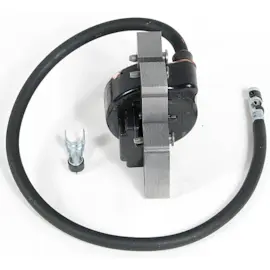
- Fuel system: fuel tank, cap, fuel line, hose clamps, carburetor, air cleaner gaskets
- Starting system: starter assembly and starter drive components
- Lubrication: dipstick assembly, oil fill cap, O-rings, drain tube or drain plug parts
- Exhaust: muffler, exhaust manifold gasket, spark arrester (if equipped)
- Cylinder head and valve train: cylinder head, intake and exhaust valves, push rods, rocker arms, valve springs, breather parts
- Crankshaft and rotating parts: crankshaft and related fasteners
Examples of engine-related parts called out for model 917273135
The manual’s engine breakdown for this model commonly lists items like these:
| System | Example parts you may see listed | What it affects |
|---|---|---|
| Fuel | Fuel tank, cap, fuel line, clamps | Starting, stalling, fuel leaks |
| Starting | Starter assembly | Cranking and turn-over |
| Lubrication | Dipstick assembly, oil fill cap, O-rings | Oil level control, oil leaks |
| Exhaust | Muffler, exhaust gasket, spark arrester | Noise, power, exhaust leaks |
Quick tips for identifying the right engine part
- Match the model number 917273135 first; then use the engine diagram key numbers.
- Identify the system first (fuel, starting, lubrication, exhaust) before choosing a part.
- Replace sealing items (gaskets, O-rings) whenever you open a sealed joint.
- If you are also troubleshooting poor cutting or heavy load, inspect the deck drive components; a worn blade can increase load. A common example is the lawn tractor 42-in deck high-lift blade 532138971.
Why it matters
Engine symptoms overlap. A “won’t start” issue can be fuel delivery, starter cranking, or oil-related safety conditions; using the correct system diagram prevents ordering the wrong part.
Last updated: February 2026