Get free shipping on your order, with any water filter subscription. Find my filter

Open Hamburger Menu
Sears Parts Direct
Tips to find your model number
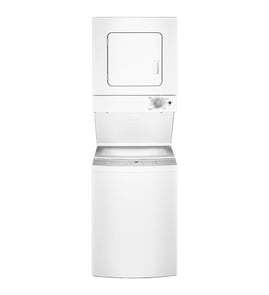
Kenmore 11081442710 stacked laundry center

Kenmore 11081442710 stacked laundry center Parts

Here are the diagrams and repair parts for Kenmore 11081442710 stacked laundry center, as well as links to manuals and error code tables, if available.

By Schematic
By Part
SELECT DIAGRAM
?

This is the number corresponding to the part on the diagram / schematic

Browse Parts for 11081442710 Laundry Center

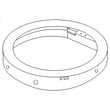
  • Adapter for Kenmore 11081442710 - Part W11187713

    Washer basket and gear parts diagram

    Adapter

    Part #W11187713

    The manufacturer no longer makes this part, and there's no substitute part

  • Screw,tub Bo for Kenmore 11081442710 - Part W11178813

    Washer basket and gear parts diagram

    Screw,tub Bo

    Part #W11178813

    The manufacturer no longer makes this part, and there's no substitute part

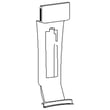
  • Pcb Cover,pa for Kenmore 11081442710 - Part W11174392

    Washer top and control parts diagram

    Pcb Cover,pa

    Part #W11174392

    The manufacturer no longer makes this part, and there's no substitute part

  • Support-lt for Kenmore 11081442710 - Part W11174391

    Washer top and control parts diagram

    Support-lt

    Part #W11174391

    The manufacturer no longer makes this part, and there's no substitute part

  • Damper Cover for Kenmore 11081442710 - Part W11174364

    Washer top and control parts diagram

    Damper Cover

    Part #W11174364

    The manufacturer no longer makes this part, and there's no substitute part

  • Washer Cover for Kenmore 11081442710 - Part 3394228

    Dryer cabinet and motor parts diagram

    Washer Cover

    Part #3394228

    The manufacturer no longer makes this part, and there's no substitute part

  • Twist Tie,ha for Kenmore 11081442710 - Part W11178920

    Washer cabinet parts diagram

    Twist Tie,ha

    Part #W11178920

    The manufacturer no longer makes this part, and there's no substitute part

  • Rotary Shaft for Kenmore 11081442710 - Part W11174371

    Washer top and control parts diagram

    Rotary Shaft

    Part #W11174371

    The manufacturer no longer makes this part, and there's no substitute part

  • Damper Right for Kenmore 11081442710 - Part W11174368

    Washer top and control parts diagram

    Damper Right

    Part #W11174368

    The manufacturer no longer makes this part, and there's no substitute part

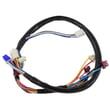
  • Panel Rear T for Kenmore 11081442710 - Part W11134947

    Dryer cabinet and motor parts diagram

    Panel Rear T

    Part #W11134947

    The manufacturer no longer makes this part, and there's no substitute part

Kenmore Laundry Center 11081442710 FAQs

The Kenmore stacked laundry center model 11081442710 uses a compact, stacked-style dryer; this design is typically about 4.0 to 5.9 cu. ft. (not the 6.5+ cu. ft. size found in many full-size standalone dryers). For the exact spec used for your unit, confirm it in the 11081442710 use and care guide.

What capacity range to expect for this type of Kenmore laundry center

Stacked laundry centers are built to save space, so the dryer drum is smaller than a standard 27-inch dryer.

  • Most stacked laundry center dryers run roughly 4.0 to 5.9 cu. ft.
  • They dry best when loads are not packed tightly
  • Bulky items (comforters, heavy blankets) often need extra time or multiple cycles
  • Overloading commonly causes damp clothes and long dry times
  • Proper venting has a bigger impact on results than small capacity differences

Quick load-sizing tips (to match the drum size)

Use these practical guidelines to prevent poor tumbling and overheating:

  • Fill the drum loosely to about 1/2 to 2/3 full
  • Dry towels and jeans in medium loads, not “stuffed” loads
  • Dry bulky items one at a time
  • Clean the lint screen before every load
  • If clothes are still damp, follow the steps in laundry center clothes still damp

Capacity comparison (helpful when shopping or estimating)

Dryer type Typical capacity Best for
Stacked laundry center dryer (like 11081442710) 4.0 to 5.9 cu. ft. Apartments, closets, everyday loads
Full-size standalone dryer 6.5 to 9.0+ cu. ft. Large families, bulky bedding

Why it matters

Dryer capacity affects airflow and tumbling. When the drum is too full, items cannot separate; moisture stays trapped, cycles run longer, and clothes often come out damp.

Last updated: February 2026

For a Kenmore washer, a typical life expectancy is 10 to 15 years with normal household use and basic maintenance. For the Kenmore stacked laundry center model 11081442710, good airflow for the dryer section and routine cleaning help reduce wear on shared components.

What affects washer lifespan the most

  • Load size and balance: frequent overloading shortens bearing, suspension, and drive life.
  • Detergent choice: this laundry center is designed for HE (high efficiency) detergent; using non-HE can cause oversudsing and extra strain.
  • Water quality: hard water increases mineral buildup and can affect valves and wash performance.
  • Drain and spin habits: repeated off-balance spins accelerate wear.
  • Ventilation (dryer side): restricted venting increases heat and moisture in the cabinet, which can impact overall reliability.

Maintenance we recommend (simple, high impact)

Use the schedule and procedures in the 11081442710 use and care guide.

  • Clean the washer interior and dispensers regularly.
  • Keep loads within the cycle’s intended capacity.
  • Level the unit to reduce vibration during spin.
  • Check hoses for bulges, cracking, or leaks; replace as needed.
  • Keep the dryer vent system clear for strong airflow.

Quick lifespan expectations by scenario

Usage pattern Typical expectancy What usually fails first
Light (1 to 3 loads/week) 12 to 15 years Hoses, lid/door wear items
Average (4 to 7 loads/week) 10 to 13 years Drain components, drive parts
Heavy (multiple loads/day) 8 to 10 years Drive system, bearings, controls

Why it matters

Knowing the expected lifespan helps you decide whether to maintain, repair, or plan a replacement. Many “end of life” symptoms are actually fixable issues like vibration from poor leveling, restricted venting, or worn mechanical parts.

Last updated: February 2026

Your Kenmore stacked laundry center’s model number is printed on the appliance’s rating label; use that exact number (for example, 11081442710) when ordering parts or checking specifications in the owner's manual. On this unit, the manual also references the model series 81442710.

Where to look on a stacked laundry center

Check these common label locations first (power off the unit before reaching into tight areas):

  • Inside the washer lid area, around the top rim of the washer opening
  • On the back panel of the laundry center cabinet
  • Behind the dryer door opening, along the door frame area
  • On a side panel near the lower washer section
  • On the inside edge of the control console area (less common)

What to write down (and why)

Record both the model number and serial number exactly as shown. They matter because:

  • The model number matches you to the correct diagrams and part list
  • The serial number helps identify production changes that can affect fit
  • Small differences (extra digits or letters) can point to different components

Quick checklist

Item What it looks like Used for
Model number 11081442710 Finding the correct parts and manuals
Serial number A longer mix of letters and numbers Identifying the production run

Why it matters

Laundry centers often share a similar cabinet, but internal washer and dryer components (like a timer, belt, or switch) can vary by model. Using the exact model number prevents ordering the wrong replacement part.

Last updated: March 2026
Most common symptoms to help you fix your laundry centers

Choose a symptom to see related laundry center repairs.

Main causes: broken dryer drive belt, weak drive motor, binding drum seals…

Main causes: door not fully shut, bad door switch, faulty push-to-start switch, wiring failure, bad drive motor, blown f…

Main causes: blocked exhaust vent, clogged lint screen, bad timer, moisture sensing problems, weak gas valve coils, bad …

Main causes: broken lid switch or lid lock, faulty drive motor, drain system problem, broken drive system components…

Main causes: bad lid switch or lid lock, drive motor failure, broken motor coupler, bad timer, faulty electronic control…

Main causes: clogged drain system, blocked drain hose, bad drain pump…

Main causes: control system failure, broken heating element, bad gas valve coils, gas supply failure, voltage supply pro…

Main causes: unbalanced load, broken suspension springs or shocks, worn snubber ring…

Main causes: lack of water supply, failed lid switch or lid lock, bad water level pressure switch, control system failur…

Most common repair guides to help fix your laundry centers

These step-by-step repair guides will help you safely fix what’s broken on your laundry center.

How to replace a laundry center washer lid lock switch

How to replace a laundry center washer lid lock switch

If the washer fills but won’t start the agitation cycle, the lid lock switch could be defective. …

Repair time and Difficulty

 15 minutes or less
How to replace a laundry center washer timer

How to replace a laundry center washer timer

If the washer doesn't fill, spin or drain, the timer could be the problem. …

Repair time and Difficulty

 15 minutes or less
How to replace a laundry center washer snubber ring

How to replace a laundry center washer snubber ring

If the washer tub bangs the cabinet during the spin cycle even though the load is balanced, you might need to replace th…

Repair time and Difficulty

 15 minutes or less

Effective articles & videos to help repair your laundry centers

Use the advice and tips in these articles and videos to get the most out of your laundry center.

How to get cleaner clothes: 7 laundry tips for whiter whites and better results

How to get cleaner clothes: 7 laundry tips for whiter whites and better results

Tired of dull laundry? These 7 expert tips help you get cleaner clothes, brighten whites, and fix common washer mistakes…

Are DIY appliance repairs safe?

Are DIY appliance repairs safe?

Find out how to stay safe when repairing your appliances.…

Cleaning your appliances after a drinking water advisory

Cleaning your appliances after a drinking water advisory

Find out how to clean and flush household appliances once a boil water advisory is lifted.…

Parts & More

Bottom-Mount Refrigerator
Dishwasher
Dryer
Electric Chainsaw
Front-Engine Lawn Tractor
Gas Line Trimmer
Gas Range
Gas Snowblower
Gas Walk-Behind Mower
Laundry Center
Parts
Side-By-Side Refrigerator
Table Saw
Washer