Installation guide
 Owner’s manual


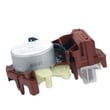
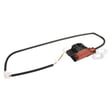
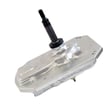
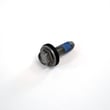
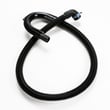
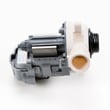
Are Whirlpool washer parts interchangeable?
Whirlpool washer parts are sometimes interchangeable across similar platforms, but we recommend matching parts to your exact Whirlpool washer model WTW5840BC0. Even small differences in wiring, mounting, or calibration can cause leaks, noise, poor washing performance, or error codes.
What “interchangeable” really means
Parts can look identical yet still be wrong for your washer. The safest approach is to confirm compatibility by model number and the part’s cross-reference.
Common reasons a “close” part does not work:
- Different electrical connectors or harness length (actuators, lid locks, control boards)
- Different pulley, belt, or cam geometry (spin or agitation problems)
- Different water valve flow rate or inlet orientation (fill issues)
- Different tub, basket, or suspension tuning (vibration, off-balance)
- Different firmware or user interface mapping (wrong cycles or errors)
Best way to confirm the right part for WTW5840BC0
Use the parts diagram and part list for your model, then match the exact part ID.
- Start with the exploded views and part list in the WTW5840BC0 owner's manual
- Verify the part category (drive system, lid, drain, fill, suspension)
- Match the exact part ID before ordering
- If your washer shows an error, use the closest Whirlpool top-load error code reference for symptom direction
Examples of model-matched parts (WTW5840BC0)
| Washer symptom | Part that often relates | Example part ID on this model |
|---|---|---|
| Won’t lock or won’t start | Lid lock assembly | W10404050 |
| Won’t drain or leaves water | Drain pump assembly | WPW10276397 |
| Won’t agitate or spin correctly | Washer actuator | WPW10006355 |
| Loud banging or “walking” | Suspension rod assembly | W10780044 |
Why it matters
Using the correct Whirlpool part for WTW5840BC0 protects wash performance and helps prevent repeat failures. For example, a mismatched lid lock can stop the cycle, and a wrong belt or cam can cause slipping, grinding, or no-spin complaints.
Last updated: February 2026
Is there a way to reset the whirlpool cabrio washer?
Yes. For the Whirlpool WTW5840BC0 (Cabrio-style) washer, a basic reset is to clear the control by removing power for several minutes, then restarting a cycle. This often clears a stuck cycle, minor control glitches, and some non-persistent error conditions.
Quick reset steps (power reset)
- Press POWER/CANCEL once to stop the cycle.
- Unplug the washer (or switch OFF the breaker).
- Wait 5 minutes.
- Restore power.
- Select a cycle and press START.
If the problem comes back right away
A reset helps when the control is confused; it will not fix a hard failure (like a lid not locking or a drain problem). Check these common causes:
- Lid not locking: make sure the lid closes fully and nothing is caught in the strike area (lid lock issues are common on top-load units).
- Washer will not drain: check for a kinked drain hose and clear the standpipe; a weak or jammed pump can also cause repeat failures.
- Washer will not spin: reduce load size, redistribute items, and confirm the washer is level.
- Out of balance or shaking: verify all four feet are firmly on the floor and the cabinet is level.
- Repeated error codes: use the model’s diagnostic info and code meanings to target the failing system.
Leveling check (helps prevent repeat spin and balance faults)
The installation instructions for this washer emphasize checking levelness and making sure all four feet contact the floor. Use this quick checklist:
- Place a level across the top edges.
- Rock the washer slightly; it should not teeter.
- Adjust the leveling feet as needed.
- Recheck level after moving the washer.
| Symptom after reset | Most likely area to check | Common next step |
|---|---|---|
| Won’t start, lid clicks | Lid lock system | Inspect/replace washer lid lock assembly W10404050 |
| Hums but won’t drain | Drain path or pump | Check hose, then inspect washer drain pump assembly WPW10276397 |
| Agitates poorly, noisy | Drive system | Inspect belt and cam, including washer drive belt WPW10006384 |
Why it matters
Resetting clears temporary control logic issues, but repeat problems usually point to a specific system (lid lock, drain, drive, or leveling). Using the correct troubleshooting steps prevents unnecessary part replacement and repeat breakdowns.
For model-specific control behavior and any diagnostic steps, follow the WTW5840BC0 owner's manual.
Last updated: February 2026
What is the most common problem with Whirlpool washers?
The most common Whirlpool washer problem we see on the Whirlpool WTW5840BC0 is a no-drain or no-spin condition, often caused by an out-of-balance load, a draining restriction, or a lid lock issue that prevents the washer from advancing into spin. Use the checks in the WTW5840BC0 owner's manual to confirm the exact symptom and test steps.
Most common symptoms and what they usually point to
- Won’t drain or won’t spin: drain restriction, failing drain pump, or lid lock not engaging
- Stops mid-cycle or won’t fill: installation or water supply issues (hoses, screens, valves), or leveling problems
- Loud banging or walking: unbalanced load, washer not level, weak suspension
- Won’t start: lid lock problem, power supply issue, or control not sensing a safe condition
- Water leaks: loose fill hoses, missing hose washers, or drain hose not secured
Quick checks we recommend first (WTW5840BC0)
The installation guide troubleshooting section emphasizes basics that commonly cause “won’t run/fill” complaints.
- Verify the washer is level and all feet are firmly on the floor; lock the jam nuts.
- Confirm fill hoses are tight and the flat hose washers are seated.
- Make sure the drain hose is secured to the standpipe or laundry tub and not kinked.
- Reduce load size and redistribute items to prevent an unbalanced load.
- If the lid won’t lock consistently, inspect the lid strike area and consider the lid lock.
Parts that commonly fix no-spin or no-drain complaints
If the symptom matches, these model-compatible parts are frequent solutions:
| Symptom | Common suspect | Example part for WTW5840BC0 |
|---|---|---|
| Won’t drain | Drain pump issue or blockage | Washer drain pump assembly WPW10276397 |
| Won’t spin / won’t start | Lid won’t lock | Washer lid lock assembly W10404050 |
| Agitates poorly / slips | Belt or drive wear | Washer drive belt WPW10006384 |
Why it matters
A washer that cannot drain or lock the lid often will not enter high-speed spin. Catching the simple causes first (leveling, hoses, drain setup) prevents repeat shutdowns, reduces noise, and helps you avoid replacing parts that are still good.
Last updated: February 2026