Owner’s manual
 Error Codes


How do I turn on the bottom ice maker on my LG refrigerator?
On the LG LFC22740SW bottom-mount refrigerator, turn on the bottom ice maker by setting the ice maker power switch to I (ON) after the refrigerator is connected to the water supply. Ice production typically starts after the freezer reaches 15°F (-9°C) or below; allow 12 to 24 hours for the first ice. See the LFC22740SW owner's manual.
- Confirm the refrigerator is connected to the household water supply and the shutoff valve is open.
- Locate the ice maker inside the freezer compartment.
- Move the ice maker power switch to I (ON).
- Make sure nothing blocks the feeler arm (it must move freely).
- Discard the first few batches of ice to clear the water line.
If the switch is ON but you are not getting ice, these checks solve most “no ice” complaints:
- Wait a full 24 hours after turning it on (new installs need time).
- Verify the freezer is cold enough (target 0°F for best ice production).
- Check for a kinked or pinched water line behind the refrigerator.
- Confirm the ice bin is seated correctly and not overfilling into the feeler arm.
- If cubes are small or large, adjust using the ice maker cube size button.
| What you see | What it means | What to do |
|---|---|---|
| No ice for several hours | Freezer not yet at operating temp | Keep doors closed, wait up to 24 hours |
| Ice clumps together | Normal with low usage | Break up clumps, use ice more often |
| Ice stops when bin is full | Feeler arm is sensing full bin | Empty bin or use ice |
The ice maker only runs when it has water and the freezer is cold enough. Turning the switch ON too early (before water is connected) can prevent proper filling and delay ice production.
Last updated: January 2026
What is error code 22 on LG refrigerator?
On the LG LFC22740SW refrigerator, error code 22 points to a compressor start or relay-related problem that can prevent the sealed system from starting and cooling normally. This is typically a repair situation because it involves the compressor start circuit and power components.
- Unplug the refrigerator for 5 minutes, then plug it back in to see if the code clears.
- Confirm the outlet is working and the cord is firmly seated (avoid extension cords).
- Listen for repeated clicking near the compressor area; that often matches a start/relay issue.
- If cooling is failing, move perishable food to another refrigerator or a cooler.
- If the code returns quickly, stop cycling power repeatedly; it can overheat the start components.
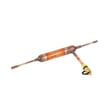
Error 22 is commonly tied to the compressor start device (start relay/overload). For this model, a common related part is the refrigerator compressor start relay assembly 6749c-0014e.
| Symptom | What it often means | Best next step |
|---|---|---|
| Clicking every few minutes, warm fridge | Compressor not starting | Check start relay/overload, then service if needed |
| Runs but not cooling well | Sealed system or airflow issue | Verify fans/airflow, then service |
| Code appears after power event | Control detected abnormal start | Power reset, then diagnose start circuit |
The compressor is the heart of cooling. When the start relay circuit fails, the compressor may not run, temperatures rise, and food safety becomes a concern. Because this can involve sealed system components, professional diagnosis is often the fastest path to a reliable fix.
For electrical and operating guidance (including power cord and extension cord cautions), use the LFC22740SW owner's manual.
Last updated: January 2026
Why does my LG freezer keep icing up at the bottom?
On the LG LFC22740SW, ice building up on the bottom of the freezer is usually caused by warm, moist air leaking in (drawer not sealing or not fully closing) or by restricted airflow that lets moisture collect and freeze. Start by confirming the freezer drawer closes tightly and the vents are not blocked.
- Make sure the freezer drawer closes completely; remove any packages that prevent full closure.
- Check the door gasket for gaps, rips, or areas that are folded inward.
- Clean sticky/dirty gasket surfaces so the gasket can seal (a dirty gasket can also make doors hard to open).
- Confirm the refrigerator is slightly tilted to the rear so doors close easily (leveling screws adjusted evenly).
- Keep air vents clear; blocked vents reduce circulation and can increase moisture buildup.
Use the LFC22740SW owner's manual to locate vents, review door closing and leveling guidance, and confirm normal airflow patterns between the freezer and fresh food sections.
If the drawer is not sealing well, a worn gasket is a common cause. For this model, a matching option is the refrigerator gasket assembly ADX73350925.
| What you notice | Most likely cause | What to do first |
|---|---|---|
| Ice sheet only at the very bottom | Drawer not fully closing or gasket leak | Clear obstructions; inspect/clean gasket |
| Frost on food packages and walls too | Frequent openings or poor seal | Reduce openings; check gasket contact all around |
| Moisture/condensation plus icing | Airflow restricted | Move items away from vents |
Bottom ice is more than a nuisance; it usually means extra humidity is entering the freezer or cold air is not circulating correctly. That can lead to temperature swings, longer run times, and more frost over time.
Last updated: January 2026
Why is my LG refrigerator not making ice on the bottom?
If your LG LFC22740SW bottom-mount refrigerator is not making ice, the most common causes are the icemaker being turned off, the freezer not being cold enough yet, or a water supply issue. We recommend allowing 12 to 24 hours for ice production after changes and confirming the feeler arm can move freely per the LFC22740SW owner's manual.
- Confirm the icemaker power switch is set to I (on).
- Make sure nothing blocks the feeler arm; a jammed arm stops ice production.
- Verify the freezer door closes fully; warm air slows ice making.
- Wait a full 24 hours after any reset, filter change, or water shutoff.
- Discard the first few batches after restoring water to clear the line.
If the ice bin in the bottom freezer stays empty, focus on water flow to the icemaker.
- Check the household shutoff valve is fully open.
- Look for a kinked or frozen water line; inspect the refrigerator water line path.
- If you see leaking, cracking, or restrictions in the line, replace the refrigerator water tubing 5210JA3005W.
| What you notice | Likely cause | What to do first |
|---|---|---|
| No ice at all | Icemaker off, blocked feeler arm, no water | Turn on icemaker; clear arm; confirm water supply |
| Very slow ice | Freezer too warm, frequent door openings | Set colder; reduce openings; wait 24 hours |
| Frost buildup in freezer | Door not sealing/closing | Check door closure and gasket seal |
Ice production depends heavily on freezer temperature and airflow.
- Set the freezer colder and give it 24 hours to stabilize.
- Avoid overpacking the freezer drawer; blocked vents reduce cooling.
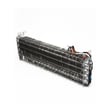
- If you suspect a defrost issue (heavy frost, warming, then refreezing), a failed sensor or heater can contribute; for this model, common service parts include the refrigerator defrost sensor assembly 6615JB2005C and refrigerator defrost heater 5300JB1100J.
When the freezer runs warm or the icemaker cannot fill with water, the icemaker will not cycle normally. Fixing door sealing, water flow, and freezer temperature restores reliable ice production and prevents frost and odor issues.
Last updated: January 2026