Owner’s manual
 Error Codes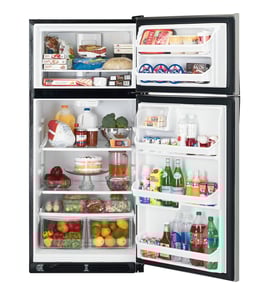


What is the average lifespan of a Maytag refrigerator?
Most Maytag refrigerators, including the Maytag M0RXEMMWW01 top-mount refrigerator, typically last 10 to 15 years with normal household use and basic maintenance (clean airflow paths, good door sealing, and stable temperatures).
Typical lifespan and what to expect
A refrigerator’s lifespan is mostly driven by compressor run time, heat removal, and how well the doors seal.
- Typical range: 10 to 15 years
- Common “still running” range with good care: 15 to 20 years
- Most common age for major repairs: 8 to 14 years (fans, defrost parts, controls)
| Appliance type | Typical lifespan | Notes |
|---|---|---|
| Top-mount refrigerator (like M0RXEMMWW01) | 10 to 15 years | Often longer when coils are kept clean |
| Side-by-side / French door | 10 to 15 years | More features can mean more repair points |
Maintenance that extends life
These steps reduce compressor strain and prevent icing and airflow problems.
- Keep condenser area clean and maintain ventilation space around the cabinet
- Make sure doors close fully and gaskets seal all the way around
- Keep freezer vents clear so cold air can circulate into the fresh-food section
- Set stable temps (avoid “max cold” unless needed temporarily)
- Address frost buildup early (defrost system issues shorten compressor life)
Why it matters
A refrigerator that runs longer than normal to hold temperature uses more energy and wears out key components faster. Catching airflow, sealing, and defrost issues early is usually the difference between a simple repair and a shortened lifespan.
Helpful references for this model
- Use the M0RXEMMWW01 owner’s manual for model-specific care, troubleshooting, and warranty details.
Last updated: January 2026
Is a top mount or bottom mount fridge better?
A top-mount refrigerator like Maytag M0RXEMMWW01 is better when you want the freezer at eye level and a typically lower purchase cost; a bottom-mount is better when you use fresh-food items most and want the refrigerator section at waist height to reduce bending.
Quick comparison
| Feature | Top-mount refrigerator | Bottom-mount refrigerator |
|---|---|---|
| Fresh-food access | Lower; you bend more | Higher; you bend less |
| Freezer access | Higher; easier reach | Lower; drawer-style on many models |
| Organization | Simple shelves and bins | Often more freezer organization |
| Typical cost | Usually lower | Usually higher |
| Best for | Heavy freezer users | Heavy fresh-food users |
How we recommend choosing
- Choose top-mount if you use the freezer daily, want quick access to frozen foods, or prefer a simpler layout.
- Choose bottom-mount if you cook often and want the refrigerator shelves at a more comfortable height.
- If you have tight clearance, consider door swing and leveling; proper setup helps doors close correctly and improves temperature stability.
- If you plan to add an ice maker or water line, leave extra space behind the refrigerator for connections.
Why it matters
Ergonomics and airflow affect day-to-day satisfaction. For example, the M0RXEMMWW01 manual calls out ventilation clearances (space at the sides/top and behind) and door alignment/leveling steps; both help the refrigerator run efficiently and keep doors sealing properly.
Helpful setup tips for a top-mount like M0RXEMMWW01
- Leave clearance around the cabinet for ventilation.
- Level the refrigerator so doors close easily.
- Keep the unit away from heat sources.
- Use both hands when removing heavy glass shelves to prevent breakage.
For model-specific installation clearances, door alignment, and care guidance, use the M0RXEMMWW01 owner’s manual.
Last updated: January 2026
What are the disadvantages of a top mount fridge?
Top-mount refrigerators like the Maytag M0RXEMMWW01 trade convenience for simplicity: the freezer is at eye level, but fresh-food access is lower, storage is usually less flexible than premium layouts, and dispenser features are less common. For model-specific use and care details, follow the M0RXEMMWW01 owner's manual.
Common disadvantages you will notice day to day
- More bending for fresh food: the refrigerator section sits below the freezer, so you reach down more often.
- Less “zone” organization: many top-mount designs have fewer dedicated bins and specialty compartments than higher-end layouts.
- Fewer built-in dispenser options: external water and ice dispensers are less common on top-mount models.
- Door swing clearance needs: you may need extra space on the hinge side to open the door fully.
- Can feel less stable if not leveled: if the cabinet is not tilted correctly, doors may not close as easily.
Setup and space considerations (often overlooked)
Your refrigerator needs breathing room and door clearance to work efficiently and feel convenient in a tight kitchen.
| What to plan for | Typical guidance for this style | Why it matters |
|---|---|---|
| Side and top clearance | About 1/2 inch | Helps ventilation and steady cooling |
| Rear clearance | About 1 inch | Protects airflow and room for connections |
| Hinge-side clearance | About 2 inches minimum | Prevents the door from binding on a wall |
| Room for ice maker water line | Extra space behind unit | Avoids kinked lines and leaks |
Why it matters
Top-mount refrigerators are popular because they are straightforward and often cost-effective, but the layout affects comfort (bending), food visibility, and how easily you can keep items organized. Proper clearance and leveling also directly affect door closing and temperature performance.
Last updated: January 2026
What is the most common problem with Maytag refrigerators?
The most common problems we see on Maytag refrigerators like model M0RXEMMWW01 are cooling complaints (not cold enough, warm freezer, running constantly) and ice maker or water supply issues. Many of these trace back to airflow restrictions, dirty condenser coils, door seal leaks, or a weak evaporator fan.
Most common symptoms and what usually causes them
- Refrigerator not cold enough: dirty condenser coils, blocked vents, thermostat/control setting issues
- Freezer cold but fridge warm: weak evaporator fan, iced-up evaporator area, airflow blockage
- Runs all the time: dirty coils, door not sealing, frequent door openings, warm room conditions
- No ice or slow ice: restricted water supply, frozen fill tube, inlet valve issue, ice maker failure
- Water leaks or puddles: clogged/iced drain, water line connection leak
Quick checks we recommend first (before replacing parts)
- Confirm controls are set correctly (avoid extreme settings unless troubleshooting).
- Clean the condenser area (dust buildup commonly causes poor cooling and long run times). The M0RXEMMWW01 owner’s manual includes cleaning guidance.
- Check door sealing: close a dollar bill in the gasket; it should resist pulling out.
- Verify airflow: keep food from blocking return vents and supply vents.
- For ice maker issues: confirm the shutoff arm is down (or switch is on) and the water supply valve is fully open.
Parts that commonly solve these problems on M0RXEMMWW01
| Symptom | Common part involved | What it affects |
|---|---|---|
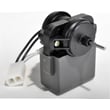
| Fridge warm, freezer OK | Refrigerator evaporator fan motor WP2315539 | Moves cold air into the fresh food section |
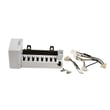
| No ice or slow ice | Refrigerator ice maker 4317943 | Harvests and cycles ice production |
| No water to ice maker | Refrigerator water inlet valve WP2315576 | Opens to send water to the ice maker |
Why it matters
Cooling and ice maker problems often start small (dust, airflow, sealing) but can lead to food spoilage, heavy frost, and longer compressor run times. Addressing the basics first prevents unnecessary part replacement.
Last updated: January 2026