Owner’s manual
 Error Codes


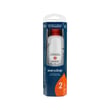
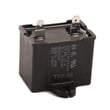
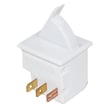
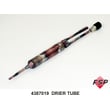

Are bottom mount fridges better?
A bottom-mount refrigerator like Kenmore 10679403410 is better for many households because the fresh-food section sits higher, so you reach everyday items with less bending. It is a strong choice if you use the refrigerator compartment more often than the freezer.
- You want fresh food at eye and chest level for faster grab-and-go access.
- You prefer fewer bends during daily cooking (produce, dairy, leftovers).
- You like wider refrigerator shelves and door bins for organizing.
- You use the freezer less often, so a lower freezer drawer is fine.
- You access frozen foods multiple times per day (a top-freezer can feel more convenient).
- You prefer lighter freezer doors (some bottom freezer drawers can feel heavier when loaded).
- You need the simplest layout possible (bottom-mounts often have more drawers and rails).
| Factor | Bottom-mount refrigerator | Top-freezer refrigerator |
|---|---|---|
| Fresh-food access | Best (least bending) | Good, but lower shelves require more bending |
| Freezer access | Lower drawer, more bending | Higher, easier reach |
| Organization | Strong (bins, drawers, wide shelves) | Simpler, fewer compartments |
| Typical repairs | Drawer rails, door alignment, gaskets | Door gaskets, defrost issues |
Choosing the layout that matches how your household eats reduces door-open time, improves organization, and helps the refrigerator maintain steadier temperatures. For model-specific features and care guidance, use the owner's manual.
Last updated: February 2026
Do they make a 34 in refrigerator?
Yes. 34-inch wide refrigerators are a common size, and you can find them in several styles (including bottom-mount and French door). For your Kenmore model 10679403410, the key is confirming the cabinet opening and required clearances in the owner's manual before choosing any 34-inch unit.
Measure your space and compare it to the refrigerator’s listed dimensions (width, height, depth) plus clearance.
- Measure the opening width at the front and back (walls are not always perfectly square)
- Measure height to the lowest cabinet or trim point
- Measure depth to the front edge of counters and note door swing clearance
- Plan ventilation space: about 1/2 inch on each side and at the top, and about 1 inch behind
- If installing next to a fixed wall, plan about 2 inches so the door can swing open
- If you have an ice maker or water dispenser, allow extra room behind for the water line
| What you’re checking | What to look for | Why it matters |
|---|---|---|
| Width | 34 inches plus side clearance | Prevents cabinet rubbing and vibration noise |
| Depth | Standard vs. counter-depth | Affects walkway space and door swing |
| Door swing | Clearance at hinges and handles | Prevents doors from hitting walls/cabinets |
| Rear clearance | Space for airflow and water line | Helps cooling performance and avoids kinks |
A refrigerator that is “34 inches wide” still needs extra space for airflow and door swing. Using the clearances recommended for 10679403410 helps the compressor and evaporator fan cool efficiently and helps prevent warm spots, noise, and premature wear.
Last updated: February 2026
How to tell if a Kenmore refrigerator compressor is bad?
If your Kenmore refrigerator model 10679403410 is warm and you hear repeated clicking from the back but the compressor never settles into a steady run, the compressor may be failing or it may not be starting due to a start-device issue. Use the troubleshooting steps in the owner's manual to rule out power and control settings first.
We start with the basics because a refrigerator can look “dead” even when the compressor is fine.
- Confirm the unit is plugged into a grounded 3-prong outlet (no extension cord).
- Test the outlet with a lamp; reset the breaker or replace a blown fuse if needed.
- Make sure cooling is turned on (not “Cooling Off”).
- If your model has it, check for “Showroom” mode (cooling disabled).
- After plugging in, allow 24 hours for full cooling on a new install or after being unplugged.
A bad compressor and a bad start device can look similar. These signs help narrow it down:
- Clicking every few minutes from the compressor area (overload cycling).
- No cooling even though interior lights and fans run.
- Compressor is very hot to the touch and shuts off quickly.
- Humming then click (tries to start, then trips).
- Breaker trips when the compressor attempts to start.
In many “clicking, not cooling” cases, the start relay/overload (start device) is the first part we check because it is external to the compressor and commonly fails.
| What you notice | More likely cause | What to check next |
|---|---|---|
| Clicks repeatedly, won’t start | Start device issue | Inspect/replace refrigerator start device WPW10448874 |
| Runs but cooling is weak | Sealed system or compressor wear | Check airflow, frost pattern, temps |
| Completely silent, no operation | Power/control setting | Follow owner's manual power and control checks |
A compressor that cannot start (or cannot run long enough) will let temperatures rise quickly, risking food spoilage and forcing the refrigerator to run inefficiently. Ruling out control settings and the start device prevents unnecessary sealed-system work.
Last updated: February 2026
How to tell what model Kenmore refrigerator?
To tell what model Kenmore refrigerator you have, we look for the model and serial tag on the cabinet inside the fresh food (refrigerator) compartment. On Kenmore model 10679403410, the Use and Care Guide lists the model family as 106.7940_, and your exact tag will match that format. Use the model number to pull the correct parts list and instructions in the owner's manual.
Check these common locations first (use a flashlight and look for a white or silver sticker/plate):
- Inside the refrigerator compartment on a side wall
- On the ceiling area inside the fresh food compartment
- Behind or beside the crisper drawers
- Along the door frame when you open the refrigerator doors
- Near the bottom front, behind the kick plate (less common)
Kenmore model numbers are usually a long number string. For this refrigerator, the manual shows the 106.7940_ series, and your full model will look like 10679403410 (no spaces).
| What you see | What it means | What to do next |
|---|---|---|
| Model starts with 106 | Common Kenmore prefix used on many refrigerators | Use the full model to match parts and diagrams |
| Model/serial tag is hard to read | Wear, moisture, or cleaning can fade ink | Take a photo, then zoom in to read characters |
| Only partial digits visible | Missing characters can lead to wrong parts | Compare your photo to the format shown in the owner's manual |
Once you find the model number, match it exactly before buying filters, switches, or door parts.
- Copy the model number character-for-character from the tag
- Use the full model (not just “106” or “106.7940”)
- If you are replacing filters, match by model first, then choose the correct part
- Keep the serial number too; it helps confirm production variations
Kenmore refrigerators often share similar styling across multiple series. The exact model number is what ensures the right fit for items like a water filter, air filter, door gasket, or control components.
Last updated: February 2026