Installation guide
 Owner’s manual


How do I know if my whirlpool dryer thermal fuse is blown?
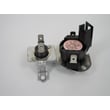
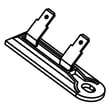
If your Whirlpool dryer model WED6620HC0 won’t start or runs with no heat, a blown thermal fuse is a common cause. The sure way to confirm is a continuity test with a multimeter; a good fuse reads near 0 ohms (continuity), and a blown fuse reads open (no continuity). For access and safety steps, follow the WED6620HC0 owner’s manual.
- Dryer will not run at all (most common)
- Dryer runs but won’t heat (some setups)
- Cycle stops unexpectedly
- No error code, but the dryer acts “dead” even with power
- Unplug the dryer (electric shock hazard).
- Access the fuse location using the disassembly steps in the WED6620HC0 installation guide.
- Remove at least one wire from the fuse terminal so you don’t backfeed the circuit.
- Set your multimeter to ohms/continuity.
- Touch one probe to each terminal:
- 0 to 1 ohm (or meter beeps): fuse is good
- OL/open/no beep: fuse is blown
| Meter reading | What it means | What to do next |
|---|---|---|
| 0 to 1 Ω (continuity) | Fuse is good | Check power supply, heating circuit, airflow restrictions |
| OL / open (no continuity) | Fuse is blown | Replace the fuse and correct the overheating cause |
A thermal fuse usually blows because the dryer overheated. If you replace it without fixing the cause, the new fuse can blow again quickly.
- Clean lint screen and housing
- Inspect vent hose for kinks/crushing
- Clear the wall vent and exterior hood
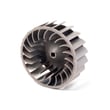
- Check blower airflow (a damaged wheel can reduce airflow; see dryer blower wheel WP697772)
Last updated: February 2026
What is the life expectancy of a Whirlpool dryer?
A Whirlpool dryer like model WED6620HC0 typically lasts about 10 years with normal household use. With consistent vent cleaning, correct installation, and timely replacement of wear parts, many dryers reach 12 to 15 years before major repairs become more common.
- Airflow and venting: Restricted venting overheats components and shortens life.
- Installation conditions: A level floor helps the drum tumble correctly and helps sensor cycles work properly.
- Load size and frequency: Overloading and multiple loads per day increase wear.
- Maintenance habits: Lint removal and periodic deep cleaning reduce strain on the motor and heater.
- Wear parts condition: Rollers, idler pulley, and blower wheel wear gradually and get noisy before failing.
| Usage pattern | Typical life expectancy | What usually fails first |
|---|---|---|
| Light use (1 to 3 loads/week) | 12 to 15 years | Belt and drum support parts |
| Average use (4 to 7 loads/week) | About 10 years | Heating and airflow-related parts |
| Heavy use (multiple loads/day) | 7 to 9 years | Motor, rollers, idler pulley |
Use these steps as a simple maintenance plan:
- Clean the lint screen every load; keep the housing clear.
- Check vent airflow regularly and keep the vent run as short and smooth as possible.
- Keep the dryer level; an uneven dryer can tumble poorly and affect automatic sensor cycles (see the WED6620HC0 installation guide).
- Avoid overloading; heavy loads stress the drum support system.
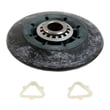
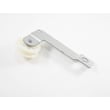
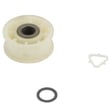
- If you hear squealing or thumping, address it early; common wear items include the dryer drum support roller WPW10314173 and the dryer idler pulley W10837240.
A dryer that is vented correctly and kept level runs cooler, dries faster, and puts less stress on the heating system and drive components. That directly improves reliability and helps you avoid repeat breakdowns.
Last updated: February 2026
What are the common problems with whirlpool dryers?
Common Whirlpool dryer problems (including Whirlpool model WED6620HC0) are: the dryer will not start, the drum turns but there is no heat, long dry times from poor airflow, and unusual noises from worn drum support parts. Our WED6620HC0 owner’s manual troubleshooting section helps you match symptoms to the right fix.
- Won’t start: power issue, door not fully closed, Start/Pause not engaged, or a control problem
- Runs but won’t heat: tripped breaker or blown fuse (electric models need full 240 V), gas valve closed (gas models)
- Takes too long to dry: restricted venting, lint buildup, crushed duct, or weak airflow
- Unusual noises (thumping, humming, squealing): drum rollers, idler pulley, blower wheel, or belt wear
- Odors: fumes in the room (paint, stain, varnish) or steam-water hookup issues on steam models
- Confirm power: reset the breaker(s). Electric dryers typically need two breakers/fuses for full heat.
- Check airflow: clean the lint screen; inspect the vent run for kinks, clogs, or long runs.
- Verify settings: try a timed dry cycle to rule out sensor-cycle behavior.
- Listen for the noise type: thump (flat spots), squeal (idler/rollers), rumble (rollers), roar (blower wheel).
- Steam models: confirm the water supply is on and the inlet hose is connected at the faucet and dryer.
| Symptom | Common part involved | Example part for this model |
|---|---|---|
| Squealing, rumbling, thumping | Drum support system | Dryer drum support roller WPW10314173 |
| Squealing, belt slack | Belt tension system | Dryer idler pulley W10837240 |
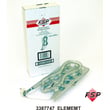
| No heat (after power/airflow checks) | Heating circuit components | Dryer heating element WP3387747, thermal fuse W10909685 |
| Loud roaring, weak airflow | Blower system | Dryer blower wheel WP697772 |
Dryer issues often start as airflow or power problems; fixing those first prevents repeat failures (especially overheating that can open a thermal fuse) and keeps dry times and energy use under control.
Last updated: February 2026