 Owner’s manual
 Error Codes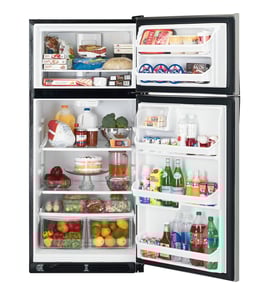



What are the disadvantages of a top mount fridge?
A top-mount refrigerator like Kenmore model 11161205712 is usually affordable and efficient, but the main tradeoffs are convenience and organization: fresh-food items sit lower (more bending), freezer access is higher, and you typically get fewer premium storage and dispenser features than on many bottom-freezer designs.
Common disadvantages you may notice
- More bending for daily use: the refrigerator compartment is below the freezer, so produce, drinks, and leftovers often require bending.
- Less “grab-and-go” organization: many top-mount layouts have fewer adjustable bins, deli drawers, and wide pantry-style storage than some bottom-mount models.
- Fewer built-in features: through-the-door water and ice are less common on top-mount units.
- Freezer can feel cramped: top freezers often have less usable space for bulky items.
- Temperature swings from frequent freezer use: opening the top freezer repeatedly can affect airflow and consistency, especially if vents get blocked.
How to decide if a top-mount is still the right fit
Top-mount refrigerators work best when you prioritize reliability, simpler design, and value. For this Kenmore model, the manual lists a compact footprint and capacity that fits many kitchens.
| What you care about most | Top-mount typically delivers | You may prefer another style if you want |
|---|---|---|
| Budget and simplicity | Strong | Premium storage features and convenience |
| Ergonomics | Fair | Fresh food at eye level |
| Dispensers | Limited | Built-in water and ice access |
Tips to reduce the downsides
- Put everyday items (milk, snacks) on the top refrigerator shelf to reduce bending.
- Keep air vents clear in both compartments to maintain steady cooling.
- Use clear bins to group items (deli, breakfast, leftovers) for faster access.
- If you have an ice maker, follow the water pressure and setup guidance in the owner's manual.
Why it matters
Most people open the fresh-food section far more than the freezer. With a top-mount design, that means comfort and organization can matter more day-to-day than total capacity.
Last updated: February 2026
Can you still get parts for Kenmore refrigerators?
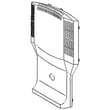
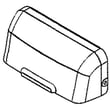
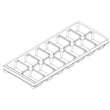
Yes. You can still get replacement parts for Kenmore refrigerators, including the Kenmore 11161205712 top-mount refrigerator, by shopping parts by model number and matching the exact component you need (such as shelves, door gaskets, or ice maker-related parts) to your unit.
How to make sure you order the right part
Use your refrigerator’s model number (11161205712) and confirm the part’s location and description before ordering.
- Find the model and serial label (commonly inside the fresh food compartment).
- Use the parts diagrams to identify the exact part name and position.
- Compare your original part’s markings (numbers, connector style, shape) to the listing.
- If you are replacing a water filter, match the filter type listed for your unit.
- If you are troubleshooting first, check for any displayed error codes and symptoms.
Common Kenmore refrigerator parts people replace
These are frequent wear items and problem-solvers on top-mount refrigerators like model 11161205712:
| Part type | What it affects | Common symptom |
|---|---|---|
| Door gasket (seal) | Temperature stability, frost control | Warm temps, condensation, frost |
| Evaporator fan | Airflow to refrigerator section | Freezer cold, fridge warm |
| Defrost components | Frost management | Heavy frost on back wall |
| Water filter (if equipped) | Water taste, ice quality | Slow flow, bad taste/odor |
Why it matters
Using the correct model-specific part helps restore proper cooling, airflow, and door sealing. It also prevents repeat failures caused by mismatched components or incorrect fit.
For model-specific part identification and diagrams, use the owner's manual. For troubleshooting by code on Kenmore 111 units, use Kenmore 111 model top freezer refrigerator error codes.
Last updated: February 2026
Can I buy extra fridge shelves?
Yes. For your Kenmore 11161205712 top-mount refrigerator, you can buy additional shelves, but the correct choice depends on the exact shelf position and mounting style used in your cabinet. Use the 11161205712 owner's manual to identify the shelf locations and style before ordering.
How we match the right shelf for model 11161205712
Because shelves vary by position (upper, middle, crisper cover, freezer shelf) and by mounting points, we match using your model number plus the shelf’s physical details.
- Identify the compartment: refrigerator section vs. freezer section
- Identify the position: top, middle, bottom, or crisper cover
- Check the mounting style: side rails, rear hooks, or molded supports
- Measure the shelf: width and depth (front to back)
- Note the shelf type: glass, wire, or door bin
What to check before you order
| Check | What to look for | What it prevents |
|---|---|---|
| Shelf position | Upper, mid, crisper cover, freezer | Ordering a shelf shaped for a different spot |
| Mounting points | Tabs, hooks, rails, supports | Shelf not seating or locking in place |
| Dimensions | Width and depth | Door interference, wobble, poor fit |
| Shelf style | Glass vs. wire | Airflow and cleaning differences |
Why it matters
A shelf that does not match the mounting points for the Kenmore 11161205712 can sit crooked, rattle, block airflow, or keep the door from sealing, which affects cooling performance and food stability.
Safety note
Handle shelves carefully and do not force tools into the liner. This refrigerator uses R600A flammable refrigerant; avoiding punctures protects internal tubing.
Last updated: February 2026
Which is better, top mount or bottom mount refrigerator?
A top-mount (top-freezer) refrigerator is better when you want a simpler layout, easier freezer access, and typically lower purchase and repair costs; a bottom-mount is better when you want fresh-food items at eye level and less bending. For Kenmore model 11161205712, use the 11161205712 owner's manual to confirm your exact features and fit requirements.
Quick comparison
| Feature | Top-mount (freezer on top) | Bottom-mount (freezer on bottom) |
|---|---|---|
| Best everyday access | Freezer | Fresh food |
| Ergonomics | More bending for fridge items | Less bending for fridge items |
| Organization | Straightforward shelves and bins | More drawers and baskets in freezer |
| Typical cost | Usually lower | Usually higher |
| Common maintenance | Simpler storage hardware | More rails, slides, and drawer parts |
How we recommend choosing
- Choose top-mount if you use frozen foods daily and want the freezer at a comfortable height.
- Choose bottom-mount if you cook often and want the refrigerator section at eye level.
- Choose top-mount if you prefer fewer complex drawer systems and simpler cleaning.
- Choose bottom-mount if you want more freezer drawer organization and easier sorting.
- For either style, measure your cabinet opening and plan for door-swing clearance and ventilation.
Model-specific notes for Kenmore 11161205712
This model is a top-mount design, so it naturally prioritizes freezer access and a simpler, space-efficient layout. For planning and installation, rely on the specifications listed in the 11161205712 owner's manual (dimensions, electrical requirements, and any ice maker or water connection details). We do not use third-party capacity claims when comparing mount styles.
Why it matters
Mount style changes how often you bend and reach, how you organize groceries, and how well the refrigerator fits your kitchen workflow, especially for families that use either the freezer or fresh-food section more heavily.
Last updated: February 2026
How to tell cubic feet of Kenmore refrigerator by model number?
For Kenmore model 11161205712, the capacity shown in the specifications section of the owner’s manual is 14.2 cu. ft. The most reliable way to get cubic feet is to read the published specs for your exact model in the 11161205712 owner's manual, not to decode the model number.
Best ways to find cubic feet for your exact Kenmore model
Use these options in order; they give the most accurate result for the refrigerator you own.
- Check the specifications page in the 11161205712 owner's manual
- Look for a rating/spec label inside the fresh food compartment (often on a side wall)
- Use the full model number (11161205712) when comparing specs so you stay in the correct series
- If you see separate compartment volumes, use the total capacity (refrigerator plus freezer)
Quick estimate if you cannot access the specs
Measuring the interior gives a close estimate, but it will not match the rated capacity exactly.
- Measure interior width, height, and depth in inches
- Multiply:
W × H × Dto get cubic inches - Divide by 1728 to convert to cubic feet
- Expect a lower number because shelves, ducts, and contours reduce usable space
| Method | What you get | When to use it |
|---|---|---|
| Manual specifications | Rated capacity (most accurate) | Comparing models, documentation |
| Interior measurement | Approximate usable volume | Rough sizing, organizing |
Why the model number usually does not “encode” cubic feet
Kenmore model numbers identify the platform and feature set. Capacity can vary within a series due to insulation thickness, liner shape, and freezer design, so the published specifications are the dependable source.
Why it matters
Knowing cubic feet helps you compare refrigerator sizes accurately, plan food storage, and match the correct documentation and parts diagrams to your Kenmore refrigerator.
Last updated: February 2026





