Owner’s manual
 Error Codes


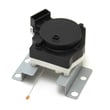
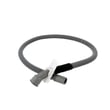
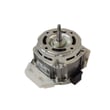
What are the most common issues with WA40J3000AW?
The most common issues we see on the Samsung WA40J3000AW top-load washer are draining problems, out-of-balance shaking during spin, lid lock or lid switch symptoms, and fill or control problems. Many of these tie directly to wear parts like the drain pump, suspension rods, and lid lock.
Common problems and what they usually point to
- Won’t drain or drains slowly: clogged coin trap, kinked drain hose, failing drain pump or pump motor
- Loud banging or walking during spin: worn suspension rods, unbalanced load, washer not level
- Won’t start or stops mid-cycle: lid lock not engaging, lid switch magnet issue
- Won’t fill or fills slowly: water inlet valve issue, supply valves not fully open, inlet screens clogged
- Noisy operation or weak agitation/spin: drive belt wear, clutch wear
Quick checks you can do first
- Unplug the washer for safety.
- Confirm the washer is level; adjust legs if needed.
- Run a smaller, evenly distributed load to rule out loading issues.
- Check the drain hose for kinks and verify the standpipe is not backing up.
- Look up any displayed error code and follow the diagnostic steps in the owner's manual.
Parts that commonly solve these symptoms
| Symptom | Likely part to inspect | Example part on this model page |
|---|---|---|
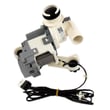
| Not draining | Drain pump, coin trap, drain hose | Washer drain pump assembly dc97-19289f, washer pump coin trap DC61-03385A |
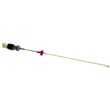
| Shaking/banging | Suspension rods, leveling legs | Samsung washer suspension rod DC97-05280W, washer leveling leg DC61-01722B |
| Won’t lock/start | Lid lock, lid switch magnet | Washer lid lock assembly DC34-00025E, washer lid switch magnet DC61-03184A |
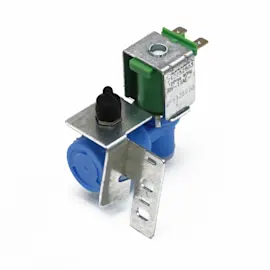
| Fill problems | Water inlet valve | Washer water inlet valve assembly DC62-00311F |
Why it matters
Catching the root cause early prevents secondary damage, such as a failing drain pump overheating, a loose tub stressing the cabinet, or repeated out-of-balance spins wearing suspension components faster.
For error-code driven troubleshooting, use our Samsung top load washer error codes guide alongside the manual.
Last updated: March 2026
What is the average lifespan of WA40J3000AW?
A Samsung top-load washer like model WA40J3000AW typically lasts 11 years with normal household use. Consistent cleaning, correct loading, and fixing drain or vibration problems early helps you reach that lifespan without premature wear.
Typical lifespan and what affects it
- Usage: multiple loads per day shortens life compared to a few loads per week
- Load habits: chronic overloading strains the drive system and suspension
- Water quality: hard water increases residue buildup and component wear
- Maintenance: keeping the tub and drain path clean reduces pump stress
- Early repairs: replacing worn parts prevents secondary damage
For model-specific care and cycle guidance, follow the WA40J3000AW owner's manual.
Quick maintenance checklist (best payoff)
- Run a monthly cleaning cycle (or hot wash) to reduce detergent and soil buildup
- Use HE detergent and measure carefully to prevent oversudsing
- Keep the washer level; recheck the feet if it starts walking or banging
- Check pockets to reduce clogs and protect the drain system
- Leave the lid open between loads to help the tub dry
Parts that commonly impact lifespan
If performance changes, these are frequent wear or failure points on top-load washers:
| Symptom | Likely area | Example part on this model |
|---|---|---|
| Won’t drain, drains slowly | Drain pump, hoses, coin trap | Washer drain pump assembly dc97-19289f |
| Loud banging, off-balance | Suspension | Samsung washer suspension rod DC97-05280W |
| Lid won’t lock or won’t start | Lid lock | Washer lid lock assembly DC34-00025E |
Why it matters
Knowing the expected 11-year lifespan helps you decide whether to maintain, repair, or plan replacement. On WA40J3000AW, addressing draining and out-of-balance issues early protects the tub, motor, and control components from extra stress.
Last updated: March 2026
What is the capacity of the Samsung washer model WA40J3000AW?
The Samsung washer model WA40J3000AW is a top-load washer with about 4.0 to 4.2 cu. ft. capacity (typical for this model family). For the exact rated capacity for your specific unit, we recommend confirming it in the WA40J3000AW owner's manual.
How to confirm the exact capacity on your washer
Use these quick checks to match the spec to your exact unit configuration:
- Look for the full model tag (often includes a suffix like /AA) under the lid or on the rear panel
- Compare the model tag to the model shown in the WA40J3000AW owner's manual
- Check the manual’s “Specifications” section for “Capacity” or “Tub capacity”
- If you are comparing to another washer, confirm both are top-load or both are front-load (capacities are often listed differently)
- Use capacity only as a guide; load size still depends on fabric type and cycle selection
Typical capacity range and what it means
Because the manual excerpt is not included here, we use the common published range for this Samsung top-load platform.
| Capacity (cu. ft.) | What it typically fits | Best for |
|---|---|---|
| ~4.0 | Medium to large loads | Everyday mixed laundry |
| ~4.2 | Large loads | Towels, jeans, bedding (not overpacked) |
Why it matters
Capacity affects cleaning and spin performance. Overloading a 4.0 to 4.2 cu. ft. washer can cause poor agitation, out-of-balance spinning, and extra wear on suspension components such as the suspension rods.
Last updated: February 2026