Owner’s manual
 Error Codes


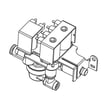
Is it really necessary to replace a refrigerator water filter?
Yes. For the Samsung RF28HMEDBSR refrigerator, replacing the water filter on schedule is necessary to keep water tasting clean, maintain normal dispenser flow, and reduce sediment buildup that can strain the dispenser system over time. Most households replace the filter about every 6 months.
What happens if you do not replace it
A clogged or exhausted filter can cause performance and water-quality issues, including:
- Slower water dispensing or weak flow at the door
- Bad taste or odor (filter media is saturated)
- Cloudy water from trapped sediment breaking through
- Reduced ice production if fill flow drops
- Extra load on the water filter housing and valves
When to replace the filter (typical guidance)
Use time plus symptoms. Even if a filter light is time-based, it is still a good replacement trigger.
| Situation | Replace the filter? | Why |
|---|---|---|
| 6 months of normal use | Yes | Typical carbon filter capacity is used up |
| Water flow slows down | Yes | Filter is restricting flow |
| Taste or odor returns | Yes | Filtration media is saturated |
| After plumbing work or water outage | Yes | Sediment can plug the filter quickly |
For model-specific filter location and the exact reset steps for your control panel, follow the RF28HMEDBSR owner's manual.
Tips to get the best results after a filter change
- Dispense and discard several minutes of water to flush carbon fines
- Dump the first bin of ice after replacement (helps clear air and residue)
- Check for leaks at the filter seating area and housing
- Keep the filter fully seated; partial engagement can reduce flow
- If the filter light stays on, use the correct reset sequence for this model
For step-by-step visuals and common filter types, use our how to replace the water filter in a Samsung refrigerator guide.
Why it matters
A fresh filter protects water quality and helps your Samsung refrigerator’s dispenser and ice maker operate normally. Replacing it on time is one of the simplest ways to prevent nuisance issues like slow flow and poor-tasting water.
Last updated: February 2026
What are the dimensions of the Samsung RF28HMEDBSR AA?
The Samsung RF28HMEDBSR measures 35 3/4 in. wide and 70 in. high when measured with hinges, handles, and doors; depth depends on which configuration you use (handles and hinges change depth the most). For planning clearances and door swing, confirm the dimension set in the RF28HMEDBSR manual.
Dimensions you’ll see in specs (and what they mean)
Manufacturers list multiple WxHxD sets so you can plan installation, moving, and how far the refrigerator will project past counters.
- With hinges, handles, and doors: best for final installed footprint
- With hinge and door, no handle: useful if you remove handles
- Without hinges and door: best for moving through tight openings
- Clearance requirements: space needed for airflow and door swing
| Spec style | Width | Height | Depth | Best use |
|---|---|---|---|---|
| With hinges, handles, and doors | 35 3/4 in. | 70 in. | 36 1/2 in. | Installed footprint and counter projection |
| Without hinges and door | 35 3/4 in. | 68 7/8 in. | 29 3/8 in. | Moving through doorways and tight halls |
| With hinge and door, no handle | 35 3/4 in. | 70 in. | 34 in. | Planning if handles will be removed |
How we recommend measuring your space
Use these checks before delivery or moving the unit.
- Measure the cabinet opening width at front and back
- Measure height to the lowest soffit or cabinet trim
- Measure depth from the back wall to the counter front edge
- Allow room for door swing and freezer drawer pull-out
- Leave airflow clearance as specified in the RF28HMEDBSR manual
Why it matters
Depth is the most common fit issue on French door and bottom-mount refrigerators; handles, hinges, and required airflow clearance determine whether doors open fully and whether the cabinet sits where you expect.
Last updated: February 2026
Why is my Samsung bottom freezer not freezing?
If your Samsung RF28HMEDBSR bottom freezer is not freezing, the most common causes are warm air leaking past the door seal, heavy frost blocking airflow, or a cooling-system issue such as a failed evaporator fan, sensor, or compressor. Start with temperature and airflow checks, then move to parts testing using the RF28HMEDBSR owner's manual.
Quick checks we recommend first
- Confirm the freezer is set near 0°F (typical target for most refrigerators).
- Make sure vents are not blocked by food packages.
- Check the door closes fully; look for gaps, torn gasket areas, or a door that sits crooked.
- Listen for the evaporator fan in the freezer area; no fan sound often means no airflow.
- Look for heavy frost on the rear freezer panel (a sign of a defrost or airflow problem).
- Verify the condenser area is not packed with dust (restricted heat removal reduces freezing).
What the symptoms usually point to
| What you notice | Most likely issue | What to do next |
|---|---|---|
| Freezer warm, fridge section also warming | Sealed system or compressor not running efficiently | Check for compressor sound and run time; consider professional service |
| Freezer warm, fridge still fairly cold | Airflow problem (fan, frost blockage, damper) | Inspect for frost and fan operation |
| Frost/ice sheet on back freezer wall | Defrost failure or airflow restriction | Defrost fully, then troubleshoot fan/sensors |
| Temps swing, unit runs oddly | Temperature sensing/control issue | Test/replace sensor or control board |
Parts that commonly cause “not freezing” on this model
These are model-matched parts we see involved in no-freeze complaints:
- Refrigerator temperature sensor DA32-10104N (bad readings can prevent proper cooling)
- Refrigerator temperature sensor DA32-00033C (another sensor used in temperature control)
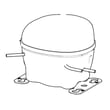
- Samsung refrigerator compressor MKV190CL2BASH (weak or failed compressor reduces freezing)
Why it matters
A freezer that cannot hold 0°F can lead to food spoilage and forces the refrigerator to run longer, which increases wear on the compressor, control boards, and fans.
Related DIY help
If the issue started with ice production problems or icing around the ice room, follow why your Samsung fridge stopped making ice and how to fix it because ice-room airflow and freezing problems often overlap.
Last updated: February 2026