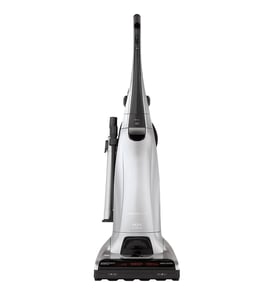


Why is my Kenmore 11635923502 upright vacuum brush not spinning?
If the brush roll on your Kenmore 11635923502 upright vacuum is not spinning, the most common causes are a jammed brush roll (hair, string, debris), a worn or broken drive belt, or a brush roll that is seized from worn end bearings. Less often, the powerhead drive motor or its wiring is the issue.
Quick checks (fastest fixes first)
- Unplug the vacuum and lay it down so you can access the brush area.
- Remove hair and string from the brush roll and end caps; make sure the brush turns by hand.
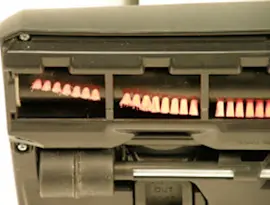
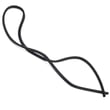
- Check the belt for cracks, glazing, stretching, or a loose fit on the motor shaft.
- Look for a clog in the nozzle or base that can overload the brush and stop it.
- Confirm the height setting is not too low for thick carpet (it can stall the brush).
- If your model has a brush on/off control, make sure it is set to “on.”
What the symptoms usually mean
| What you notice | Most likely cause | What to do next |
|---|---|---|
| Brush roll is hard to turn by hand | Debris jam or seized bearings | Clean thoroughly; replace brush roll if it still binds |
| Brush roll spins sometimes, then stops | Belt slipping or stretched | Replace the belt and recheck brush roll freedom |
| Motor runs but brush never moves | Broken belt or stripped belt path | Inspect belt routing and replace belt |
| Vacuum shuts off when brush is engaged | Brush jam or motor overheating | Clear jam; check for clogs; let it cool and retest |
How we recommend diagnosing it safely
- Spin test: With the vacuum unplugged, rotate the brush roll by hand. It should spin smoothly with light resistance.
- Belt inspection: Remove the bottom plate and inspect the belt. A belt that looks intact can still be too stretched to drive the brush.
- Load test: After cleaning and reassembling, run the vacuum briefly on a hard floor. If the brush still does not spin, focus on the belt/brush roll fit and the drive motor circuit.
Why it matters
A non-spinning brush roll reduces carpet agitation, so pickup drops fast. Continuing to run the vacuum with a jammed brush can overheat the belt and stress the drive motor, turning a simple belt or brush roll fix into a bigger repair.
For step-by-step visuals and troubleshooting paths, use our DIY resources like vacuum brush roll on spinning and how to replace a vacuum beater bar.
Last updated: February 2026
Why is my Kenmore vacuum not suctioning?
Loss of suction on a Kenmore upright vacuum like model 11635923502 is almost always caused by restricted airflow: a full bag or bin, clogged filters, a blockage in the hose or nozzle, or a poor seal at the canister or hose connections. Restoring airflow restores suction.
Quick checks that fix most suction problems
- Empty the dust cup or replace the bag (even if it is not completely full).
- Clean or replace the pre-motor filter and any exhaust or HEPA-style filter.
- Check the hose, wand, and nozzle throat for a clog (coins, socks, hair clumps).
- Inspect the floor nozzle and brush area for packed debris that blocks the air path.
- Reseat the dust cup or bag door so it fully latches and seals.
- Check for cracks or loose fittings in the hose that can leak air.
Step-by-step airflow test (fast way to find the restriction)
- Turn the vacuum off and unplug it.
- Remove the hose and look through it end-to-end; clear any obstruction.
- Check the nozzle intake and the path up into the body for a blockage.
- Reinstall everything tightly, then test suction at:
- the hose handle
- the base/nozzle
If suction is strong at the hose but weak at the nozzle, the restriction is usually in the base (nozzle channel, brush area, or internal duct).
Common causes and what you’ll notice
| What’s wrong | Typical symptom | What to do |
|---|---|---|
| Clogged filter | Motor sounds higher pitched, weak pickup | Clean or replace filters |
| Blocked hose/nozzle | Sudden suction loss | Remove clog |
| Poor seal (cup/door/hose) | Whistling or air leak sound | Reseat and latch parts |
| Full bag/bin | Gradual loss of pickup | Replace bag or empty bin |
Why it matters
Suction depends on steady airflow through the filters, hose, and nozzle. When airflow is restricted, the vacuum cannot lift debris effectively and the motor can run hotter than normal.
For model-specific repair walkthroughs and symptom-based troubleshooting, use our vacuum not suctioning well guide.
Last updated: February 2026
How to change the belt on a Kenmore vacuum?
To change the belt on your Kenmore upright vacuum model 11635923502, we unplug the vacuum, remove the nozzle base cover, lift out the brush roll, swap the belt from the motor shaft to the brush roll, then reassemble and test for smooth brush rotation.
Before you start
- Unplug the vacuum (never service the nozzle while powered).
- Set the handle flat and work on a stable surface.
- Gather a Phillips screwdriver (some bases also use latches).
- Cut away hair and string from the brush roll so the new belt grips.
Belt replacement steps (typical Kenmore upright)
- Turn the vacuum over and remove the screws or release latches to take off the bottom plate.
- Lift the brush roll (beater bar) out; note how the end caps sit in the slots.
- Slide the old belt off the motor shaft, then off the brush roll.
- Loop the new belt around the motor shaft first.
- Stretch the belt over the brush roll and center it in the belt path.
- Reinstall the brush roll fully into its holders, then reinstall the bottom plate.
- Plug in and run 10 to 15 seconds; stop if you smell burning rubber or hear a loud squeal.
If the brush roll still will not spin
- Belt is twisted or riding off the motor shaft.
- Brush roll is not seated all the way in the holder slots.
- Debris is jammed in the nozzle opening.
- End caps are seized; the brush roll does not spin freely by hand.
| What you notice | Likely cause | Fix |
|---|---|---|
| Loud squeal | Belt misaligned | Reopen base, center belt |
| Burning rubber smell | Brush roll jammed | Clear jam, verify free spin |
| No brush movement | Belt off shaft or brush not seated | Reinstall belt, reseat brush |
Why it matters
The belt transfers motor power to the brush roll. Correct routing and a freely spinning brush roll prevent belt breakage and restore carpet cleaning performance.
For step-by-step visuals, use: how to replace a vacuum power head cogged drive belt.
Last updated: February 2026