Owner’s manual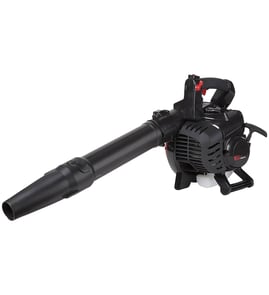




What is the best gas-powered leaf blower on the market?
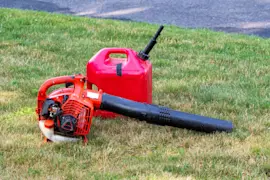
The “best” gas-powered leaf blower depends on whether you want maximum power, easier handling, or lower noise. For Craftsman model 358797120, our owner's manual confirms it is a 25cc 2-cycle blower rated at 185 MPH and 385 CFM, which is a strong benchmark for typical residential yard cleanup.
How to choose the best gas leaf blower for your needs
We recommend comparing these factors first, then matching them to how you actually use the blower.
- Air volume (CFM): Higher CFM moves more leaves and debris faster.
- Air speed (MPH): Higher MPH helps dislodge wet leaves and heavier debris.
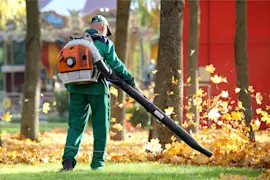
- Type: Handheld for lighter work; backpack for long sessions and large yards.
- Weight and balance: A few pounds makes a big difference over 20 to 40 minutes.
- Starting and fueling: 2-cycle mix requirements and starting system matter for convenience.
- Noise and neighborhood use: Plan to run at the lowest throttle that gets the job done.
Quick comparison: what “best” usually means
| If you want... | Best match | What to look for |
|---|---|---|
| Maximum productivity | Backpack blower | High CFM, comfortable harness, long run time |
| Best all-around homeowner choice | Mid-power handheld | Good CFM/MPH balance, manageable weight |
| Easier ownership | Simpler handheld | Straightforward maintenance, easy starting |
| Better neighbor-friendly use | Any blower used correctly | Lower throttle operation, reasonable hours |
Why it matters
Buying “too much blower” often means extra weight, more fuel use, and more noise than you need. Buying “too little blower” means longer cleanup time and frustration with wet leaves, mulch, and stuck debris.
A practical benchmark using your Craftsman 358797120
Your 358797120 is rated 385 CFM / 185 MPH in the manual, so when you compare other blowers, use that as your baseline. If you want a noticeable step up for bigger properties, prioritize higher CFM first, then MPH.
Last updated: February 2026
Why are gas-powered leaf blowers bad?
Gas-powered leaf blowers can be “bad” mainly because they create noise, blow dust and debris into the air, and can throw rocks or other hard objects that cause injury or property damage. For the Craftsman 358797120, our safety guidance focuses on safe operation, protective gear, and using the lowest throttle that still gets the job done (see the owner's manual).
What people usually mean by “bad”
Noise and neighborhood impact
Many complaints are about noise. The manual recommends operating at reasonable hours, limiting how many machines run at once, and using the lowest possible throttle speed to do the job.
Dust, debris, and air quality
Leaf blowers can stir up dust, sand, and fine debris. In dusty conditions, the manual recommends slightly dampening surfaces (when water is available) and wearing a respirator or face mask.
Safety risks from flying debris
A blower can pick up rocks, glass, wire, gravel, or sticks and throw them at high speed. That can injure the operator or bystanders and can break windows or damage vehicles.
How to reduce the downsides (practical steps)
- Wear eye protection marked Z87 and sturdy footwear.
- Inspect the area first; remove rocks, glass, wire, and other hard objects.
- Keep children, pets, open windows, and vehicles out of the blow path.
- Aim the air stream away from people, animals, glass, and solid objects.
- Use the full nozzle extension so you can work close to the ground.
- In dusty conditions, dampen the surface and wear a respirator or face mask.
Quick reference: concern vs. what to do
| Concern | What helps most | What to check first |
|---|---|---|
| Too loud | Use lowest effective throttle; limit run time | Local quiet hours; your work schedule |
| Too dusty | Lightly dampen surfaces; wear a mask | Surface condition (dry sand, gravel, dust) |
| Debris flying | Clear the area; direct airflow safely | Rocks, glass, wire, loose gravel |
| Unsafe operation | Use proper tubes/attachments; keep intake clear | Blower tubes installed; vents not blocked |
Why it matters
Reducing dust, noise, and flying debris protects your eyes and lungs, helps prevent property damage, and makes the blower safer to use around neighbors, pets, and vehicles.
Last updated: February 2026
Are gas leaf blowers being phased out?
Yes. Gas leaf blowers are being phased out in many areas through local rules that restrict when or where they can be used, and some places also restrict new sales. Your Craftsman model 358797120 can still be maintained and repaired; always follow the safety and operating guidance in the owner's manual.
What “phased out” usually means
Most phase-outs focus on use restrictions (noise and emissions) rather than immediately making existing blowers illegal everywhere.
Common approaches include:
- Seasonal or time-of-day limits (often aimed at noise)
- Restrictions for commercial landscaping use first, then residential
- Requirements to switch to electric equipment by a certain date
- Limits on new gas equipment sales (existing units may still be used)
- Enforcement through nuisance or noise ordinances
What to do if you already own a Craftsman 358797120
Keeping a gas blower running cleanly and safely reduces smoke, hard starting, and fuel system problems.
We recommend:
- Mix fuel correctly; this model uses a 40:1 gas-to-2-cycle-oil ratio (3.2 oz oil per 1 gallon gas)
- Fuel outdoors only; wipe spills and move at least 10 feet away before starting
- Inspect for loose or damaged parts before each use
- Replace cracked or leaking fuel lines (common on older blowers)
- Keep the air intake area clear so debris is not pulled in and thrown
Parts that commonly help with emissions and drivability
If your blower smokes, surges, or won’t stay running, these parts are often involved:
| Symptom | Common cause | Example part for this model |
|---|---|---|
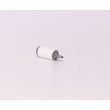
| Hard starting, stalls at idle | Restricted fuel flow | Engine fuel filter 530095646 |
| Fuel smell, wet lines, won’t prime | Cracked fuel line | Fuel line, small 530069247 or fuel line, large 530069216 |
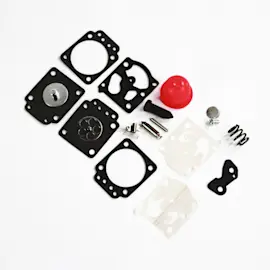
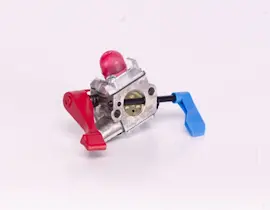
| Runs poorly even with fresh fuel | Fuel metering issue | Carburetor 530071775 |
Why it matters
Local restrictions can change how and when you can use a gas blower, but maintenance still matters either way. A properly fueled and sealed fuel system helps your Craftsman 358797120 start easier, run cleaner, and avoid leaks that create safety and performance problems.
Last updated: February 2026
What is the life expectancy of a gas leaf blower?
A gas leaf blower like the Craftsman 358797120 typically lasts about 8 to 10 years with normal homeowner use and consistent maintenance. Regular tune-ups, clean fuel practices, and on-schedule service (air filter, spark plug, fuel filter) are what most directly determine how long it keeps starting easily and running strong.
What most affects lifespan
- Fuel quality and mix ratio: This model uses a 40:1 gas-to-2-cycle-oil mix; incorrect mix can shorten engine life.
- Air filtration: A dirty air filter accelerates engine wear.
- Fuel system condition: Cracked fuel lines or a restricted fuel filter can cause lean running and hard starting.
- Cooling and exhaust: Keeping the muffler area clear and hardware tight helps prevent overheating issues.
- Storage habits: Old fuel left in the tank and carburetor is a common reason blowers “die early.”
Maintenance schedule to hit the high end of life expectancy
The Craftsman 358797120 manual calls out these intervals; following them is the simplest way to extend service life. See the owner's manual.
| Task | When to do it | Why it matters |
|---|---|---|
| Check for loose fasteners/parts | Before each use | Prevents vibration damage and air leaks |
| Inspect for damaged/worn parts | Before each use | Catches small issues before they become failures |
| Clean unit and labels | After each use | Reduces overheating and debris buildup |
| Clean air filter | Every 5 hours of operation | Protects piston and ring from dust wear |
| Replace spark plug | Yearly | Restores easy starting and smooth running |
| Replace fuel filter | Yearly | Prevents fuel starvation and lean running |
Parts that commonly restore performance
If your blower is hard to start, surges, or stalls, these model-compatible parts are common fixes:
- Craftsman lawn & garden equipment engine fuel filter 530095646
- Poulan lawn & garden equipment fuel line, small 530069247
- Ayp lawn & garden equipment fuel line, large 530069216
Why it matters
Most “end of life” symptoms on a 2-cycle gas blower are actually fuel delivery or airflow problems. Keeping the 40:1 fuel mix correct and staying on the maintenance intervals helps the engine avoid premature wear and keeps the carburetor from gumming up.
Last updated: February 2026