Owner’s manual
 Error Codes


How to find model number on Kenmore?
On Kenmore model 79571604012, the model and serial number are printed on an identification label inside the fresh food (refrigerator) compartment, typically on the right-hand side wall. Use that label when ordering refrigerator parts or checking the correct Use & Care information in the 79571604012 owner's manual.
Look for a sticker or metal tag in one of these spots:
- Inside the refrigerator compartment on the right-hand side wall (most common)
- On an inside side wall near the crisper drawers
- On the ceiling of the fresh food compartment
- Inside the freezer compartment side wall (less common)
- Behind the base grille or kick plate (some designs)
Record both numbers exactly as shown on the label:
- Model number: identifies the exact design and parts list
- Serial number: helps match production changes and correct replacement parts
- Color code or suffix (if shown): can affect door bins, handles, and trim parts
| Label item | Example format | What it’s used for |
|---|---|---|
| Model number | 79571604012 | Matching diagrams and parts |
| Serial number | Letters and numbers | Production run identification |
| Color/suffix | May appear after model | Cosmetic part matching |
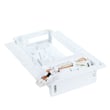
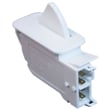
Kenmore model numbers can look similar across bottom-mount refrigerators, but small design changes affect fit and wiring. Using the exact model number helps us match the right parts the first time, such as the refrigerator door switch 6600JB1010A or the ice maker assembly.
Last updated: February 2026
How to tell if a Kenmore refrigerator compressor is bad?
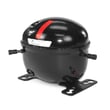
A bad compressor on Kenmore refrigerator model 79571604012 usually shows up as poor or no cooling even though the unit has power, often paired with repeated clicking/trying-to-start sounds or a compressor that runs hot and never stabilizes temperatures. Use the checks below to separate normal operating sounds from a true sealed-system problem.
- Confirm the refrigerator is not in Demo (Demonstration) Mode; Demo Mode disables cooling.
- Listen for normal “new refrigerator” sounds (pulsing, gurgling, fan airflow) versus repeated start-clicks.
- Make sure doors are closing fully and the door switch is working (lights should respond correctly).
- Check for airflow issues: blocked vents, heavy frost, or a stalled evaporator fan.
- Clean dust from the condenser area; dirty coils can mimic compressor trouble.
For model-specific operating notes and troubleshooting steps, use the 79571604012 owner's manual.
A compressor is more likely at fault when you see cooling failure plus start/run symptoms, such as:
- Refrigerator and freezer both warm, and temperatures do not recover after several hours.
- Repeated clicking every few minutes (start device trying and failing).
- Compressor shell is very hot to the touch while cooling is still poor.
- Compressor is silent most of the time (not running) even though fans and lights work.
| What you hear | Often normal? | What it can mean |
|---|---|---|
| Pulsating or high-pitched hum while running | Yes | High-efficiency compressor running normally |
| Gurgling at cycle end | Yes | Refrigerant moving through the system |
| Repeated clicking with little/no cooling | No | Start device/overload issue or compressor not starting |
If the compressor is trying to start but cannot, these parts are commonly checked/replaced during diagnosis:
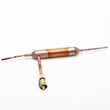
- Refrigerator compressor overload protector 6750CL0001D
- Condenser coil cleanliness and condenser fan airflow
- Electrical supply issues (outlet, breaker, cord)
A compressor issue is a sealed-system repair; misdiagnosing it can lead to replacing expensive parts unnecessarily. Ruling out Demo Mode, airflow problems, and condenser coil restrictions first saves time and helps target the real failure.
Last updated: February 2026
What are the most common problems with Kenmore refrigerators?
The most common problems we see on Kenmore refrigerators like model 79571604012 are cooling issues, water leaks, ice maker troubles, and unusual noises. Many of these come down to airflow being blocked, dirty condenser coils, door gasket leaks, or a failing fan or sensor; start with the checks in the 79571604012 owner's manual.
- Not cooling or warm temperatures: blocked air vents, dirty condenser coils, evaporator fan problems, or control settings needing time to stabilize (wait 24 hours after changes).
- Frost buildup or moisture issues: airflow restrictions, doors not sealing, frequent door openings.
- Water on the floor or puddles: a clogged/iced drain system (often tied to the drain tube) or excess condensation.
- Ice maker not making ice or bad-tasting ice: new installation (discard first batches), old ice, odors from unwrapped food, or water quality.
- Rattling or vibration: unit not level or floor is uneven.
- Make sure air vents are not blocked by food packages (blocked vents cause temperature and moisture problems).
- Give the refrigerator 2 to 3 hours at initial start-up before loading food.
- After adjusting temperature controls, wait 24 hours for temperatures to fully stabilize.
- Clean the condenser coils on the maintenance schedule in the manual.
- If lights go out, close doors for a second; some models shut lights off after about 7 minutes with the door open.
| Symptom | Common part area | Example part for 79571604012 |
|---|---|---|
| Warm fridge, weak airflow | Evaporator fan system | Lg refrigerator evaporator fan motor 4681JB1027C |
| Leaking or puddles | Drain system | Refrigerator drain tube 5251JA3003D |
| Clicking, won’t start, overheats | Compressor start protection | Refrigerator compressor overload protector 6750CL0001D |
Cooling and leak complaints often trace back to airflow and heat removal. Keeping vents clear and coils clean helps the compressor run efficiently, protects food temperatures, and reduces moisture that can lead to puddles and frost.
Last updated: February 2026
What is the average lifespan of a Kenmore Elite refrigerator?
A Kenmore Elite refrigerator typically lasts 12 to 15 years. For your Kenmore bottom-mount refrigerator model 79571604012, consistent cleaning, good airflow around the cabinet, and keeping the condenser coils clean are the most reliable ways to reach (or beat) that range; see the 79571604012 owner's manual.
Most refrigerators fail early because they run hot, run too often, or have airflow and sealing issues. These factors have the biggest impact:
- Dirty condenser coils causing longer run times
- Door gaskets not sealing, leading to warm air leaks
- Frequent door openings and overpacking that blocks air circulation
- Warm room temperatures that increase compressor run time
- Poor leveling that can cause vibration and stress over time
Use this simple cadence to protect the sealed system and cooling performance:
| Task | How often | Why it helps |
|---|---|---|
| Clean condenser coils | Every 6 to 12 months | Reduces compressor run time and heat load |
| Check door gasket seal | Every 3 to 6 months | Prevents temperature swings and frost issues |
| Confirm temps (37°F fresh food, 0°F freezer) | Monthly | Catches cooling problems early |
| Keep vents clear inside | Ongoing | Maintains proper airflow and even cooling |
These symptoms usually mean the refrigerator is working harder than it should:
- Compressor seems to run most of the day (especially after coils are cleaned)
- Food temperatures drift even after adjusting control settings
- Excessive frost or moisture that keeps returning
- Unusual rattling or vibration that leveling does not fix
- Repeated ice maker or dispenser performance problems
When a refrigerator runs longer to maintain temperature, it puts extra wear on major components like the compressor and fans. The manual notes that newer high-efficiency compressors can run a large portion of the time under normal conditions, and even more in warm conditions, so keeping coils clean and airflow clear helps prevent unnecessary run time.
Last updated: February 2026
What is the cubic foot of my Kenmore refrigerator model 79571604012?
Your Kenmore refrigerator model 79571604012 has a total capacity of 21.9 cubic feet. For the exact breakdown between fresh food and freezer sections (if listed for your specific configuration), we recommend checking the specifications section in the 79571604012 owner's manual.
| Item | Value |
|---|---|
| Model | 79571604012 |
| Refrigerator type | Bottom-mount (bottom freezer) |
| Total capacity | 21.9 cu. ft. |
Capacity is usually listed in the product literature, but you can also verify key identifiers on the unit itself:
- Look for the model and serial label inside the refrigerator compartment (commonly on the right-hand side)
- Match the model number exactly: 79571604012
- Use the model family reference shown in the manual (795.7160*) to confirm you are in the correct document
- If your unit has a color suffix in the model family, the capacity still applies to the base model series
Knowing the cubic feet helps when comparing replacement refrigerators, planning food storage space, and choosing organization parts such as door bins, drawers, and freezer baskets that fit your Kenmore 79571604012 correctly.
Last updated: February 2026
Why is my Kenmore refrigerator leaking water from the bottom?
A water leak from the bottom of your Kenmore refrigerator model 79571604012 is usually caused by a clogged or frozen defrost drain that overflows into the cabinet, or a small leak at the water supply connection feeding the ice maker and dispenser. Use the 79571604012 owner's manual to locate cleaning and troubleshooting guidance.
- Defrost drain clogged or frozen: Water from the defrost cycle cannot reach the drain pan and spills inside.
- Drain tube restricted: Sludge or ice in the tube can back water up and create a puddle.
- Water line connection seepage: A loose compression nut or fitting can drip and run to the front.
- Ice maker fill or supply issue: A slow leak can collect under the unit over time.
- Drain pan shifted or cracked: Less common, but can cause water to miss the pan.
- Unplug the refrigerator.
- Remove items from the freezer bottom area and look for ice or water near the rear panel.
- Melt ice in the drain area using warm water (a turkey baster works well); avoid overheating plastics.
- Flush until water flows freely to the drain pan.
- Clean the drain tube; if the tube is damaged or won’t clear, replace the refrigerator drain tube 5251JA3003D.
The manual’s water line section calls out checking for leaks at connections and tightening fittings as needed.
- Turn off the household water supply.
- Dry all fittings, then turn water back on and watch for drips.
- Tighten the compression nut slightly (do not overtighten).
- If you see corrosion, a cracked tube, or repeated seepage, replace the tubing/fitting.
| Symptom | Most likely source | Best next step |
|---|---|---|
| Water inside fridge, then puddle | Defrost drain | Thaw and flush drain |
| Puddle only when dispensing water/ice | Water line/fitting | Inspect and tighten connections |
| Puddle appears slowly over days | Small seep at supply or drain tube | Dry, observe, then repair |
Leaks can lead to ice buildup, odors, and floor damage. Clearing the defrost drain restores normal defrost drainage, and tightening water connections prevents ongoing seepage (the manual specifically advises checking for leaks at water line connections).
Last updated: February 2026
Why is my refrigerator not getting cold at the bottom?
If your Kenmore refrigerator model 79571604012 is warm at the bottom, the most common causes are restricted airflow (blocked vents or an iced-up return path), dirty condenser coils, or a weak evaporator fan. Start with airflow and temperature settings, then move to cleaning and fan checks using the 79571604012 owner's manual.
- Wait 24 hours after any control change; temperatures need time to stabilize.
- Make sure air vents are not blocked by food packages; blocked vents can keep cold air from circulating.
- Set temperatures one step colder and re-check after 24 hours (adjust refrigerator first, then freezer if needed).
- Clean dust and pet hair from the condenser area (dirty coils reduce cooling performance).
- Confirm the room temperature is within 55°F to 110°F; extreme temps can hurt cooling.
- Airflow inside the fresh food section: If the top feels cooler than the bottom, airflow is usually the issue (blocked vents, overpacked shelves, or frost restricting air return).
- Evaporator fan operation: If you do not hear a steady fan sound when the unit is running, the fan motor or blade can be the problem. For this model, common related parts include the lg refrigerator evaporator fan motor 4681JB1027C and refrigerator evaporator fan blade 5901JA1021A.
- Condenser heat removal: If the cabinet sides feel unusually hot and cooling is weak, inspect and clean the condenser area; a damaged coil can also reduce performance (see refrigerator condenser coil ACG73784701).
| Symptom | Most likely cause | Best first action |
|---|---|---|
| Bottom warm, top cool | Blocked vents or restricted air return | Clear vents, reduce overpacking |
| Both sections warm | Dirty condenser area or sealed system issue | Clean condenser area, verify controls |
| Warm fridge, freezer OK | Airflow problem or evaporator fan issue | Check fan sound and vent flow |
| Temps change slowly after adjustment | Normal stabilization time | Wait 24 hours between changes |
Bottom-mount refrigerators rely on controlled airflow from the freezer into the refrigerator. When vents are blocked or the fan cannot move air, cold air stays where it should not, and the lower refrigerator area warms up first.
Last updated: February 2026