Owner’s manual
 Error Codes



Is a bottom mounted refrigerator good?
Yes. A bottom-mount refrigerator like the Whirlpool WRF757SDHV00 is a strong choice because the fresh-food section sits at eye level for easier daily access, and the design typically delivers efficient, steady cooling (often with longer compressor run times that are normal for high-efficiency models). See the WRF757SDHV00 owner's manual for the features and normal operating sounds.
What you can expect from a bottom-mount design
- Less bending for everyday items stored in the refrigerator compartment
- Wide, easy-to-organize fresh-food space (common on French door bottom-mount models)
- Normal “new” sounds and longer run times from a high-efficiency compressor
- Strong temperature management; some models use separate evaporators for fridge and freezer climates
- Convenient in-door ice storage on many configurations
Pros and trade-offs (quick comparison)
| Feature | Bottom-mount (like WRF757SDHV00) | Top-freezer style |
|---|---|---|
| Fresh-food access | Easier (at eye level) | Requires more bending |
| Freezer access | Lower drawer; more bending | Easier (upper freezer) |
| Organization | Often more flexible shelving and drawers | Typically simpler layout |
| Cost | Often higher | Often lower |
When a bottom-mount is the best fit
- You use the refrigerator section far more than the freezer
- You want more fresh-food storage and flexible shelving for platters and trays
- You prefer in-door ice to free up shelf space
Why it matters
Refrigerator layout affects comfort and food quality. Bottom-mount models are built around how most households use a fridge daily, and the WRF757SDHV00 is designed for energy efficiency, which can mean longer, variable-speed compressor operation that is normal.
Last updated: February 2026
Do you remove cardboard from the bottom of a Whirlpool refrigerator?
No. On the Whirlpool WRF757SDHV00, any cardboard-like panel or cover at the bottom is there to protect and direct airflow around key components, so it should stay in place. Only remove loose shipping packaging; follow the disposal guidance in the owner's manual.
What to remove vs. what to leave
Remove only materials that are clearly packaging. Leave any fixed cover or panel attached to the refrigerator.
- Remove tape, foam blocks, plastic wrap, and corner protectors
- Remove cardboard spacers used to hold shelves and drawers during shipping
- Leave any screwed-on or clipped-on bottom cover/panel in place
- Leave rear lower covers in place (they protect components and airflow)
- If a piece is trapped under the cabinet, pull it out only if it is loose and not fastened
Quick check: is it packaging or a protective cover?
Use this simple guide before you pull anything off the bottom.
| What you see | Usually means | What we recommend |
|---|---|---|
| Loose cardboard sheet under the unit | Floor protection or shipping spacer | Slide it out and recycle it |
| Cardboard/fiberboard panel that is fastened | Protective airflow/component cover | Leave it installed |
| Metal panel with screws | Service/access cover | Leave it installed unless servicing |
Why it matters
That bottom cover helps protect wiring, the condenser area, and other refrigeration components. Removing it can reduce airflow control and increase the chance of damage during normal use or cleaning.
If you need to move the refrigerator
When pulling the WRF757SDHV00 out for cleaning or service, protect your flooring and move it straight out to avoid damage. The owner's manual includes safe moving guidance.
Last updated: February 2026
What is the most common problem with whirlpool refrigerators?
The most common Whirlpool refrigerator problems are cooling complaints (too warm, uneven temps) and ice maker issues (no ice, slow ice, clumping). On Whirlpool WRF757SDHV00, these symptoms usually trace back to airflow restrictions, temperature-sensing issues, door sealing problems, or water supply problems; start with the checks in the owner's manual.
Most common symptoms we see
- Refrigerator section too warm or freezing items
- Freezer too warm, soft ice cream, or thawing food
- Ice maker not making ice or making small/hollow cubes
- Water leaking inside the fresh food section or under the unit
- Unusual noises after installation or during normal cycling
Quick checks that fix many “common problems”
- Give it time after setup: After a new install or power loss, allow 24 hours for full cooling.
- Confirm controls are on: Make sure Cooling Off mode is not enabled.
- Reset the control initialization: Unplug the refrigerator for 5 seconds, plug it back in, then wait 30 seconds before opening doors or touching the control panel.
- Improve airflow: Do not block interior vents; avoid overpacking shelves.
- Check door closing and sealing: A poor seal can cause warm temps, frost, and long run times.
Parts that commonly relate to these problems
If the basic checks do not resolve the issue, these model-matched parts are often involved:
| Problem area | What it affects | Model-matched part to consider |
|---|---|---|
| Temperature sensing | Warm temps, erratic temps | Refrigerator thermistor W11724692 |
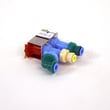
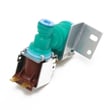
| Water supply to ice maker/dispenser | No ice, slow ice, no water | Refrigerator water inlet valve assembly WPW10341329 |
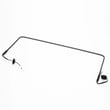
| Defrost system | Frost buildup, weak airflow, warming | Refrigerator defrost heater WP12729128 |
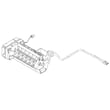
| Ice production | No ice or inconsistent harvest | Refrigerator ice maker W11658802 |
Why it matters
Cooling and ice maker problems often share the same root causes: restricted airflow, incorrect temperature feedback, or inconsistent water flow. Fixing the underlying cause prevents food spoilage, reduces frost buildup, and helps the compressor and fans run normally.
Last updated: February 2026
What is the bottom part of a refrigerator called?
On a Whirlpool WRF757SDHV00 bottom-mount refrigerator, the “bottom part” most people mean is the base area that houses the cooling system components (including the compressor) and the leveling hardware behind the base grille. For diagrams and feature locations, use the owner's manual.
Common names for the “bottom part”
Depending on what you’re looking at, the bottom area may be called one of these:
- Base grille: the front cover at the very bottom
- Machine compartment: the area behind/under the cabinet where major cooling components sit
- Compressor area: where the compressor and related parts are located
- Bottom hinge area: where door alignment hardware is accessed
- Brake feet and roller assemblies: the leveling and stability hardware under the front
What you can access at the bottom (WRF757SDHV00)
The Use & Care Guide describes the base grille covering the adjustable brake feet and roller assemblies at the bottom of the refrigerator.
| Bottom-area item | What it does | Where you’ll notice it |
|---|---|---|
| Base grille | Covers and protects lower components | Front, below the doors/freezer drawer |
| Brake feet | Stabilize the refrigerator so it does not roll | Front bottom, behind the grille |
| Rollers | Help move the refrigerator into position | Front bottom, behind the grille |
| Compressor (cooling system) | Pumps refrigerant to cool the refrigerator | Typically back/bottom area |
Why it matters
Using the right term helps you find the correct instructions and parts faster. For example, if you need to stop the refrigerator from rolling forward or improve door closing, you will be adjusting the brake feet behind the base grille, not the compressor.
Quick tips if you’re troubleshooting something “down low”
- If the refrigerator rolls when you open the door, check and adjust the brake feet.
- If doors look uneven, the alignment adjustment is accessed near the bottom hinge area.
- If you hear normal running sounds, a high-efficiency compressor can run for longer periods at varying speeds.
- If you’re removing the grille, pull it firmly toward you (with the freezer drawer open for access).
Last updated: February 2026