 Error Codes

Can you order parts directly from Bosch?
You can order replacement parts for your Bosch electric dryer model WTMC8330US from the model-specific parts list for this dryer on Sears PartsDirect. Using the exact model number helps match the correct diagram callout to the correct part so you get a proper fit.
Best way to make sure you get the right part
Using the exact model number (WTMC8330US) matters because Bosch often has multiple versions of similar dryers.
- Copy the model number exactly from the rating label (usually on the door opening or cabinet)
- Match the diagram callout number to the part description before ordering
- Compare your original part’s markings and mounting points
- Replace any damaged mounting hardware during the repair (screws, seals)
- If you are unsure, contact Sears PartsDirect support with your model number and the part description
When ordering from Sears PartsDirect is the better option
If you want a part that is already mapped to your dryer model, ordering through our model-specific parts list reduces guesswork.
| What you need | Ordering from the model parts list |
|---|---|
| OEM part availability | Often available |
| Model-specific fit help | Model page + part listing |
| Common hardware (screws, seals) | Available |
| DIY troubleshooting help | Strong DIY library |
Parts you may see listed for WTMC8330US
These are examples of parts that can appear on the WTMC8330US parts list; match by function and location before buying.
- Ntc 10010119 (temperature sensor used for heat control)
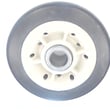
- Bearing 00618931 (supports drum or rotating components)
- Washer seal 00154165 (helps prevent air leaks and vibration noise)
Why it matters
Ordering the wrong dryer part can cause poor drying performance, overheating, noise, or repeat failures. Using the correct model number and a diagram-based match helps ensure the replacement part fits and performs correctly.
For electrical troubleshooting basics before you buy parts, use how to use a multimeter to test electrical parts video.
Last updated: March 2026
How to reset Bosch dryer series 6?
For a Bosch WTMC8330US electric dryer (Series 6 style), a “reset” is usually clearing an overheat condition and restoring airflow. Unplug the dryer for 2 minutes, then correct any venting or lint blockage before restarting; otherwise the dryer can trip again.
Quick reset steps (safe and effective)
- Unplug the dryer (or switch off the breaker) for 2 minutes.
- Clean the lint screen and the lint screen housing.
- Check the exhaust duct for kinks, crushing, or heavy lint buildup.
- If your model has a manual reset thermostat button on the heater housing, press it once (you may need to remove a panel to access it).
- Restore power and run a timed dry cycle for 5 to 10 minutes to confirm heat and airflow.
If it keeps tripping, check these first
Restricted airflow is the most common reason an electric dryer overheats and “needs a reset.” Focus on:
| What to check | What you’re looking for | What to do |
|---|---|---|
| Lint screen and chute | Lint film, packed lint | Wash screen with warm water, brush/vacuum chute |
| Vent ducting | Long runs, crushed flex, lint plugs | Shorten/straighten, replace crushed sections |
| Outside vent hood | Flapper stuck, lint mat | Clear obstruction, verify strong exhaust |
| Load size | Overloading reduces airflow | Dry smaller loads |
When a part is likely involved
If airflow is good but the dryer still shuts down or shows heat-related symptoms, a temperature sensor or overheat protection component may be failing. On this model, the temperature-sensing circuit can involve an NTC thermistor. If diagnostics point to that area, match the exact replacement by model.
- Consider checking the ntc 10010119 if you’re seeing temperature or heating control issues.
Why it matters
A dryer that repeatedly overheats can take longer to dry, shut off mid-cycle, and stress components like the heater and thermostats. Restoring proper venting and lint control is the fastest way to prevent repeat shutdowns.
For code-based troubleshooting, use our Bosch dryer error codes reference to interpret what the dryer is reporting.
Last updated: February 2026
What are the main parts of a dryer?
The main parts of a dryer (including the Bosch WTMC8330US electric dryer) are the drum system that tumbles clothes, the drive system that turns the drum, the heating and airflow system that moves warmed air through the load, and safety controls that prevent overheating.
Core dryer systems and parts
- Drum and supports: drum, rear bearing or support rollers, front glides or felt seal
- Drive system: drive motor, belt, idler pulley/tensioner
- Heating system (electric): heating element, high-limit thermostat, thermal cut-off, thermal fuse
- Airflow system: blower wheel, lint screen, duct/vent path (or condenser/heat exchanger on ventless designs)
- Controls and sensors: timer or control board, door switch, moisture sensor bars, thermistor (temperature sensor)
How these parts work together (quick map)
| Dryer function | What it does | Common parts involved |
|---|---|---|
| Tumble clothes | Rotates the drum | Motor, belt, idler pulley, drum support |
| Heat air | Raises air temperature | Heating element, thermostats, thermal fuse |
| Move air | Pushes air through drum | Blower wheel, lint screen, venting |
| Control dryness | Stops at target dryness | Moisture sensor, thermistor, control |
Parts you may see listed for WTMC8330US
Parts listings vary by diagram section, but common service items include sensors and hardware. For example, an NTC (thermistor) helps the dryer monitor temperature; see ntc 10010119 if you are diagnosing temperature-related drying problems.
Why it matters
Knowing the main parts helps you troubleshoot faster. For example, long dry times usually point to airflow (lint screen, venting, blower) while a no-heat complaint on an electric dryer often points to the heating circuit (element, thermostats, thermal fuse).
For symptom-based help, we recommend starting with Bosch dryer error codes.
Last updated: February 2026
What is error code 06 on a Bosch dryer?
Error code 06 (E06) on a Bosch electric dryer (including model WTMC8330US) indicates a fault in the heating circuit, meaning the dryer is not heating correctly or the control is detecting an unsafe heating condition.
What to do first (safe, quick checks)
- Power reset: Unplug the dryer (or switch off the breaker) for 2 minutes, then restore power.
- Confirm full power: Electric dryers need 240V; a tripped breaker can leave the dryer running but not heating.
- Clean airflow path: Clean the lint screen and check the exhaust duct for restrictions.
- Run a timed dry test: Try a 10 to 15 minute timed cycle to see if heat returns.
- Stop if you smell burning: Turn the dryer off and disconnect power.
What usually causes E06 (heating circuit fault)
Common causes on electric dryers include:
- Heating circuit wiring connection issue
- Temperature sensing problem (thermistor/NTC)
- Heater or heater relay/control issue
- Overheating from poor airflow (lint buildup, crushed vent)
Parts that may be involved
If troubleshooting points to temperature sensing, the NTC (thermistor) is a common suspect on many Bosch designs. For this model, see the ntc 10010119.
Quick symptom guide
| Symptom | What it often points to | Best next step |
|---|---|---|
| Drum turns, no heat | Power supply issue or heating circuit fault | Check breaker, then heating circuit diagnostics |
| Long dry times | Restricted airflow | Clean venting and lint areas |
| Heat starts then stops | Overheating protection triggered | Improve airflow; inspect sensors |
Why it matters
A heating circuit fault can cause no-heat, overheating, or repeated shutdowns. Addressing airflow and power first prevents unnecessary parts replacement and helps protect the heater and control.
For more model-specific code guidance, use our Bosch dryer error codes reference.
Last updated: February 2026
Where is the thermistor on a Bosch dryer?
On the Bosch WTMC8330US electric dryer, the thermistor is mounted on or very near the blower housing in the airflow path. You typically reach it by removing the rear panel, then locating the sensor at the front area of the base near the blower assembly (often a small probe-style sensor with two wires).
How to find it (quick access path)
- Unplug the dryer (or switch off the breaker) before removing any panels.
- Pull the dryer out far enough to work safely behind it.
- Remove the rear panel screws and lift the panel off.
- Look low and toward the front of the cabinet for the blower housing.
- Find the small temperature sensor attached to the housing or duct; it usually has a 2-wire connector.
- If you see an NTC-style sensor in that location, it is the thermistor.
What the thermistor does (and why location matters)
The thermistor (often called an NTC sensor) measures exhaust air temperature. Because it must read airflow temperature accurately, Bosch places it in the moving air stream near the blower housing, not up on the control panel.
Common symptoms when the thermistor area has a problem
| What you notice | Common cause near the thermistor/blower area |
|---|---|
| Long dry times | Restricted airflow, lint buildup, or a dirty blower housing |
| Overheating or shutting off | Poor airflow or a failing temperature sensor |
| Error code related to temperature | Thermistor/NTC circuit issue or wiring connection |
For model-specific error code meanings and what to check first, use our Bosch dryer error codes guide.
If you’re replacing the sensor
For this model, the thermistor is commonly listed as an NTC sensor. Match your original part by location and connector style, then use the exact replacement listed for your dryer, such as the ntc 10010119 when it matches your unit.
Why it matters
A correctly placed, working thermistor helps the control board regulate heat and cycle time. If it is loose, coated in lint, or electrically out of range, the dryer can under-dry, overheat, or throw temperature-related errors.
Last updated: February 2026
Why is my Bosch dryer not tumbling?
If your Bosch WTMC8330US electric dryer runs but the drum will not tumble, the most common causes are a broken or slipped drive belt, a failed motor, or a drum support issue (roller, bearing, or idler). Start with simple checks, then inspect the drive system.
Quick checks first (no tools)
- Make sure the door fully closes and the cycle actually starts (listen for the motor).
- Try spinning the drum by hand with the dryer off; heavy resistance points to a drum support problem.
- If you hear the motor running but the drum is still, suspect a belt or idler issue.
- If you hear a hum and the drum will not move, suspect a stuck drum, seized support, or weak motor.
What usually causes “no tumble”
| Symptom | Most likely cause | What to check |
|---|---|---|
| Motor runs, drum does not move | Belt off or broken | Look for slack belt, belt fragments, or a loose drum |
| Drum is hard to turn by hand | Drum support binding | Check drum rollers and rear support points for drag |
| Loud squeal or grinding before failure | Worn support | Inspect drum bearing surfaces and supports |
| Hums, then stops | Motor or jammed drum | Check for a seized drum or obstruction |
DIY troubleshooting steps (safe, practical order)
- Unplug the dryer (electric shock risk).
- Remove the top/front access as applicable and inspect the belt path around the drum and motor pulley.
- With the belt removed, spin the drum by hand:
- Spins freely: belt/idler or motor is most likely.
- Still stiff: drum support (roller/bearing) is most likely.
- Check for lint buildup or foreign objects rubbing the drum.
- If the drum support is noisy or rough, plan to replace the worn support parts.
Parts that can be involved on this model
Some WTMC8330US drum support and temperature-control related parts listed for this model include the bearing 00618931 and the ntc 10010119. Use your symptom to guide which parts to inspect first.
Why it matters
A dryer that will not tumble can overheat, wear the motor, and damage the drum or belt. Fixing the root cause (belt drive vs. drum support drag) prevents repeat failures and improves drying performance.
For error displays or blinking indicators that accompany the no-tumble issue, use Bosch dryer error codes to match the code to the most likely failure.
Last updated: February 2026





