Owner’s manual
 Error Codes


What is the most common problem with Samsung refrigerators?
Cooling complaints are the most common issue we see across Samsung refrigerators, including the Samsung RF18HFENBSP. In many cases, the root cause is restricted airflow from frost or ice buildup, a fan not moving air, or a sealed-system problem that shows up as warm temperatures in the fridge or freezer.
- Fresh food section is warm but freezer seems OK (or the reverse)
- Temperature display blinks or temps drift up after door openings
- Frost/ice buildup on the back wall or around vents
- Unusual fan noise, ticking, or louder-than-normal operation
- Ice maker slows down or stops because the freezer is too warm
Use the steps and temperature settings in the RF18HFENBSP user manual.
- Confirm the unit is not in Cooling Off (demo) mode
- Set temps to a normal baseline (about 38°F fridge, 0°F freezer)
- Make sure air vents are not blocked by food packages
- Verify doors seal and close fully; clean sticky gaskets
- Allow several hours after changes for temperatures to stabilize
| Symptom | Most likely area | What to do next |
|---|---|---|
| Frost/ice buildup, weak airflow | Defrost system or evaporator airflow | Defrost, clear vents, check fan operation |
| Freezer warm, no steady cooling | Sealed system or compressor issue | Consider professional diagnosis |
| Runs a lot, temps still high | Dirty condenser area or airflow restriction | Clean/vacuum and ensure clearance |
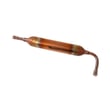
If testing indicates a compressor-related failure on this model, the compatible replacement is the refrigerator compressor MKV172CL2JSJ1.
Cooling problems can lead to food spoilage, excessive frost that blocks airflow, and extra wear on the compressor and fans. Catching airflow restrictions early often prevents bigger repairs.
Last updated: January 2026
What's the lifespan of a bottom freezer fridge?
A bottom freezer refrigerator like the Samsung RF18HFENBSP typically lasts 13 years with normal household use. Consistent temperatures, clean airflow (condenser area), and good door sealing do the most to extend service life and reduce major repairs.
- Condenser cleanliness and airflow: dust buildup makes the system run hotter and longer.
- Door gasket condition: air leaks cause longer run times and temperature swings.
- Room conditions: high ambient heat and tight clearances increase workload.
- Usage habits: frequent door openings and overpacking restrict air circulation.
- Power quality: repeated outages or surges can stress controls and the compressor.
| Refrigerator type | Typical lifespan | Notes |
|---|---|---|
| Bottom freezer (bottom-mount) | 13 years | Strong efficiency; fewer door openings to freezer than top-freezer |
| Top freezer | 14 years | Often simpler design |
| Side-by-side | 12 years | More door seal area and airflow paths |
| French door (bottom freezer) | 13 years | Similar to bottom-mount; more door hardware to maintain |
If your RF18HFENBSP is near the 10 to 13-year mark, we usually weigh repair cost against remaining life.
- Repair is often worth it when: cooling is inconsistent due to a fan, sensor, door seal, or defrost issue.
- Replacement is often considered when: sealed-system or compressor repairs are needed and the unit is older.
If you suspect a sealed-system issue, the compatible refrigerator compressor MKV172CL2JSJ1 is one of the major components tied to cooling performance.
Knowing the expected lifespan helps you plan for maintenance and make smarter repair decisions, especially when cooling problems show up. For model-specific operating and care guidance (cleaning, temperature settings, and troubleshooting), use the RF18HFENBSP user manual.
Last updated: January 2026
How do I find the model number on my RF18HFENBSP?
On your Samsung refrigerator model RF18HFENBSP, the model number and serial number are printed on a label on the left side of the refrigerator. We recommend writing both down so you can match parts, diagrams, and troubleshooting steps correctly in the owner's manual.
- Open the fresh food (upper) doors.
- Look along the left interior side wall of the refrigerator compartment.
- Find the product label with Model # and Serial #.
- Copy the model number exactly as shown (letters, numbers, and any dashes).
- Take a clear photo of the label for future reference.
| Label item | What it’s used for | Why it matters |
|---|---|---|
| Model number | Identifies the exact refrigerator version | Ensures correct part fit and diagrams |
| Serial number | Identifies production run details | Helps confirm compatible revisions |
| Electrical ratings | Voltage/amps information | Useful for safe service checks |
Samsung refrigerators often have multiple versions within the same model family. Using the exact model number from the label helps us match the right components (for example, a door gasket, control board, or ice maker) and avoid ordering a similar-looking part that does not fit.
Last updated: March 2026