Owner’s manual
 Error Codes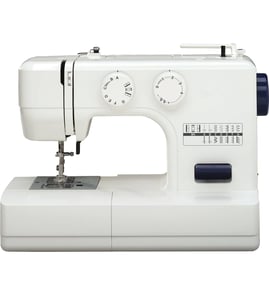

What are the features of the Kenmore 385?
The Kenmore 385.15510200 is a household mechanical sewing machine designed for adjustable, foot-control speed sewing, with a removable extension table (free-arm capability) and an accessory box for storage. For the full list of standard parts, accessories, and operating features, use the 385.15510200 owner's manual.
Key built-in features you will use most
- Foot controller speed control: sewing speed changes based on how far you press the foot control.
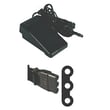
- Polarized plug: helps ensure correct plug orientation for safer power connection.
- Extension table with accessory box: supports larger projects; detaches for free-arm sewing.
- Presser foot lifter and thread cutter: everyday controls for positioning fabric and trimming thread.
- Changeable needle and presser feet: supports different fabrics and stitch applications.
What’s included vs. what you can adjust
| Feature area | What the machine provides | What you adjust |
|---|---|---|
| Speed | Foot-controlled motor speed | Pressure on the foot control |
| Sewing surface | Extension table plus free arm | Table on or off |
| Stitch results | Mechanical stitch system | Stitch settings and threading accuracy |
| Maintenance access | User-cleanable areas | Cleaning schedule and lint removal |
Where to find the complete “feature list” for this model
We list the most reliable, model-specific details in the documentation. In the 385.15510200 owner's manual, check these sections:
- Names of parts (controls and components)
- Available accessories and attachments
- Getting ready to sew (power connection, speed control, spool pins)
- Troubleshooting (common symptoms like fabric not feeding smoothly or noisy operation)
Why it matters
Matching the machine’s features to your project (fabric type, stitch needs, and speed control) prevents common issues like uneven feeding, thread jams in the hook/shuttle area, and needle problems.
Last updated: February 2026
How old is a Kenmore 385 sewing machine?
Kenmore “385” sewing machines were made across multiple decades, so age depends on the exact model number. Your Kenmore 385.15510200 is one specific 385-series machine; use the purchase date (or original receipt) as the most accurate way to determine how old yours is, and confirm model details in the 38515510200 owner's manual.
What “385” means for age
The 385 prefix identifies a Kenmore sewing machine family that was produced over many years. That means two machines labeled “Kenmore 385” can be very different ages.
Common ways we see age estimated:
- Purchase date: most accurate for your specific machine
- Model number: narrows the family down to a specific design (yours is 385.15510200)
- Features and accessories: can hint at era, but are not definitive
- Service history: older machines often show patterns of maintenance (belt, motor, wiring)
How to estimate the age of your specific machine
Use this checklist to pin down a realistic age range:
- Check any receipt, gift record, or warranty paperwork for the purchase date
- Look for a date stamp on the motor, foot control, or internal wiring tag (if present)
- Match your machine’s controls and included attachments to the parts and diagrams in the manual
- If you inherited it, ask for the approximate year it was last used regularly
Quick reference: “model family” vs “your model”
| What you have | What it tells you | How useful it is for age |
|---|---|---|
| “Kenmore 385” | Family/series | Medium |
| 385.15510200 | Exact model | High |
| Purchase date | When it entered service | Highest |
Why it matters
Knowing the approximate age helps us choose the right troubleshooting path for issues like sluggish running, lockups, or feed problems; older machines are more likely to need cleaning, lubrication, and inspection of wear items (belt, motor brushes, wiring, foot control).
If your machine is acting up while you’re trying to date it, use our Kenmore 385 error codes resource to narrow symptoms quickly.
Last updated: February 2026
How do I know what model my sewing machine is?
Your sewing machine’s model number is printed on the machine, usually on a small ID plate or label on the back, side, or bottom. For this Kenmore machine, the owner documentation identifies it as model 385.15510200; see the 38515510200 owner's manual.
Where to look on the machine
Check these common spots first (use a flashlight if needed):
- Back of the machine near the power cord connection
- Right side or left side of the machine body
- Bottom of the base (tip the machine carefully)
- Under the extension table or accessory box area
- Inside a flip-up or slide-off cover (varies by design)
Model number vs. serial number (what to write down)
The model number is what we use to match Kenmore parts diagrams and repair information. The serial number is mainly for manufacturing identification.
| Item | What it looks like | What it’s used for |
|---|---|---|
| Model number | Often numbers with a dot (example: 385.15510200) | Finding correct parts and manual |
| Serial number | May include letters and numbers | Identifying a specific unit |
Why it matters
Kenmore sewing machines can look similar across multiple 385-series models, but parts (like the foot control, light bulb type, needle plate, or bobbin area components) can differ. Using the exact model number helps us match the right sewing machine parts and troubleshooting steps the first time.
Quick tip for Kenmore 385-series machines
If your label starts with 385, you are in the Kenmore 385 family. Still, we recommend using the full model number (all digits) when searching parts and instructions.
Last updated: February 2026
What are the 7 common sewing machine troubles?
On the Kenmore 38515510200 mechanical sewing machine, the 7 most common troubles are: thread bunching (bird’s nests), thread breaking, skipped stitches, fabric not feeding, bent or dull needles, uneven or puckered seams, and the machine jamming or locking up. Most fixes start with correct threading, tension, and cleaning lint.
The 7 troubles and the fastest first checks
- Thread bunching or bird’s nests (usually under fabric): rethread with the presser foot up, then sew with the presser foot down.
- Needle thread breaks: check threading path, reduce upper tension, replace a bent or blunt needle.
- Bobbin thread breaks: rethread bobbin case correctly and clean lint from the shuttle area.
- Skipped stitches: install a new needle correctly; match needle and thread to fabric.
- Fabric not feeding: confirm presser foot is down; check feed dogs are up and not packed with lint.
- Needle breaks: tighten the needle clamp screw; use the proper needle plate; do not pull fabric.
- Machine jams or locks up: remove tangled thread, clean the shuttle race, then oil only where the manual indicates.
What the manual points to for this model
Your owner's manual troubleshooting section focuses on a few repeat causes:
| Symptom | Most common cause | What to do first |
|---|---|---|
| Needle thread breaks | Misthreading, tension too tight, bent/blunt needle | Rethread, lower tension, replace needle |
| Bobbin thread breaks | Misthreading in bobbin case, lint in shuttle | Rethread bobbin, clean shuttle area |
| Needle breaks | Needle installed wrong, clamp screw loose, tension too tight | Reinstall needle, tighten screw, lower tension |
| Skipped stitches | Needle installed wrong, wrong needle/thread for fabric | New needle, match needle type to fabric |
Why it matters
Most “big” sewing machine problems are simple setup issues. Correct threading, the right needle, and a clean shuttle area prevent thread breaks, jams, and stitch quality problems, and they also protect moving parts from damage.
When to stop and service
Unplug the machine before removing covers, cleaning, or oiling. If the cord or plug is damaged, or the machine was dropped or got wet, do not run it; follow the safety guidance in the owner's manual.
For step-by-step symptom help, use our DIY guides like sewing machine fabric not moving and sewing machine locks up.
Last updated: February 2026
When did Kenmore stop making sewing machines?
Kenmore sewing machines were largely discontinued when Sears scaled back the Kenmore sewing line; most Kenmore machines (including many 385-series models like the Kenmore 38515510200) were sold for years, but new Kenmore-branded sewing machine production effectively ended in the early-to-mid 2000s.
What this means for Kenmore 38515510200 owners
Even though new Kenmore sewing machines are no longer being produced, your Kenmore 38515510200 is still serviceable. The best next step is to use the owner's manual for model-specific setup, maintenance, and troubleshooting.
Common ownership realities for older Kenmore sewing machines:
- Parts availability varies by component (mechanical items often last a long time).
- Routine cleaning and correct threading prevent many “machine won’t sew” complaints.
- Electrical items (cord, foot control, switch, motor) are the most common age-related failures.
- A tune-up often fixes noise, sluggish running, and stitch quality issues.
Quick checks before assuming you need a replacement machine
If your machine is acting up, we recommend these basics first (they solve many issues on mechanical Kenmore models):
- Unplug the machine before removing covers, cleaning, or lubricating.
- Remove the needle plate area lint buildup; packed lint can stop fabric feeding.
- Rethread the upper thread and bobbin completely; incorrect threading causes jams and breaks.
- Replace the needle (do not use bent or dull needles).
- Check that the feed dogs are raised after drop-feed sewing.
- If the machine will not run, confirm power connection and look for thread caught in the hook/shuttle race.
Troubleshooting help (symptoms and codes)
Some Kenmore 385-series machines display or reference codes; others are purely mechanical. Either way, these guides help narrow the cause quickly:
| What you’re seeing | Most common cause | Best next step |
|---|---|---|
| Fabric not moving | Feed dogs down or packed with lint | Use sewing machine fabric not moving |
| Machine locks up | Thread jam in hook/shuttle area | Use sewing machine locks up |
| Motor will not run | Power, switch, foot control, or motor issue | Use sewing machine motor won't run |
| Code-related troubleshooting | Model-family code reference | Use Kenmore 385 error codes |
Why it matters
Knowing Kenmore sewing machines are discontinued helps set expectations: you typically keep these machines running through maintenance and targeted repairs (needle, cleaning, tension, drive system) rather than looking for “new Kenmore” replacements.
Last updated: February 2026