Owner’s manual
 Error Codes


Do you remove cardboard from the bottom of a Whirlpool refrigerator?
For the Whirlpool WRF540CWHZ03 bottom-mount refrigerator, we remove shipping packaging (tape, foam, cardboard spacers) used for transport, but we do not remove any permanent bottom or rear cover panels. Those panels protect wiring and cooling components and help the refrigerator run correctly. See the unpacking steps in the owner's manual.
What to remove vs. what to leave in place
Remove these shipping items:
- Exterior tape, protective film, and corner guards
- Cardboard base or skid used only for shipping (if it is clearly separate from the cabinet)
- Foam blocks, spacers, and packing inserts inside the fresh food and freezer sections
- Any cardboard used to protect shelves, bins, or doors during transport
Leave these in place:
- Any screwed-on or clipped-on cover panel at the bottom rear (often a thin panel)
- The base grille (unless you are servicing the unit; it snaps off and reinstalls)
- Any fixed insulation or molded air ducts
Quick checks to tell what it is
Use this simple guide before pulling anything off:
| What you see | Usually means | What to do |
|---|---|---|
| Loose cardboard you can lift away with no tools | Shipping packaging | Remove it |
| Panel held by screws/clips, or it feels like part of the cabinet | Protective/service cover | Leave it installed |
| Cardboard or panel near the compressor/condenser area | Component protection/airflow management | Leave it installed |
Why it matters
Bottom and rear covers help protect components and maintain proper airflow for the sealed refrigeration system (compressor, condenser, evaporator, and tubing). Removing a permanent cover can increase noise, reduce cooling performance, or expose wiring and moving parts.
Safe unpacking tips we recommend
- Unplug the refrigerator before reaching near the bottom rear area.
- Remove tape and glue residue with mild dish soap and warm water (avoid sharp tools and abrasives).
- Keep the refrigerator upright; pull it straight out when moving to avoid floor damage.
Last updated: February 2026
Is a bottom mounted refrigerator good?
Yes. A bottom-mount refrigerator like the Whirlpool WRF540CWHZ03 is a great choice for most kitchens because the fresh-food section sits at eye and waist level, so you reach everyday items with less bending. It also typically offers wide shelves and a pull-out freezer drawer for easier organization.
What you will like about a bottom-mount design
- Less bending for frequently used refrigerated foods (milk, produce, leftovers)
- Freezer drawer helps keep frozen items grouped in baskets and bins
- Wide refrigerator shelves make it easier to store platters and meal prep containers
- Good fit for households that use the refrigerator more often than the freezer
- Door swing and drawer access can work well in tighter aisles when properly spaced
What to watch for (so it performs well)
Your WRF540CWHZ03 needs the right clearances and room conditions to cool efficiently. We follow these setup targets from the owner's manual:
| Setup item | Recommended minimum |
|---|---|
| Side and top clearance | 1/2 in. |
| Rear clearance | 1 in. |
| Hinge-side clearance near a wall | 2 1/2 in. |
| Room temperature range | 55°F to 110°F (best 60°F to 90°F) |
Why it matters
Bottom-mount refrigerators are “good” when they are installed with proper airflow and the doors and drawer close correctly. Good ventilation and correct leveling help prevent warm spots, excess frost, and higher energy use.
Quick setup checks we recommend
- Keep the refrigerator away from strong heat sources (oven, radiator)
- Confirm the cabinet has the clearances listed above
- Level the unit so doors close easily (raise the front slightly using the leveling screws)
- If installed next to a fixed wall, confirm the hinge-side clearance so the door can swing open
- If you have an ice maker, leave extra space behind for the water line connection
Last updated: February 2026
What is the biggest problem in a Whirlpool refrigerator?
The biggest problem we see in Whirlpool refrigerators is a cooling problem (food compartment too warm, freezer too warm, or temperatures swinging). On the Whirlpool WRF540CWHZ03, the most common causes are airflow issues, dirty condenser coils, door seal leaks, or a failing fan or temperature sensor; see the owner's manual for model-specific operating checks.
Most common symptoms (and what they usually point to)
- Fresh food section warm but freezer OK: airflow restriction or damper issue
- Freezer warm and refrigerator warm: condenser airflow problem, sealed system issue, or control problem
- Runs constantly: warm room, frequent door openings, dirty coils, or door not sealing
- Noisy operation: fan-related noise or normal high-efficiency compressor/fan run time
- Water or ice issues: restricted filter or inlet valve problem
Quick checks we recommend first (WRF540CWHZ03)
Start with the simple items that cause the most “not cooling” calls:
- Confirm the controls are turned on and set correctly (do not set to coldest expecting faster cooling)
- Allow a full 24 hours to cool after a new install or after being unplugged
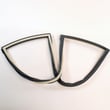
- Make sure doors fully close and the gaskets seal all the way around
- Clean dust from the condenser area so heat can release properly
- Avoid overpacking; blocked vents reduce airflow between compartments
Common parts involved when cooling is the issue
If basic checks do not fix it, these parts are frequently involved in Whirlpool cooling complaints:
| Problem pattern | Likely system | Example part for WRF540CWHZ03 |
|---|---|---|
| Temps fluctuate or read wrong | Temperature sensing | Refrigerator thermistor W10316760 |
| Warm fridge, freezer OK | Airflow control | Refrigerator electronic damper WPW10594329 |
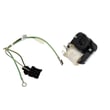
| Poor airflow, fan noise, warm temps | Evaporator fan system | Refrigerator evaporator motor W11024089 |
Why it matters
Cooling problems can spoil food quickly and also make the compressor run longer than normal. The manual notes that high-efficiency compressors and fans may run longer, especially with warm rooms, frequent door openings, or heavy loads; fixing airflow and sealing issues reduces run time and improves temperature stability.
Last updated: February 2026