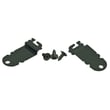
Installation guide
 Owner’s manual


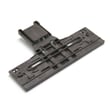
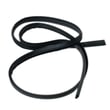
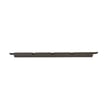
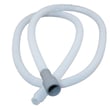
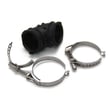
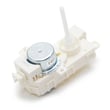
Can I replace dishwasher parts myself?
Yes. For KitchenAid dishwasher model KDFE104DWH2, many common repairs are DIY-friendly if you shut off power and water first and follow the step-by-step instructions in the KDFE104DWH2 installation guide. Simple mechanical parts (rack wheels, latches, seals, hoses) are the best place to start.
Good DIY repairs vs. repairs to plan carefully
Usually DIY-friendly:
- Dishrack hardware (rollers, adjusters, clips)
- Door latch and some door hardware
- Drain hose replacement (if accessible and routed correctly)
- Lower door seal replacement
- Basic checks for “won’t start” (door fully latched, breaker, water on)
Plan carefully (more disassembly, wiring, or leak risk):
- Drain pump and pump-and-motor repairs
- Water inlet valve replacement
- Heating element and electrical components
- Control panel and wire harness work
Safety and prep checklist (do this every time)
- Turn off power at the breaker (or unplug if accessible).
- Shut off the water supply valve.
- Protect the pump area when working with the door open so screws do not fall into the sump.
- Avoid kinking or pinching the water line, drain hose, and power cord when sliding the dishwasher.
- After reassembly, run the shortest cycle and confirm water enters the tub within the first couple minutes.
Parts we see replaced often on KDFE104DWH2
| Symptom | Common DIY part to check/replace | Example part for this model |
|---|---|---|
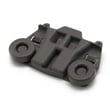
| Lower rack won’t roll smoothly | Worn rack wheels | Dishwasher dishrack roller assembly, lower WPW10195417 |
| Door won’t latch or won’t start | Latch not engaging | Dishwasher door latch WPW10653840 |
| Not draining | Clog or failed drain pump | Dishwasher drain pump WPW10348269 |
| Poor drying | Heater circuit issue or settings | Element assembly W10703867 |
Why it matters
Starting with simpler, external parts reduces the chance of leaks and wiring mistakes, and it helps you confirm the real cause before replacing higher-cost components like a pump-and-motor assembly.
Last updated: February 2026
What is the average lifespan of a KitchenAid dishwasher?
A KitchenAid dishwasher typically lasts 10 to 14 years with normal household use. For your KitchenAid KDFE104DWH2, consistent maintenance (cleaning filters, using rinse aid, and avoiding suds) and correct installation practices help you reach the high end of that range; see the KDFE104DWH2 owner’s manual for care guidance.
What affects lifespan the most
- Water quality: hard water speeds up mineral buildup and wear.
- Detergent habits: using the correct dishwasher detergent prevents excess suds.
- Rinse aid use: improves drying and helps control hard-water deposits.
- Loading and soil removal: scrape food off; avoid blocking spray paths.
- Cycle choices and run time: energy-efficient models often run longer per load.
- Installation quality: stable mounting and correct drain routing reduce leaks and strain.
Maintenance checklist we recommend
- Run a monthly cleaning cycle and wipe the door seals.
- Keep rinse aid filled; it is designed to be used for good drying performance.
- Use fresh detergent and the right amount for soil level and water hardness.
- Scrape dishes (do not pre-rinse) and keep the bottom area clear of debris.
- If you see standing water or slow draining, address it early to protect the pump.
Common “end-of-life” symptoms vs. fixable issues
| Symptom | Often fixable? | What to check first |
|---|---|---|
| Not draining | Yes | Clog, drain hose routing, then pump |
| Poor drying | Yes | Rinse aid, heater performance, cycle selection |
| Door won’t latch | Yes | Latch alignment and latch wear |
| Loud grinding/humming | Sometimes | Debris in pump area, then motor/pump condition |
If your KDFE104DWH2 stops draining reliably, a worn pump is a common repair; the dishwasher drain pump WPW10348269 is one of the model-matched replacement parts we stock.
Why it matters
Dishwashers are designed to run long, efficient cycles (often 2 to 3 hours per load on newer designs). Keeping water temperature, detergent, and rinse aid use in spec reduces stress on the circulation system, heater, and seals, which directly extends service life.
Last updated: February 2026
What is the most common problem with a KitchenAid dishwasher?
For the KitchenAid KDFE104DWH2 dishwasher, the most common problem we see is poor cleaning or poor draining caused by restricted water flow (food debris in the filter area, spray arm blockage, or a drain path issue). These conditions can also trigger warning lights or error codes; check the basics first using the KDFE104DWH2 owner’s manual.
Most common symptoms and what they usually point to
- Dishes still dirty: spray arms blocked, filter area packed with debris, low water temperature
- Water left in the tub: drain restriction, drain hose routing issue, failing drain pump
- Clean light flashing: float stuck, water supply off, or excess suds (wrong soap)
- Not drying well: no rinse aid, plastics loaded in a way that traps water, heat-dry option not used
- Leaks: door seal area, hose connections, or internal seals
Quick checks we recommend before replacing parts
- Confirm the water supply is fully on and the float moves freely.
- Use automatic dishwasher detergent only (hand soap and laundry detergent create suds that disrupt filling and washing).
- Verify incoming hot water is at least 120°F (49°C).
- Inspect the drain path and hose for kinks or clogs.
- If the unit won’t clear water, focus on the drain system.
Common “problem to part” matchups (when symptoms persist)
| Symptom | Most likely area | Example part for KDFE104DWH2 |
|---|---|---|
| Standing water after cycle | Drain system | Dishwasher drain pump WPW10348269 |
| Won’t fill or fills slowly | Water supply / inlet | Dishwasher water inlet valve W11175771 |
| Poor drying | Rinse aid, heat options, loading | Use manual settings guidance |
Error codes and flashing lights
If you’re seeing a repeating light pattern or code, we use KitchenAid’s code lists to narrow the failure quickly. Start with KitchenAid he dishwasher error codes.
Why it matters
Cleaning and draining problems are usually flow-related, so a simple restriction (debris, suds, low water temp) can look like a major failure. Fixing the root cause protects the circulation system and helps prevent leaks and repeat clogs.
Last updated: February 2026