Owner’s manual



How do I tell what model LG washer I have?
You can identify your LG washer model by finding the model and serial tag on the machine and reading the MODEL number printed on it. On LG front-load washers like WM3360HWCA, the tag is most often around the door opening or on the door frame area; confirm the exact location in the WM3360HWCA owner's manual.
Where to look for the model tag
Check these common LG washer tag locations first:
- Around the door opening (door frame area)
- Behind the door on the inner lip of the opening
- Along the front panel near the door latch area
- On the back panel (less common, but worth checking)
- Inside the service flap area if your unit has one
What to write down (and why)
When you find the tag, record these items exactly as shown:
- Model number (this is what we use to match parts diagrams and fit)
- Serial number (helps confirm production version and compatible revisions)
- Brand (LG)
- Any suffix letters/numbers after the model (they matter)
Quick reference table
| Tag item | Example | What it’s used for |
|---|---|---|
| Model number | WM3360HWCA | Selecting correct parts and troubleshooting info |
| Serial number | (varies) | Identifying production run and version |
| Product type | Washer | Matching the right repair instructions |
Why it matters
LG washers can look nearly identical across multiple model families, but parts like a door lock, drain pump, or inlet valve can vary by model and revision. Using the exact model number helps prevent ordering the wrong replacement part.
Last updated: February 2026
What is the average lifespan of an LG washer?
Most LG washers, including the LG WM3360HWCA, typically last 10 to 15 years with normal household use. Consistent maintenance (especially drain and door-boot care) and fixing small problems early are what most often push a washer toward the high end of that range; see the WM3360HWCA owner's manual for model-specific care steps.
What affects lifespan the most
- Load size and frequency (daily heavy loads shorten life)
- Proper leveling to reduce vibration and bearing wear
- Keeping the drain path clear (coins, lint, small items)
- Door-boot and dispenser cleaning to prevent leaks and odor
- Prompt repair of draining, filling, or door-lock problems
Maintenance checklist that helps you reach 15 years
- Clean the pump filter regularly and check for debris
- Leave the door slightly open between loads so the boot can dry
- Wipe the door boot folds and check for small items
- Use the right amount of HE detergent to reduce residue
- Run a monthly tub-clean cycle (or a hot cycle with washer cleaner)
Common “wear” parts and what they impact
| Symptom | Likely system involved | Example part for this model |
|---|---|---|
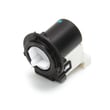
| Won’t drain, slow drain | Drain pump or filter | Drain pump motor (4681EA2001T) - washer part by LG electronics 4681EA2001T |
| Door won’t lock/unlock | Door lock system | LG washer door lock assembly EBF49827801 |
| Leaks at the door | Door boot/clamp | Washer door boot MDS47123604 |
Why it matters
A front-load washer’s most expensive failures often start as small issues (minor leaks, vibration, slow draining). Basic upkeep and early part replacement protect the tub bearings, motor system, and control components, which is how you maximize the service life of your LG washer.
Last updated: February 2026
What is the most common problem with LG washers?
The most common LG washer problem we see is drain and spin trouble: the washer will not drain fully, will not spin out, or stops with water left in the tub. On the LG WM3360HWCA, this is often tied to a clogged drain pump filter, a restricted drain hose, or a failing drain pump.
Quick checks that fix the majority of drain/spin complaints
- Unplug the washer; then check the drain path for coins, lint, and small socks.
- Clean the drain pump filter and re-test a Drain/Spin cycle (steps are in the WM3360HWCA owner's manual).
- Confirm the drain hose is not kinked, crushed, or shoved too far down the standpipe.
- Reduce load size; overloading can prevent proper draining and cause out-of-balance spin behavior.
- If you hear the pump hum but water barely moves, the pump or filter housing is usually restricted.
Parts that commonly relate to “won’t drain” symptoms
If cleaning the filter and correcting the hose routing does not restore normal draining, these model-matched parts are the most common next suspects:
- Washer drain pump filter 383EER2001A (cracked cap, damaged seal, or missing filter can cause leaks or poor flow)
- Drain pump motor (4681EA2001T) - washer part by LG electronics 4681EA2001T (weak pump, noisy pump, or intermittent draining)
- Washer tub-to-pump hose 4738ER1002A (blockage in the sump hose between tub and pump)
Symptom-to-likely-cause guide
| What you notice | Most likely cause | Best first step |
|---|---|---|
| Water left in tub, slow drain | Clogged filter or hose restriction | Clean filter; check hose routing |
| Loud grinding during drain | Debris in pump or failing pump | Inspect filter area; consider pump |
| Stops before high-speed spin | Not fully drained or load imbalance | Fix drain first; then reduce load |
Why it matters
A washer that cannot drain properly often cannot reach high-speed spin. That leaves clothes wetter, increases cycle time, and can strain the drain pump and motor over time.
For model-specific operating and maintenance steps (including filter access and drain hose guidance), follow the WM3360HWCA owner's manual.
Last updated: February 2026