Installation guide
 Owner’s manual


How many cubic feet is a Kenmore Model 11020022011 washer?
Kenmore washer model 11020022011 is a top-load design; washers in this Kenmore 110 platform typically fall around 3.2 to 3.5 cu. ft. capacity. For the exact rated capacity for your specific unit, we recommend confirming it in the 11020022011 owner's manual.
Capacity is usually listed in the specifications section or product details area of the manual.
- Check the Specifications or Product dimensions section
- Look for terms like capacity, basket volume, or tub capacity
- If your manual lists only dimensions/clearances, use the model number to match the correct spec sheet
- If you are comparing to another washer, compare cu. ft. and basket diameter/depth
These are common real-world ranges for this style of Kenmore (Whirlpool-built) top-load washer.
| Washer type (common for Kenmore 110) | Typical capacity range | What you will notice |
|---|---|---|
| Standard top-load (agitator) | 3.0 to 3.6 cu. ft. | Smaller loads, higher water level options |
| Larger-capacity top-load | 3.8 to 4.3+ cu. ft. | Bulkier items fit easier, larger basket |
Knowing the cubic feet helps us recommend the right cycle settings and loading level, and it also helps when comparing replacement parts that relate to the wash basket and drive system (for example, an agitator or drive components).
These parts do not change cubic feet, but they can affect agitation and spin performance when the washer is loaded.
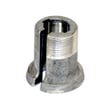
- Agitator dog 80040 (helps the agitator “ratchet” and move clothes)
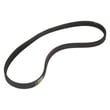
- Washer drive belt WPW10006384 (transfers motor power for agitation/spin)
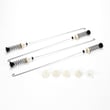
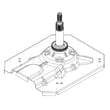
- Gear case W11454741 (drives agitation and spin in many top-load designs)
Last updated: February 2026
How to identify a Kenmore washer model?
Your Kenmore washer model number is the ID we use to match the correct parts and instructions for your exact washer. For Kenmore model 11020022011, the model tag is typically on the cabinet frame under the lid, on the rear panel, or near the control area; confirm it against the 11020022011 owner's manual.
Check these common locations for the model and serial tag (usually a sticker or metal plate):
- Top-load washers: under the lid on the rim of the opening, or on the cabinet frame near the tub
- Front-load washers: inside the door opening around the door frame
- All styles: on the back panel near the power cord entry, or behind/near the control console
- If the tag is worn: look for a second label on the cabinet side or rear
Kenmore model numbers often start with a 3-digit prefix (commonly 110 on many Kenmore washers) followed by additional digits.
| What you see | What it means | What to do next |
|---|---|---|
| 110.20022011 (with a dot) | Same model number format | Use it as 11020022011 when searching parts |
| 11020022011 (no dot) | Full model number | Match parts and diagrams to this exact number |
| Only a serial number | Not enough to identify parts | Keep looking for the model tag |
- Copy the model number exactly as printed (include all digits)
- Use the model number, not the cycle names on the console
- If you are between two close numbers, verify using the diagrams and the 11020022011 installation guide
- When troubleshooting, note symptoms (won’t spin, won’t drain, lid won’t lock) before choosing parts
Kenmore washers can look similar across multiple model series, but internal components (like the lid lock, drive system, and drain pump) can differ. Using the exact model number ensures the right fit, correct installation steps, and fewer returns.
Last updated: February 2026
What is the average lifespan of a Kenmore washer?
A Kenmore washer typically lasts 10 to 15 years with normal household use. For your Kenmore 11020022011 top-load washer, correct installation, keeping it level, and avoiding chronic overloading are the biggest factors that help it reach the longer end of that range; see the 11020022011 installation guide for setup basics.
- Load size and balance: frequent overloading strains the drive system and suspension.
- Leveling and floor support: an unlevel washer vibrates more and wears parts faster.
- Water quality and detergent use: excess suds and mineral buildup increase wear.
- Drain performance: slow draining makes the pump work harder and can leave residue.
- Lid lock and cycle interruptions: repeated stops and restarts add stress to controls.
- Keep loads evenly distributed; wash bulky items in smaller loads.
- Use the right amount of HE detergent (too much causes oversudsing).
- Periodically run a clean washer cycle (or hot wash with washer cleaner).
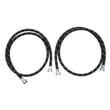
- Check fill hoses for bulges or leaks and replace as needed.
- If you hear squealing or see poor agitation, inspect the drive system early.
| Symptom | Often a wear item | Example part for 11020022011 | When it becomes a bigger repair |
|---|---|---|---|
| Won’t drain or drains slowly | Drain pump | Washer drain pump assembly WPW10276397 | Repeated clogs, leaks, or motor damage |
| Won’t spin or agitates poorly | Belt or actuator | Washer drive belt WPW10006384 | Gear case or motor issues |
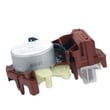
| Lid won’t lock, won’t start | Lid lock | Washer lid lock assembly W10404050 | Control or wiring problems |
Knowing the typical 10 to 15 year lifespan helps you decide whether to maintain and replace common parts (belt, pump, lid lock) or plan for a larger repair. A washer that is installed on a solid, level floor and used within capacity usually runs quieter, spins better, and lasts longer.
Last updated: February 2026