Installation guide
 Owner’s manual
 Error Codes


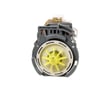
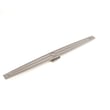
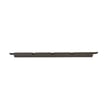
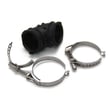
How to order Whirlpool parts?
For your Whirlpool WDF590SAJW0 dishwasher, we order parts by matching the exact model number to the correct part diagram, then selecting the right part number or part ID for your repair. If your dishwasher is under warranty, we handle the warranty verification and help arrange service using the information in your WDF590SAJW0 owner’s manual.
Fastest way to order the right part
- Confirm the full model number on the dishwasher (typically on the tub frame near the door).
- Identify the symptom (not draining, not heating, door not latching, rack not rolling).
- Match the symptom to the correct part category (drain, wash, heating, door, racks).
- Use the part ID when ordering to avoid look-alike parts.
- If you are installing a new dishwasher or replacing hoses, follow the parts and tool list in the WDF590SAJW0 installation guide.
Commonly ordered parts for this model
| What you’re fixing | Part to look at | Part ID |
|---|---|---|
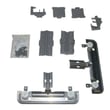
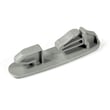
| Upper rack won’t adjust | Dishwasher rack adjuster | W10712395 |
| Lower rack won’t roll smoothly | Whirlpool dishwasher dishrack wheel | W10195416V |
| Dishwasher won’t drain | Dishwasher drain pump | W10876537 |
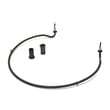
| Dishes not drying well | Element assembly (heating element) | W10703867 |
| Door won’t latch | Dishwasher door latch | WPW10653840 |
Why it matters
Ordering by model number (WDF590SAJW0) and part ID prevents fit issues and repeat repairs, especially on Whirlpool dishwashers where similar-looking parts can vary by revision.
Last updated: February 2026
How to read Whirlpool dishwasher error codes?
On the Whirlpool WDF590SAJW0 dishwasher, error codes are read as a two-part code: the first set of flashes/blinks is the function code, and the second set is the problem code. We match that two-number pattern to the code chart in the WDF590SAJW0 user manual to identify the failure.
How to count the blinks correctly
Use this quick method so you do not misread the code:
- Watch the indicator light pattern and count the first group of blinks
- Pause; then count the second group of blinks
- Write it as X-Y (example: 2-1)
- Repeat the observation once more to confirm the same pattern
- Compare the result to the error code chart
What the two numbers mean
In Whirlpool diagnostic reporting, the two numbers point you to a specific system and a specific fault.
| What you see | What it represents | What to do next |
|---|---|---|
| First blink count (X) | Function code (which system is involved) | Look up the function section in the code chart |
| Second blink count (Y) | Problem code (what went wrong in that system) | Follow the recommended checks/tests |
Common next steps after you identify the code
Once you have the exact X-Y code, we use it to narrow troubleshooting to the most likely causes.
- Reset the control and recheck for the code (especially after a power interruption)
- Confirm the door is closing and latching properly (Start/Resume can flash if the door is not closed promptly)
- Verify the water supply is turned on and the cycle is set to start
- If the code points to draining issues, inspect the drain path and consider the dishwasher drain pump W10876537
- If the code points to heating or drying, inspect the heater circuit and consider the element assembly W10703867
Why it matters
Reading the code as a two-part blink pattern prevents guesswork. The correct function-problem pairing helps you focus on the right system (drain, heat, fill, wash) and avoid replacing good parts.
Last updated: February 2026
What is the code for a leak in a Whirlpool dishwasher?
On the Whirlpool WDF590SAJW0 dishwasher, a leak condition is commonly reported as F2 (often shown as F2/E2), which points to water detected where it should not be (typically in the base pan). After you clear the water, you still need to find and fix the source of the leak.
What to do first (safe, fast checks)
- Cancel/drain the cycle and turn off power at the breaker.
- Shut off the water supply under the sink.
- Pull the toe-kick and look for water in the base (a wet/damp pan can trigger the leak code).
- Check for obvious drips at the water inlet, drain hose, and door area.
- If the unit was recently installed or moved, confirm the drain setup meets the height requirement (the drain connection should be made before the trap and at least 20 inches above the floor).
For model-specific access panels, diagnostics, and error display behavior, follow the steps in the WDF590SAJW0 owner’s manual.
Most common leak sources on this model type
| Where you see water | Most likely cause | What usually fixes it |
|---|---|---|
| Under the front corners | Door not sealing, over-sudsing, loading issue | Clean gasket, use correct detergent, adjust loading |
| Under the left front | Water inlet connection or valve seep | Tighten fitting; replace inlet valve if leaking |
| Under the center | Pump seal/grommet seep | Replace seal/grommet |
| Under the sink cabinet | Drain hose connection leak | Re-seat hose, clamp, or replace hose |
If you find moisture around the pump area, a worn seal can be the culprit; the dishwasher pump grommet WPW10538166 is one common leak-related part in that zone.
Why it matters
A leak code is the dishwasher protecting your kitchen from ongoing water damage. Clearing the code without correcting the leak often leads to repeat shutdowns, poor washing performance, and intermittent draining issues.
When a part replacement is likely
Replace parts when you see active dripping or mineral tracks (white/green staining) at the source:
- Dishwasher water inlet valve WPW10327249 for seepage at the fill valve
- Dishwasher drain hose 8269144A if the hose is split, soft, or leaking at the ends
- Dishwasher pump grommet WPW10538166 if water is coming from the pump/sump seal area
Last updated: February 2026
What is the most common problem with Whirlpool dishwashers?
The most common issue we see on Whirlpool dishwashers like model WDF590SAJW0 is not draining (water left in the tub) caused by a clog in the filter/sump area, a kinked drain hose, or a weak drain pump. Close behind are poor cleaning from blocked spray arms and “won’t start” complaints tied to the door not latching.
Quick symptoms and the most likely cause
- Standing water after the cycle: drain path restriction or a failing drain pump
- Dishes still dirty: clogged spray arm holes, low water fill, or wash circulation issue
- Won’t start or stops right away: door not fully latched, Start/Resume timing, or power supply issue
- Detergent not dispensing: dispenser door sticking or blocked by a tall item
- Poor drying: rinse aid low, heater issue, or cycle selection
What to check first on WDF590SAJW0 (fast, no tools)
- Confirm the door closes tightly and latches; if Start/Resume is used, close the door promptly (the Start/Resume light can flash if the door is not closed quickly after pressing it).
- Verify the kitchen sink drain and garbage disposer are clear (a slow sink drain often means a slow dishwasher drain).
- Inspect the drain hose routing under the sink for kinks or a low loop problem.
- Run hot water at the sink for 30 to 60 seconds before starting a cycle to improve fill temperature and cleaning.
- If the unit was recently installed, make sure the water supply line was flushed before connection (debris can plug the inlet valve screen).
Common parts involved (when checks do not fix it)
| Problem you notice | Part that often solves it | What it does |
|---|---|---|
| Not draining | Dishwasher drain pump W10876537 | Pumps water out to the drain line |
| Poor cleaning, weak spray | Dishwasher spray arm WPW10491331 | Distributes wash water through spray jets |
| Won’t start, door pops open | Dishwasher door latch WPW10653840 | Confirms the door is closed so the cycle can run |
Why it matters
Drain and wash performance problems usually start small (a partial clog, a kinked hose, or a worn pump) and then turn into repeat cycle failures, odors, and poor cleaning. Catching the cause early helps protect the pump, heater, and control system.
For model-specific operating tips and cycle behavior, use the WDF590SAJW0 owner’s manual.
Last updated: February 2026
Why is my Whirlpool dishwasher leaking at the bottom of the door?
A bottom-of-door leak on your Whirlpool WDF590SAJW0 dishwasher is usually caused by water being pushed past the door seal due to oversudsing, a loading issue that deflects spray toward the door, or a door that is not closing and latching tightly. Start by correcting detergent and confirming a solid latch.
Quick checks that fix most bottom-of-door leaks
- Switch to dishwasher detergent only (no dish soap) and use less if you have soft water.
- Remove any tall items that keep the door from closing fully.
- Make sure nothing is blocking the door gasket area (utensils, rack corners, food debris).
- Confirm the unit is level and not tipped forward (a forward tilt encourages leaks at the door).
- Run a short cycle and watch for spray hitting the inner door area.
What to inspect on the WDF590SAJW0
1) Door closing and latch
If the door is slightly open during wash, water can escape at the bottom edge.
- Check for a positive “click” when closing.
- Inspect the strike area for looseness or misalignment.
- If the latch feels weak or intermittent, replace the dishwasher door latch WPW10653840.
2) Spray pattern and wash pressure
A misdirected spray can “overpower” the seal.
- Inspect the spray arm for cracks, splits, or clogged jets.
- Clear debris from spray holes and confirm the arm spins freely.
- If damaged, replace the dishwasher spray arm WPW10491331.
3) Oversudsing and rinse aid
Too much detergent, the wrong detergent, or certain additives can create foam that leaks more easily.
- Use high-efficiency dishwasher detergent pods or powder.
- Avoid pre-washing with lots of hand soap residue left on dishes.
Symptom-to-cause guide
| What you notice | Most likely cause | What we recommend |
|---|---|---|
| Leak starts soon after filling | Oversudsing or door not fully latched | Reduce detergent; verify latch engagement |
| Leak happens only with large loads | Loading deflects spray at door | Re-load; keep items below rack edges |
| Leak is worse on one side | Dishwasher not level or door alignment issue | Level the legs; check door closure |
| Leak plus poor cleaning | Spray arm issue or circulation problem | Clean/replace spray arm; check filters |
Why it matters
A door-area leak can drip onto the floor and cabinet base, and it often gets worse over time if the door isn’t sealing or latching correctly. Fixing detergent use, loading, and latch issues usually stops the leak quickly.
For model-specific loading guidance and cycle checks, follow the steps in the WDF590SAJW0 installation guide.
Last updated: February 2026