




How to tell if a dryer thermal fuse is blown?
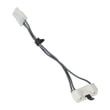
On a Whirlpool dryer model LDR3822PQ3, a blown thermal fuse usually shows up as a dryer that won’t start or runs with no heat. The sure way to tell is to unplug the dryer and test the fuse with a multimeter; a blown fuse reads no continuity (OL or infinite resistance).
Quick symptoms checklist
- Dryer will not start at all (common when the fuse is in the motor circuit)
- Dryer runs but produces no heat (common when the fuse is in the heater circuit)
- Cycle stops early or acts “dead” after overheating
- Burning smell or very hot cabinet before the failure (often tied to restricted airflow)
How we test a thermal fuse (basic continuity test)
- Unplug the dryer (electric shock hazard).
- Access the thermal fuse (commonly on the blower housing or heater housing, depending on design).
- Pull the two wires off the fuse terminals.
- Set the multimeter to continuity (beep) or the lowest ohms scale.
- Touch a probe to each terminal.
What the meter reading means
| Meter result | What it means | What to do next |
|---|---|---|
| Beep or ~0 to 1 Ω | Fuse is good | Keep troubleshooting (venting, thermostat, timer, door switch) |
| No beep, OL, or very high Ω | Fuse is blown | Replace the fuse and correct the overheating cause |
Why the fuse blew (and what to fix so it doesn’t happen again)
A thermal fuse is a one-time safety device; it opens when the dryer overheats. Overheating is most often caused by poor airflow.
- Clean the lint screen and housing
- Check the vent hose for kinks, crushing, or long runs
- Clear the wall vent and outside hood (make sure the flap opens freely)
- Confirm strong airflow at the outside vent while running
- Avoid overloading, which can reduce airflow through the drum
For airflow and efficiency tips that help prevent overheating, use our guide: how to keep a dryer clean and economical.
Related parts that can mimic “fuse” symptoms
If the dryer will not start, also check the door switch and belt switch system.
- Door switch WP3406105 (a failed switch can prevent the motor from running)
- Drum belt 3394652 (a broken belt can stop drum movement and trigger other symptoms)
Why it matters
Replacing a thermal fuse without fixing the airflow problem often leads to another blown fuse. Restoring proper venting protects the heater, wiring, and motor, and helps the LDR3822PQ3 dry faster.
Last updated: January 2026
What is the most common problem with whirlpool dryers?
The most common Whirlpool dryer problem (including model LDR3822PQ3) is no heat or poor drying, usually caused by restricted venting that overheats the dryer and triggers safety components, or by a failed heating circuit part. The next most common issue is not starting or not tumbling.
Most common symptoms and what they usually mean
- Runs but no heat: heating element or wiring issue, or a safety device opened due to overheating
- Takes too long to dry: clogged lint screen, crushed/long vent, blocked exterior hood
- Won’t start: door switch not closing, timer/control issue, power supply problem
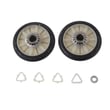
- Runs but won’t tumble: broken belt, worn idler pulley, worn drum support rollers
- Squealing or thumping: idler pulley or drum support roller wear
Quick checks we recommend first (fast, high-impact)
- Clean the lint screen and confirm strong airflow at the outside vent hood.
- Inspect the vent path for kinks, lint buildup, or long runs; shorten and straighten where possible.
- Confirm the door closes firmly and the latch engages.
- If the dryer runs but won’t tumble, check the belt and idler system.
Common parts involved on LDR3822PQ3
| Symptom | Likely part to check | Example part for this model |
|---|---|---|
| Won’t tumble | Drum belt | Drum belt 3394652 |
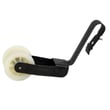
| Squeals, belt slips | Idler pulley | Dryer idler pulley WP691366 |
| Won’t start when door shuts | Door switch | Door switch WP3406105 |
| No heat (electric) | Heating element | Dryer heating element WP3403591 |
Why it matters
A restricted vent does more than slow drying; it raises operating temperature, which can shut down heating and shorten the life of parts like the heating element, wiring connections, and drum support components.
Last updated: January 2026
What is the downside to a ventless dryer?
Ventless dryers trade installation flexibility for performance tradeoffs: they usually dry slower, can warm up and humidify the laundry area, and require more routine cleaning. Your Whirlpool LDR3822PQ3 is a vented-style dryer, so these ventless downsides mainly matter if you are comparing dryer types.
Common downsides of ventless dryers
- Longer drying times than a traditional vented dryer, especially with bulky loads.
- More heat and humidity in the room, since moisture is condensed and managed inside the unit instead of being exhausted outdoors.
- More maintenance: lint filters need frequent cleaning, and condenser or heat exchanger areas often need periodic cleaning.
- Higher upfront cost in many cases (especially heat pump models).
- Smaller effective load size: overloading impacts airflow and drying performance faster.
Vented vs. ventless: quick comparison
| Feature | Vented dryer (like LDR3822PQ3) | Ventless dryer |
|---|---|---|
| Drying speed | Faster | Slower |
| Room conditions | Minimal added humidity | Adds heat and humidity |
| Maintenance | Lint screen + vent cleaning | Lint screen + internal condenser/filters |
| Installation | Needs exterior vent path | No exterior vent needed |
Why it matters
If you are choosing between vented and ventless, the biggest real-world difference is comfort and cycle time. Ventless units can be a great fit for apartments or interior laundry closets, but the extra humidity and longer cycles can be a deal-breaker in tight spaces.
If your current dryer is drying slowly
On Whirlpool LDR3822PQ3 dryers, slow drying is usually airflow-related (lint buildup, crushed vent hose, long vent run) or a worn drum drive system that reduces tumbling efficiency. If you are already inside the cabinet for service, common wear items include the drum belt 3394652 and the dryer idler pulley WP691366.
Last updated: January 2026
How many years should a whirlpool dryer last?
A Whirlpool dryer like model LDR3822PQ3 typically lasts 10 to 13 years. With lighter use and consistent maintenance (especially airflow and drum support upkeep), many dryers reach 15 years before major repairs become common.
Typical lifespan and what changes it
Most electric dryers fail early from heat stress (restricted venting) or wear in drum support parts.
- 10 to 13 years: typical service life for a household dryer
- 15 years: common with good venting, moderate loads, and routine cleaning
- Under 10 years: often tied to heavy use, overloading, or poor airflow
What to do to help your LDR3822PQ3 last longer
These steps reduce strain on the motor, heater, and drum support system.
- Clean the lint screen every load
- Keep the vent run short and clear; clean the duct at least yearly
- Avoid overloading; heavy loads stretch the belt and stress rollers
- Listen for squealing or thumping and address it early (wear parts are cheaper than secondary damage)
- Use timed dry occasionally to prevent overdrying and excess heat cycling
Wear parts that often determine “how long it lasts”
If your dryer is noisy, slow to start, or the drum stops turning, these common wear items are worth checking.
| Symptom | Common cause | Example part for LDR3822PQ3 |
|---|---|---|
| Squealing or chirping | Idler pulley wear | Dryer idler pulley WP691366 |
| Drum not turning | Belt worn or broken | Drum belt 3394652 |
| Dryer will not start when door closes | Door switch not closing circuit | Door switch WP3406105 |
Why it matters
A dryer that is venting poorly or running with worn drum support parts runs hotter and longer, which shortens the life of the heating element, motor, and timer. Preventive care keeps drying times consistent and reduces expensive breakdowns.
Last updated: January 2026








