Installation guide
 Owner’s manual


What is the life expectancy of a Whirlpool dryer?
A Whirlpool electric dryer like model WED49STBW1 commonly lasts about 10 to 13 years with typical household use. Consistent venting and lint maintenance can help it reach the higher end of that range and reduce wear on heating and airflow components.
What affects lifespan most
- Vent restriction (long runs, crushed duct, lint buildup) increases heat stress and cycle time
- Lint screen habits (clean every load; wash residue off periodically)
- Load size (overloading strains the drive system and reduces airflow)
- Heat setting and cycle choice (automatic cycles help prevent overdrying)
- Installation quality (proper 4-inch metal venting and correct electrical supply)
Maintenance checklist for WED49STBW1
Use the guidance in the WED49STBW1 use and care manual and focus on airflow.
- Clean the lint screen before or after each load
- Inspect the outside exhaust hood for strong airflow
- Clean the full vent run about every 2 years (more often with heavy use)
- Avoid plastic or foil vent; use 4-inch heavy metal venting
- Keep the area in front of the dryer clear so air can circulate
Quick reference: what “normal” looks like
| Condition | What you may notice | What it usually means |
|---|---|---|
| Drying times getting longer | Loads need extra time | Venting or lint restriction is likely |
| Drum turns but no heat | Clothes stay damp | Electrical supply issue or a heat-safety part may be open |
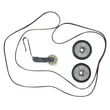
| Thumping/squealing | Noise early or during cycle | Wear in belt or drum support components |
Why it matters
Most “early failures” we see are tied to poor airflow. Keeping the vent system clear helps protect the heater circuit, thermostats, and motor, and it also lowers energy use.
Last updated: January 2026
Is a 7.4 cu ft dryer big?
Yes. A 7.4 cu. ft. dryer is generally considered a large-capacity size, meaning it can handle bigger everyday loads and bulkier items with fewer cycles. For your Whirlpool WED49STBW1, the best results still depend on not overloading and using the right cycle settings in the WED49STBW1 use and care manual.
What “7.4 cu. ft.” means in real use
A larger drum gives clothes more room to tumble, which typically helps drying performance and can reduce wrinkling when loads are sized correctly.
Common load types that usually fit well in a large-capacity dryer:
- Full family-size mixed loads (towels, tees, jeans)
- Bulky items (comforters, blankets) when not tightly packed
- Multiple bath towels in one cycle
- Larger bedding loads (sheets plus pillowcases)
How to tell if the load is too big
Even with a large-capacity drum, overloading can cause long dry times and uneven drying.
Look for these signs:
- Clothes feel hot but still damp in spots
- Items are twisted into a tight ball
- Drying times keep increasing
- The dryer seems to run but airflow at the outside vent feels weak
Quick capacity guidance (rule of thumb)
| Dryer capacity | Typical description | Best fit for |
|---|---|---|
| Under ~6.5 cu. ft. | Compact to mid-size | Singles, couples, smaller loads |
| ~6.5 to 7.3 cu. ft. | Medium-large | Regular family loads |
| 7.4 cu. ft. and up | Large capacity | Larger households, bulky items |
Why it matters
Choosing the right load size helps your Whirlpool electric dryer dry faster, run more efficiently, and reduce wear on fabrics. It also helps prevent airflow-related issues that can lead to poor drying.
Last updated: January 2026
How to tell if a whirlpool dryer motor is bad?
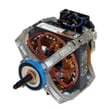
On the Whirlpool WED49STBW1 electric dryer, a bad drive motor usually shows up as the drum not turning, a humming sound with no rotation, or the dryer stopping shortly after you press Start. The most reliable confirmation is an electrical continuity test of the motor windings.
Quick symptoms that point to a bad motor
- Dryer hums but the drum will not start turning
- Drum turns by hand, but will not start on its own
- Dryer starts, then shuts off and may smell “hot”
- Motor runs intermittently (works sometimes, then won’t)
- You hear a click from the start switch, but no motor movement
How we test the motor (basic DIY approach)
- Unplug the dryer (240V shock hazard).
- Remove the cabinet access needed to reach the motor (use the WED49STBW1 use & care manual for safety and access guidance).
- Inspect for obvious issues first: broken belt, seized drum, or a jammed blower wheel.
- Use a multimeter to check continuity through the motor windings (start and run).
- If your meter never changes (open circuit) on a winding, the motor is defective.
What to check before condemning the motor
- Drum/belt load: A broken belt can mimic a “motor problem” because the motor may run but the drum won’t move.
- Door switch: If the door switch is failing, the motor may not run at all.
- Thermal fuse: A blown thermal fuse can prevent the motor from running.
Parts that are commonly involved on WED49STBW1
| Symptom | Often-related part | Why it matters |
|---|---|---|
| Hums, won’t start | Drive motor 279827 | Motor may be seized or windings open |
| Won’t run at all | Door switch, thermal fuse | Safety circuit can stop the motor |
| Runs but drum won’t turn | Belt | Drum drive is lost |
Why it matters
A failing motor can overheat and trip safety devices, and a “motor-like” symptom is often caused by airflow restrictions or a dragging drum. Ruling out belt, blower, and safety switches first helps avoid replacing the wrong part.
Last updated: January 2026