


Is a 7.3 cubic foot dryer big?
Yes. A 7.3 cubic foot dryer is considered a large-capacity size; it is big enough for most families and handles bulky items (comforters, blankets, heavy towels) more easily than typical 5.0 to 7.0 cu. ft. dryers. For your GE DBXR453GV0AA gas dryer, that capacity generally means fewer loads and better airflow around large loads when you avoid overfilling.
What “7.3 cu. ft.” means in real use
- Fits larger mixed loads so you can dry more per cycle.
- Helps bulky items tumble instead of balling up.
- Reduces the number of loads for family laundry days.
- Still benefits from proper loading; don’t pack the drum tight.
- Drying time depends heavily on venting, lint buildup, and heat output.
Quick capacity comparison
| Dryer capacity | Common label | Best for |
|---|---|---|
| 5.0 to 6.5 cu. ft. | Standard | Singles, couples, smaller loads |
| 6.6 to 7.2 cu. ft. | Large | Families, frequent laundry |
| 7.3 cu. ft. and up | Extra-large | Bulky items, big households |
Why it matters (and what to do if drying is slow)
Large capacity only helps if the dryer can move air and heat efficiently. If your DBXR453GV0AA takes too long to dry, focus on airflow first.
- Clean the lint screen every load.
- Check the vent duct for kinks, crushing, or long runs.
- Make sure the outside vent hood opens fully.
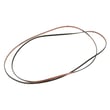
- If the drum is not tumbling well, inspect wear items like the drive belt WE03X29897.
- For performance and maintenance tips, follow how to keep a dryer clean and economical.
Last updated: February 2026
What is the most common problem with a GE electric dryer?
The most common GE electric-dryer complaint is no heat or long dry times, usually caused by restricted airflow (lint buildup or venting issues) or a failed heating safety/control part. On GE DBXR453GV0AA (a gas dryer), the most common “not drying” causes are still airflow problems and ignition or temperature-control issues.
Most common symptoms and what they usually point to
- Runs but no heat: burner ignition problem, gas valve issue, or thermostat problem
- Takes too long to dry: clogged lint screen, crushed/long vent, blocked blower housing
- Drum will not tumble: broken belt, idler problem, or motor issue
- Squealing or scraping noise: worn drum glides/bearings or felt seal wear
- Stops mid-cycle: overheating from poor airflow, thermostat cycling issues
Quick checks we recommend first (fast, no parts)
- Clean the lint screen and confirm strong airflow at the outside vent hood.
- Inspect the vent run for kinks, excessive length, or lint blockage.
- For gas models like DBXR453GV0AA, confirm the gas supply valve is open and other gas appliances work.
- Listen for ignition: a brief click and burner “whoosh” after start (no sound can indicate an igniter or valve issue).
Parts that commonly fix these problems on DBXR453GV0AA
| Symptom | Common part to check/replace | What it affects |
|---|---|---|
| Drum not turning | Drive belt WE03X29897 | Transfers motor power to the drum |
| Squeal, thump, scraping | Dryer drum glide bearing WE03X37318 | Supports drum movement and reduces friction |
| No heat (gas ignition) | Dryer burner igniter WE04X25996 | Lights the gas at the burner |
| Overheating or poor temp control | Dryer operating thermostat WE4M216 | Regulates drum temperature |
Why it matters
Airflow problems can mimic “bad heat” and can also overheat the dryer, which shortens the life of thermostats, igniters, and even the motor. Fixing venting first often restores normal drying and prevents repeat failures.
For model-specific troubleshooting steps, we use our DIY guides like gas dryer wont heat troubleshooting video and gas dryer wont start troubleshooting video.
Last updated: February 2026
What's the life expectancy of a GE dryer?
A GE dryer like model DBXR453GV0AA typically lasts about 10 to 13 years with normal household use. Consistent airflow (clean lint system and venting) and keeping the drum support parts in good shape are the biggest factors in getting the full lifespan.
Typical lifespan and what affects it most
Most dryers fail early due to heat and airflow stress, or due to drum drive wear.
- Vent restriction (long dry times, overheating, cycling issues)
- Lint buildup inside the cabinet or blower housing
- Worn drum support (glides, felt seal) causing drag and noise
- Worn drive system (belt, idler) causing slipping or no tumble
- Ignition or gas valve issues on gas dryers (no heat or intermittent heat)
Quick maintenance checklist (best ROI)
These habits extend life and reduce repair frequency:
- Clean the lint screen every load.
- Check airflow at the outside vent hood; it should be strong and steady.
- Clean the vent duct at least yearly (more often with long runs or pets).
- Do not overload; heavy loads strain the belt and drum supports.
- If you hear scraping or thumping, inspect drum supports early (small parts prevent big wear).
Common wear parts that influence longevity on DBXR453GV0AA
If your dryer still heats but is noisy, slow, or intermittently tumbles, these are common fixes:
| Symptom | Common cause | Example part for this model |
|---|---|---|
| Drum not turning | Worn or broken belt | Drive belt WE03X29897 |
| Squealing, scraping | Worn drum glide/bearing | Dryer drum glide bearing WE03X37318 |
| Thumping, rubbing, lint leaks | Worn drum felt seal | Felt WE09X27634 |
Why it matters
A dryer that is forced to run hot or run long (usually from poor venting) wears out the motor, igniter, thermostats, and drum supports faster. Keeping airflow strong is the simplest way to protect both drying performance and the service life of your GE gas dryer.
Last updated: February 2026
Where to find part number on GE dryer?
On your GE DBXR453GV0AA gas dryer, the model and serial tag (which is what you need to look up the correct replacement part number) is typically located on the door opening, either on the inside of the dryer door or on the front door frame. Use that model number to match parts like the drive belt WE03X29897 exactly.
What to look for on the tag
The tag usually lists several identifiers. For ordering parts, the most important are:
- Model number (for this dryer: DBXR453GV0AA)
- Serial number (helps confirm production details)
- Electrical and gas ratings (useful for service, not usually needed for parts)
- Sometimes a manufacturing date or code
How we recommend using the information
Once you find the tag, use the model number first, then confirm the part by name and ID.
- Match the model number to DBXR453GV0AA
- Search the part by part name (example: drive belt)
- Confirm the part ID matches the listing (example: WE03X29897)
- Compare your old part’s shape and mounting points before installing
Common tag locations on GE dryers
| Location | What to do | Why it helps |
|---|---|---|
| Inside the door | Open the door and look along the inner panel | Fastest place to check |
| Front door frame | Check the rim of the opening where the door closes | Common on many GE designs |
| Rear panel (less common) | Look for a label near the cord or gas connection area | Helpful if the front label is missing |
Why it matters
GE dryers often have similar-looking parts across different model series. Using the exact model number (DBXR453GV0AA) prevents ordering a belt, igniter, thermostat, or timer that fits a different drum size or configuration.
Last updated: February 2026