Owner’s manual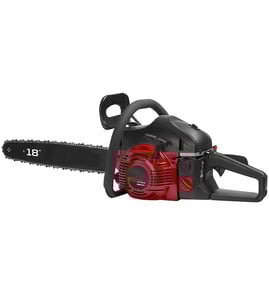


Can I scrap a chainsaw?
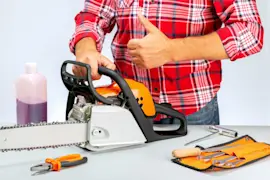
Yes. We recommend scrapping a Craftsman gas chainsaw model 316381880 by separating recyclable metal from fuel, oil, and plastic components, then taking each material to the appropriate recycling or household hazardous waste drop-off.
How to prep a gas chainsaw for scrapping
- Let the engine cool completely.
- Drain the fuel tank into an approved container; store it safely or take it to a hazardous waste facility.
- Empty the bar and chain oil reservoir; bar and chain oil can seep during storage, so keep the saw upright on absorbent material.
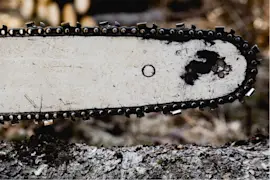
- Remove the guide bar and chain; keep the chain covered (scabbard) for safe handling.
- Wipe off heavy oil and sawdust so recyclers can handle the metal more easily.
What can be recycled vs. what needs special disposal
| Material/component | Typical handling | Notes |
|---|---|---|
| Steel/aluminum parts (engine housing, fasteners, bar) | Scrap metal recycling | Most recyclers accept mixed metal tools. |
| Saw chain | Scrap metal recycling | Keep it bundled or covered for safety. |
| Gasoline and 2-cycle mix | Household hazardous waste | Never pour onto ground or into drains. |
| Bar and chain oil | Household hazardous waste or used-oil collection (where accepted) | Use only proper bar and chain oil during operation. |
| Plastic/rubber (handles, fuel lines) | Varies by facility | Some scrap yards discard these; some require separation. |
Safety and handling notes (why it matters)
A chainsaw has sharp cutting components and flammable fluids. The 316381880 manual emphasizes safe maintenance and storage practices, including keeping the bar and chain covered and managing oil seepage during storage. Following those same practices prevents injuries and reduces fire risk while you transport the saw for recycling.
Helpful references
- For storage steps like loosening chain tension, covering the bar and chain, and draining fuel for long-term storage, follow the 316381880 owner's manual.
- If you are removing the cutting components before recycling, review kickback and chain handling guidance in the 316381880 owner's manual.
Last updated: February 2026
How many horsepower is a 42cc chainsaw?
A 42cc chainsaw is typically in the 2.2 to 2.8 horsepower range, depending on the engine design and tuning. For the Craftsman 316381880 specifically, our 316381880 operator's manual lists the engine as 46 cc, so horsepower is not the best match for this model.
Quick way to estimate horsepower from cc
Manufacturers often market chainsaws by cc (displacement) because horsepower varies with carburetor settings, exhaust, and emissions tuning. As a practical rule for homeowner 2-cycle saws:
- 40 to 45 cc: usually about 2.0 to 2.6 HP
- 46 to 50 cc: usually about 2.4 to 3.2 HP
- 50 to 60 cc: usually about 3.0 to 4.0 HP
- 60+ cc: typically 4.0+ HP
Specs that matter more than horsepower for cutting
If you are comparing saw capability, these specs usually predict real-world performance better than advertised HP:
| Spec | What it tells you | Why it matters |
|---|---|---|
| Engine displacement (cc) | Engine size | Bigger cc usually means more torque potential |
| Bar length | Max practical cut size | Longer bars need more power to pull the chain |
| Chain pitch and gauge | Chain size | Must match the bar and sprocket for safe operation |
| Sharp chain | Cutting efficiency | A sharp chain cuts faster with less strain |
For the Craftsman 316381880, the manual lists an 18-inch guide bar, 0.325-inch pitch, and 0.050-inch gauge, which are key compatibility specs when selecting a replacement chain or bar.
Why it matters
Horsepower numbers can be inconsistent across brands, but cc plus the correct bar and chain setup tells you what the saw can realistically handle. Keeping the chain sharp and the air intake clean also helps the engine maintain power under load.
Last updated: February 2026
Is 40 1 or 50 1 better for chainsaws?
For the Craftsman 316381880 gas chainsaw, 40:1 is the correct and better fuel mix because that is the manufacturer-specified fuel/oil ratio. Using 50:1 runs less oil than designed, which increases wear risk and can shorten engine life.
What to use for model 316381880
The operator manual specifies a 40:1 gasoline-to-2-cycle oil ratio. We recommend following the mix ratio exactly as shown in the 316381880 operator's manual.
- Use fresh, unleaded gasoline and quality 2-cycle engine oil
- Mix fuel in a separate approved fuel can (not in the saw tank)
- Measure oil accurately; do not “eyeball” the ratio
- Shake the fuel can to blend before each refill
- Use bar and chain oil in the oil reservoir (separate from fuel)
40:1 vs 50:1: what changes
50:1 contains less oil per gallon than 40:1. Less oil means less lubrication for a 2-cycle engine.
| Mix ratio | Oil per 1 gallon gas | What it means |
|---|---|---|
| 40:1 | 3.2 oz | More lubrication; matches this model’s spec |
| 50:1 | 2.6 oz | Less lubrication; higher wear risk if the engine is designed for 40:1 |
Why it matters
A 2-cycle chainsaw engine relies on oil mixed into the fuel for lubrication. If the mix is too lean on oil (such as 50:1 in a 40:1 engine), internal parts can run hotter and wear faster, leading to poor performance and expensive repairs.
Related maintenance that helps starting and power
If your saw is hard to start or runs rough, fuel mix is only one piece of the puzzle. These checks often make an immediate difference:
- Clean or replace the air filter 953-08134
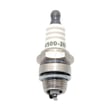
- Inspect and replace the spark plug 753-08107 if fouled
- Use fresh fuel; discard old fuel left from last season
- Confirm the choke and primer bulb are working correctly
- Keep the chain sharp and properly tensioned
For more troubleshooting steps, use tips for a hard to start chainsaw.
Last updated: February 2026
What is the Craftsman 316381880 42 cc 2-cycle gas 18 chainsaw?
The Craftsman 316381880 is a 2-cycle gas chainsaw built around an 18-inch guide bar and chain, with safety features like a chain brake, throttle lockout, and chain catcher. In the operator documentation for this model, the engine displacement is listed as 46 cc (not 42 cc); confirm operating and maintenance details in the 316381880 operator's manual.
Key specs for Craftsman model 316381880 (from the manual)
- Engine type: air-cooled, 2-cycle
- Displacement: 46 cc (2.8 cu. in.)
- Guide bar length: 18 in (45.7 cm)
- Fuel/oil mix ratio: 40:1
- Spark plug gap: 0.025 in (0.635 mm)
- Approximate weight (without fuel or bar oil): 14 to 15 lb
| Spec | What it affects | Why you care |
|---|---|---|
| 46 cc displacement | Power output and tuning baseline | Helps you match the correct service info and parts |
| 18 in bar length | Cutting capacity | Helps you choose the correct bar and chain length |
| 40:1 fuel mix | Engine lubrication | Prevents scoring, hard starting, and premature wear |
About the “42 cc” vs “46 cc” wording
You will sometimes see this saw described differently in listings. For model 316381880, use the operator manual specifications as the baseline for service and parts matching.
Parts that commonly come up for this model
When you are doing routine upkeep or solving a running issue, these are frequent checks and replacements:
- Spark plug 753-08107 (starting, misfire, poor power)
- Air filter 753-08134 (rich running, bogging, hard starting)
- Bar and chain condition and lubrication (cutting performance)
Why it matters
Using the correct model specs helps you choose compatible cutting components and tune-up parts. That improves starting reliability, reduces chain derailments, and helps protect the clutch and bar from premature wear.
Last updated: February 2026
What model number is a Craftsman 316381880 chainsaw?
The model number for this Craftsman gas chainsaw is 316.381880 (often written without the dot as 316381880). You can confirm it on the product ID label and in the 316381880 operator's manual, where it appears as “Model No. 316.381880.”
Where to find the model number on the saw
Check these common locations on Craftsman chainsaws like model 316381880:
- On the housing near the rear handle
- On the starter housing area
- Near the fuel tank or oil tank area
- On a sticker or metal tag that also lists emissions information
- Printed on the first page of the operator documentation
Model number vs. part numbers (quick comparison)
Model numbers identify the whole chainsaw; part numbers identify individual replacement parts.
| What you’re looking at | Example | What it’s used for |
|---|---|---|
| Model number | 316.381880 (or 316381880) | Finding the correct parts list and manual |
| Part number | 753-08107 | Ordering a specific replacement part |
| Part name | Spark plug | Describes the part’s function |
Why it matters
Using the exact model number ensures you get parts that fit and match the correct specifications for your saw (for example, the correct guide bar length and chain type listed for model 316.381880 in the manual).
Last updated: February 2026
Who makes Craftsman chainsaws now?
Craftsman chainsaws are built by different manufacturers depending on the specific model and production era. For the Craftsman gas chainsaw model 316381880, the operator documentation shows it was supported under the Sears and Craftsman brand umbrella; for current Craftsman chainsaws, manufacturing is typically handled by large outdoor power equipment partners and can vary by model line.
How to identify the maker for your specific Craftsman saw
The most reliable way is to match the model number and the product label information.
- Check the data plate for the full model number (for this saw: 316381880) and any manufacturer code.
- Compare the model number and specifications section in the 316381880 operator’s manual.
- Use the illustrated parts list for your model to see which supplier family the parts align with.
- If you are ordering tune-up parts, match by part number, not by “who made it.”
- When in doubt, use the model number to select parts that are confirmed to fit.
What we can confirm from the 316381880 documentation
The manual identifies this unit as a 2-cycle gas chainsaw, model 316.381880, and it is branded Craftsman with Sears support information. That tells you how the saw was marketed and supported; the underlying manufacturer can still vary across Craftsman models and years.
| What you’re checking | Where to look | What it tells you |
|---|---|---|
| Model number | Product label, manual cover | Which parts and procedures fit |
| Parts compatibility | Parts list and diagrams | Which replacement parts match |
| Safety and operation specs | Manual “Specifications” and “Maintenance” | How to run and maintain the saw correctly |
Why it matters
Knowing the exact maker is less important than matching the correct model number and part numbers. That prevents wrong-fit purchases and helps you troubleshoot common issues like hard starting, rough running, or poor cutting performance.
If your question is tied to a symptom (for example, starting problems), use tips for a hard to start chainsaw to narrow down whether the issue is fuel, spark, or airflow.
Last updated: February 2026
Will an Oregon chain fit a Craftsman chainsaw?
Yes, an Oregon chain can fit a Craftsman chainsaw if the chain’s pitch, gauge, and drive-link count match your exact saw and bar. For Craftsman model 316381880, the operator specs call for an 18-inch chain with 0.325-inch pitch and 0.050-inch gauge; match those specs before you buy. See the 316381880 operator's manual for the exact replacement chain details.
What to match so the Oregon chain fits
To fit correctly and oil properly, the replacement chain must match these items:
- Pitch: 0.325 inch (must match the drive sprocket)
- Gauge: 0.050 inch (must match the bar groove)
- Bar length: 18 inches (for the standard setup)
- Drive-link count: must match your specific 18-inch bar (count your old chain or confirm in the manual)
- Low-kickback design: we recommend a low-kickback chain for homeowner use
Model 316381880 chain specs at a glance
| Item | Spec for Craftsman 316381880 | What to look for on an Oregon package |
|---|---|---|
| Bar length | 18 in. | “18 in.” |
| Pitch | 0.325 in. | “.325” |
| Gauge | 0.050 in. | “.050” |
| Safety style | Low-kickback recommended | “Low-kickback” or “safety chain” |
Why it matters
If pitch or gauge is wrong, the chain can ride incorrectly in the guide bar, cut poorly, and increase the chance of kickback. Matching the specs keeps the chain seated in the bar groove and meshed with the sprocket the way the saw was designed.
Helpful related guidance
- If your chain seems “too tight” after cutting, recheck tension after it cools; warm chains expand.
- If the chain will not move by hand, confirm the chain brake is disengaged.
- When you replace the chain, inspect the bar groove and sprocket tip for wear.
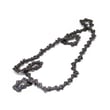
If you also need a compatible replacement chain sold for this model, our parts list includes the 18-inch chainsaw chain option: chainsaw chain, 18-in 20BPX072G.
Last updated: February 2026