Owner’s manual
 Error Codes




How do you put the bottom grill on a GE refrigerator?
On the GE PFS22MISBWW bottom-mount refrigerator, we install the bottom (base) grille by lining up the grille’s rear prongs with the matching holes in the cabinet, then pushing it forward until it snaps into place. Use the owner's manual for the exact grille location and illustrations.
- Unplug the refrigerator or switch off power at the breaker if you will be working near wiring.
- Position the grille at the bottom front of the cabinet.
- Align the prongs on the back of the grille with the holes in the cabinet frame.
- Push the grille straight forward until it snaps securely into place.
- Confirm the grille sits flush and does not rattle when you tap it lightly.
These issues are the most common on bottom-mount models:
- Refrigerator is not level: the cabinet can twist slightly and misalign the grille holes.
- Prongs are bent or blocked: straighten prongs and clear any foam, tape, or debris.
- Grille is not centered: start with one side aligned, then work across evenly.
- Something is pinched behind the grille: check for a water line or wiring routed too close to the opening.
The grille fit is often best after the refrigerator is properly leveled.
| What to check | What “good” looks like | What to do if it’s off |
|---|---|---|
| Cabinet level | Front is slightly higher than rear | Adjust leveling legs until doors close easily |
| Grille engagement | Audible/firm “snap” | Re-align prongs and push straight forward |
| Final position | Flush, no gaps | Re-seat the grille and verify nothing is obstructing |
The base grille helps protect components at the bottom front of the refrigerator and supports proper airflow around the machine compartment. A loose or missing grille can lead to noise, vibration, and easier debris buildup.
Last updated: February 2026
Is GE PFS22MISBWW considered high end?
GE PFS22MISBWW is generally considered an upper-midrange GE bottom-mount refrigerator rather than a true “high-end” built-in or luxury model. It offers solid features for everyday use, but it is typically positioned below premium lines that focus on pro styling, custom finishes, and luxury-grade fit and finish; see the owner's manual for the exact features and configuration of your unit.
We look at a mix of design, performance, and serviceability factors, not just price.
- Built-in or counter-depth luxury fit and finish (often with panel-ready options)
- Premium materials and hardware (handles, hinges, door bins, drawer glides)
- Advanced temperature management (multiple sensors, tighter control, dual evaporators on some models)
- Noise control and airflow design (fan systems, insulation, vibration control)
- Feature set (ice and water system design, filtration, storage flexibility)
This model family commonly includes features that feel “premium” compared to basic top-freezer units.
| Feature area | What you can expect | Why it feels higher-end |
|---|---|---|
| Bottom-mount layout | Fresh food at eye level | More convenient daily access |
| Water filtration | Uses a cartridge-style filter | Better taste and odor control |
| Serviceable components | Many parts are replaceable | Repairs can extend appliance life |
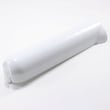
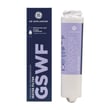
If you are maintaining the water system, the GE smartwater refrigerator water filter GSWF is a common replacement item for this model.
Knowing whether your refrigerator is “high end” helps set expectations for repair decisions. For example, investing in a control board, fan motor, or sealed-system work makes more sense when the refrigerator’s overall build and feature set justify the cost.
- Keep condenser areas clean so the compressor runs cooler.
- Replace the water filter on schedule to maintain flow and taste.
- Confirm door seals close fully to prevent frost and temperature swings.
- Use stable temperature settings and avoid overpacking air vents.
Last updated: February 2026
What is the most common problem with GE PFS22MISBWW refrigerators?
For the GE PFS22MISBWW bottom-mount refrigerator, the most common customer complaints are cooling performance problems (warm fresh food section or freezer) and ice maker or water dispenser issues (no ice, slow water, leaks). Many “cooling” complaints trace back to airflow restrictions, dirty condenser coils, or a failed fan motor.
- Refrigerator not cold enough but freezer seems OK
- Freezer not cold enough or temperatures swing
- Ice maker not making ice or making small/hollow cubes
- Water dispenser is slow, sputters, or leaks
- Unit runs for long periods or cycles on and off frequently (often normal after loading food or during hot weather)
Start with these basics before replacing parts:
- Confirm the temperature controls are set correctly (see the PFS22MISBWW owner's manual).
- Make sure doors fully close and nothing is holding them open.
- Clean the grille and condenser area; restricted airflow can cause long run times and poor cooling.
- Avoid blocking the air vents inside the fresh food section; food too close to the vent can cause freezing or uneven temps.
- If the unit is completely dead, check the outlet and home breaker or fuse (the manual lists this as a common cause).
| Symptom | Common cause | Parts that often apply |
|---|---|---|
| Warm refrigerator or freezer | Airflow problem or fan not running | Refrigerator evaporator fan motor WR60X10196, refrigerator condenser fan motor WR84X10055 |
| Temps fluctuate or seem inaccurate | Sensor issue | GE profile refrigerator temperature sensor WR55X10025 |
| No ice or slow water | Filter restriction or water path issue | GE smartwater refrigerator water filter GSWF, refrigerator water guide WR29X10092 |
Cooling and ice maker problems often get worse over time. A simple airflow issue (like dirty condenser coils or blocked vents) can make the compressor run longer than it should, which increases wear and energy use.
Last updated: February 2026