Owner’s manual
 Error Codes


How many cubic feet is my Kenmore freezer?
The exact cubic-foot capacity for Kenmore model 25322742410 is not identified in the model-specific information we have here. The most reliable way to confirm your freezer’s capacity is to check the model’s documentation or calculate it from the interior measurements (height × width × depth). See the 25322742410 use & care manual for model-specific details.
- Empty the freezer enough to measure the usable interior (not the outside cabinet).
- Measure in inches:
- Interior height
- Interior width
- Interior depth
- Multiply:
height × width × depthto get cubic inches. - Convert to cubic feet: divide by 1,728.
- Measure the main cavity only (do not include door bins unless you want “total usable” space).
- Measure to the inside liner, not to shelves or baskets.
- If the back wall is sloped, measure depth at the deepest usable point and note it.
- Round to one decimal place for a practical result.
| What you have | Convert to | Formula |
|---|---|---|
| Inches (H × W × D) | Cubic feet | (H×W×D) ÷ 1728 |
| Feet (H × W × D) | Cubic feet | H×W×D |
Capacity helps you plan food storage and freezing performance. For example, the manual notes a common loading guideline of about 3 lb of fresh food per cubic foot at one time, which depends on knowing your freezer’s size.
Last updated: January 2026
What causes an upright freezer to stop freezing?
On Kenmore upright freezer model 25322742410, the most common reasons it stops freezing are poor airflow (dirty coils or a failed fan), a temperature control issue, or heavy frost buildup that blocks the evaporator from moving cold air. Use the troubleshooting and temperature-control guidance in the 25322742410 use & care manual to narrow it down.
- Confirm the temperature control is not set to OFF; then allow several hours for temperatures to stabilize.
- Keep the door closed as much as possible and make sure packages are not preventing the door from sealing.
- Verify the freezer has had enough run time after being unplugged or moved (cooldown can take many hours).
- Check for heavy frost on the inside back wall; frost can restrict airflow and reduce freezing.
- Make sure the freezer has proper clearance for airflow around the cabinet.
| What’s happening | What you may notice | Common next step |
|---|---|---|
| Airflow problem | Warm spots, weak airflow, louder-than-normal fan noise or no fan sound | Inspect the evaporator fan area; replace the fan motor if it’s not running |
| Temperature control problem | Compressor runs too little or not at all, temperatures drift warmer | Test/replace the thermostat/control |
| Frost/defrost problem | Thick frost, reduced airflow, warmer temps even though it runs | Defrost and check defrost components |
| Heat rejection problem | Runs a lot but still not cold enough | Clean/inspect condenser area and airflow |
If diagnosis points to a failed component, these model-compatible parts are common solutions:
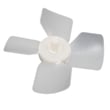
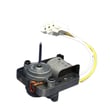
- Freezer evaporator fan motor 297309000 (moves cold air through the cabinet)
- Temperature control 5304513033 (cycles cooling based on temperature)
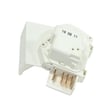
- Freezer defrost timer 5304518034 (controls defrost cycles on applicable versions)
- Freezer condenser coil 5300083897 (releases heat so the system can cool properly)
When airflow is restricted or the control system is not cycling correctly, the freezer can run but still fail to pull the cabinet down to safe food-storage temperatures. Catching the cause early helps prevent food spoilage and reduces strain on the compressor.
Last updated: January 2026
What is the average lifespan of an upright freezer?
An upright freezer like Kenmore model 25322742410 typically lasts 10 to 15 years. With good airflow, correct temperature settings, and clean condenser areas, it’s common for a well-maintained unit to reach the upper end of that range.
We see these factors make the biggest difference in how long an upright freezer runs reliably:
- Room temperature and ventilation: hot locations make the compressor run longer
- Door seal condition: air leaks cause heavy run time and frost
- Defrost and drain upkeep: blocked drains and heavy frost strain the system
- Power quality: frequent outages or low voltage can stress electrical components
- Cleaning habits: dust buildup reduces heat transfer and efficiency
For model-specific operating and care guidance, follow the maintenance and temperature-control sections in the 25322742410 use & care manual.
These are practical habits that reduce wear on the sealed system and compressor:
- Keep the freezer level so the door closes and seals consistently
- Leave air space around the cabinet for circulation
- Open the door less often; organize food to shorten door-open time
- Defrost and clean when frost buildup becomes noticeable (if your unit is not frost-free)
- Keep the condenser area clean and unobstructed
| If your freezer is… | Usually worth doing | Usually not worth doing |
|---|---|---|
| Under 10 years old | Replace wear items, fix airflow/defrost issues | Major sealed-system work unless clearly justified |
| 10 to 15 years old | Fix simple issues (gasket, controls, fan) | Repeated major failures |
| Over 15 years old | Minor fixes only | High-cost repairs involving compressor or sealed system |
A freezer that’s running longer than normal, building frost, or struggling to hold temperature often isn’t “just old”; it may have a door-seal leak, airflow restriction, or a defrost problem. Catching those early can add years of service life.
Last updated: January 2026
Where is the model number on a Kenmore upright freezer?
On the Kenmore upright freezer model 25322742410, the model number is printed on the serial plate inside the appliance compartment. You will typically find it on an interior wall near the top area, and it is meant to stay in place (do not remove it). See the 25322742410 use & care manual for the exact wording and recording section.
We recommend checking these spots in order:
- Inside the freezer compartment on a side wall (often upper left or upper right)
- On the ceiling area inside the compartment (near the light or control area)
- Behind the toe grille or kick plate at the bottom front
- On the back exterior panel (less common, but possible)
- Near the door opening on the cabinet frame (around the gasket area)
The serial plate typically lists both identifiers you will need for parts and service.
| Item on the label | What it’s used for | Example format |
|---|---|---|
| Model number | Matching parts diagrams and compatible replacement parts | 253.XXXXXXX |
| Serial number | Identifying production run and date coding | Letters and numbers |
We use the model number to match the correct Kenmore parts for your exact freezer design (shelves, door hardware, temperature control components, and more). Even small model-number differences can change which parts fit.
Last updated: January 2026
Why is my Kenmore freezer leaking water onto the floor?
Water leaking onto the floor from your Kenmore upright freezer model 25322742410 is most often caused by a blocked or frozen defrost drain path, which forces defrost water to overflow and run out of the cabinet instead of draining to the pan. Use the steps in the 25322742410 use & care manual to safely access the drain area.
- Ice or debris clogging the internal drain opening
- A frozen drain tube (water refreezes before it can exit)
- A cracked, loose, or misrouted drain tube under the cabinet
- A drain pan that is out of position or overflowing
- Door not sealing well, causing excess frost and heavy defrost water
- Unplug the freezer and protect the floor with towels.
- Look for a sheet of ice on the bottom of the freezer; that usually points to a drain restriction.
- Defrost and clear the drain opening: melt ice with warm water (not boiling) and a turkey baster, then confirm water flows freely.
- Inspect the external drain tube under the unit for kinks, ice, or blockage.
- If the tube is damaged or won’t clear, replace the drain components that match this model.
If you need replacement parts commonly tied to this symptom, we recommend checking the freezer drain tube 5304512272 and the freezer drain screen 216503100.
| What you see | Most likely cause | What usually fixes it |
|---|---|---|
| Ice sheet on freezer floor | Frozen/clogged defrost drain | Defrost, flush drain, clear tube |
| Water only during/after defrost | Partial drain restriction | Clean drain opening and tube |
| Water near front corners | Door not sealing, heavy frost | Check gasket seal, reduce door openings |
| Water underneath center | Drain pan shifted/overflowing | Reposition pan, clear drain path |
A restricted defrost drain can lead to recurring floor leaks, thicker frost buildup, longer run times, and temperature swings that can affect food quality. Clearing the drain early helps prevent repeat icing and water damage.
Last updated: January 2026