Owner’s manual


What is the average lifespan of a Samsung dryer?
A Samsung dryer typically lasts 10 to 15 years. For your Samsung DV328AGW, consistent airflow and heat management (cleaning the lint screen every load and keeping the exhaust duct clear) are the biggest factors that keep it running closer to the high end of that range.
- Vent restriction (lint buildup, crushed duct, long runs) causes overheating and extra wear
- Lint screen habits: clean before or after each load (the manual calls this out)
- Load size: chronic overloading strains the drum belt, rollers, and motor
- Heat system cycling: frequent overheating can shorten the life of thermostats and sensors
- Routine internal cleaning: periodic interior and exhaust-duct cleaning by qualified service personnel helps prevent heat and airflow problems
Use these habits to extend the life of your DV328AGW:
- Clean the lint screen every load
- Check outside vent hood for strong airflow while running
- Keep the area around the exhaust opening free of lint and dust
- Avoid overloading heavy items (towels, blankets) repeatedly
- Schedule periodic duct and interior cleaning
| Symptom | Common cause | Typical fix |
|---|---|---|
| Thumping or rumbling | Worn drum support rollers | Replace rollers, inspect belt |
| Squealing | Belt or idler wear | Replace belt, check pulleys |
| Long dry times | Vent restriction or lint buildup | Clean venting, confirm airflow |
| No heat or overheating | Thermostat/sensor issues | Test and replace failed component |
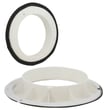
If you are hearing drum noise, a common wear part is the Samsung dryer drum support roller DC97-16782A.
Most “early failures” are really airflow and heat-stress problems. Keeping lint and exhaust restrictions under control reduces overheating, improves drying performance, and helps protect key components like the motor, belt, and thermostats.
For model-specific use and care details, follow the DV328AGW owner’s manual.
Last updated: February 2026
How to tell if Samsung dryer thermal fuse is bad?
On our Samsung DV328AGW dryer, a bad thermal fuse typically shows up as a dryer that will not start, or a dryer that runs but will not heat. The sure way to confirm is a continuity test with a multimeter; a good fuse reads closed (continuity), a blown fuse reads open (no continuity). See the DV328AGW owner's manual for safety and troubleshooting basics.
- Dryer will not start even though the door is shut and Start is pressed
- Dryer tumbles but clothes stay cold and damp
- Cycle ends but laundry is still wet (often paired with poor airflow)
- You recently had a clogged vent or heavy lint buildup
- Unplug the dryer (and shut off gas if you have a gas model).
- Access the fuse (commonly on the blower housing or heater duct, depending on design).
- Pull at least one wire off the fuse terminal.
- Set your multimeter to continuity or ohms.
- Touch probes to the fuse terminals.
| Meter result | What it means | What to do next |
|---|---|---|
| Continuity (beep or near 0 Ω) | Fuse is good | Check airflow, thermostats, heating circuit |
| No continuity (OL or very high Ω) | Fuse is blown | Fix overheating cause, then replace fuse |
Overheating is the usual reason a thermal fuse opens. The manual calls out airflow basics like cleaning the lint screen and keeping the exhaust duct clear.
- Clean the lint screen before or after each load
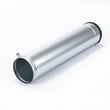
- Inspect and clean the exhaust duct; rigid 4-inch metal venting dries best
- Confirm the outside exhaust hood opens and closes freely
- Avoid crushed, kinked, or excessively long vent runs
- If the dryer is noisy or the drum drags, inspect wear items like the Samsung dryer drum support roller DC97-16782A and the Samsung dryer drum belt 6602-001655
A thermal fuse is a one-time safety device. Replacing it without correcting restricted airflow can lead to repeat no-heat or no-start problems and longer dry times.
Last updated: February 2026
How to tell if a Samsung dryer heating element is bad?
On the Samsung DV328AGW gas dryer, “no heat” is almost never a bad electric heating element because this model heats with a gas burner system. We confirm the heat failure by checking airflow first, then testing the burner ignition and safety components that control flame.
- Drum tumbles but clothes stay cool
- Burner never ignites (no flame) or ignites briefly then shuts off
- Dryer runs a long time and still leaves loads damp
- Heat seems to cycle abnormally (some cycling is normal)
For safety steps and operating checks specific to DV328AGW, use the DV328AGW manual.
- Confirm airflow: clean the lint screen; verify strong airflow at the outside vent hood.
- Check venting: crushed duct, long runs, or lint buildup can overheat the burner area and trip safety devices.
- Listen and look: during a heat cycle, you should typically hear ignition attempts and then steady burner operation.
| Symptom | Most likely area | What we test/inspect |
|---|---|---|
| No ignition attempt | Controls or door/thermal safety | Power, door switch, thermal cut-off devices |
| Ignites then shuts off | Flame sensing or temperature control | Sensor operation, cycling behavior |
| Never ignites but tries repeatedly | Ignition system | Igniter and related wiring/connectors |
If airflow is good, these parts are common “no heat” causes on Samsung gas dryers:
- A tripped or failed safety device such as the dryer thermal cut-off thermostat DC47-00016A
- A temperature sensing problem such as the dryer thermistor DC32-00007A
- A failed radiant/flame sensing component such as the dryer radiant sensor DC32-00008A
- Gas supply issues (shutoff valve closed, low supply, or installation problem)
Gas dryers rely on correct airflow and multiple safety sensors to keep the burner operating safely. Fixing vent restrictions and replacing failed sensors restores normal heat and prevents repeated shutdowns.
Last updated: February 2026