Installation guide
 Owner’s manual
 Error Codes



What is the most common problem with a KitchenAid refrigerator?
On the KitchenAid KSCS25INBL00 counter depth side-by-side refrigerator, the most common issues we see are ice maker problems and cooling complaints. These usually trace back to airflow restrictions (dirty condenser coils, frost buildup) or water-system issues that affect the ice maker and dispenser performance.
- Ice maker stops making ice or makes ice slowly
- Refrigerator section warms up while freezer seems OK
- Frost buildup on the freezer back wall
- Water leaking inside the fresh food section or under the unit
- Unusual fan noise or rattling
- Confirm temperatures: set refrigerator to about 37°F and freezer to about 0°F.
- Clean condenser coils: dust buildup reduces cooling and can cause longer run times.
- Check door sealing: look for gaps, torn gaskets, or doors not closing fully.
- Look for frost patterns: heavy frost in the freezer points to a defrost or airflow problem.
- Verify water supply (for ice/water): make sure the shutoff valve is fully open and the line is not kinked.
If your symptoms match, these model-compatible parts are often involved:
| Symptom | Common cause | Example part for this model |
|---|---|---|
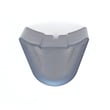
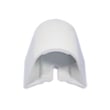
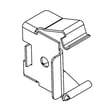
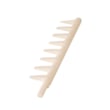
| No ice or slow ice | Ice maker failure or water delivery issue | Whirlpool refrigerator ice maker assembly 2198597 |
| Poor water flow at dispenser | Clogged water filter or restricted flow | Refrigerator water filter EDR3RXD1 |
| Frost buildup, warm fridge | Defrost system not opening correctly | Refrigerator defrost bi-metal WPW10225581 |
| Warm fridge, weak airflow | Airflow component issue (fan/damper related) | Refrigerator evaporator fan blade WP2169142 |
Ice maker and cooling problems often share the same root cause: restricted airflow or restricted water flow. Fixing the underlying issue early helps prevent food temperature swings, excessive frost, and strain on the sealed refrigeration system.
For KSCS25INBL00, use the troubleshooting and maintenance steps in the KSCS25INBL00 owner's manual to confirm temperature settings, water filter guidance, and normal operating sounds before replacing parts.
Last updated: January 2026
Are KitchenAid refrigerators good or bad?
KitchenAid refrigerators, including the KitchenAid KSCS25INBL00 counter depth side-by-side, are generally a good choice for long-term ownership because they are built around a serviceable sealed refrigeration system and are designed to be maintained with routine care. For model-specific use and care details, follow the KSCS25INBL00 owner's manual.
A KitchenAid side-by-side like KSCS25INBL00 performs best when it holds steady temperatures, makes ice reliably, and runs quietly with normal cycling.
- Refrigerator temperature stays near 37°F
- Freezer temperature stays near 0°F
- Ice maker fills and harvests consistently
- Doors seal tightly with no warm air leaks
- Water tastes clean and flow stays steady (with on-time filter changes)
Most complaints on side-by-side refrigerators come from maintenance items or wear parts, not the cabinet itself.
- Weak water flow or bad taste from an overdue filter
- Ice dispensing issues from clumps or frost in the chute
- Warm spots from blocked vents or overpacked shelves
- Noisy operation from fan or airflow restrictions
- Frost buildup from door seal or door-closing issues
Use this short checklist to keep performance strong and reduce common service calls.
- Replace the water filter on schedule; use the correct refrigerator water filter EDR3RXD1
- Keep air vents clear inside both compartments
- Clean dust from the condenser area periodically
- Confirm doors close fully and gaskets are clean
- Level the refrigerator so doors self-close properly (see the KSCS25INBL00 installation guide)
| What you notice | Usually means | First thing to do |
|---|---|---|
| Temps steady, normal cycling | Normal operation | Keep up with cleaning and filter changes |
| Temps drift, food softens | Airflow or defrost issue | Clear vents; check for frost on rear freezer panel |
| Ice slow or hollow cubes | Water supply or filter restriction | Replace filter; verify household water pressure |
| Water tastes off | Filter overdue | Replace filter and flush several gallons |
A counter depth side-by-side depends on consistent airflow and a healthy sealed system; simple upkeep (filter changes, airflow, cleaning) protects cooling performance and helps avoid expensive repairs.
Last updated: January 2026
How big is the KSCS25INBL00?
The KitchenAid KSCS25INBL00 is a counter-depth side-by-side refrigerator that fits a 36-inch-wide opening. Installation dimensions vary by configuration, but the installation guide shows a 25 cu. ft. class unit typically needs about 72 inches of opening height and clearance for a 150° door swing; confirm your exact cutout using the KSCS25INBL00 installation guide.
Use these as planning numbers for KSCS25INBL00 installations; final fit depends on leveling legs, door panels, and trim.
- Opening width: 36 in (91.5 cm)
- Opening height (25 size): 72 in (182.9 cm) standard cabinet; 72 1/8 in (183.2 cm) full-overlay
- Door swing: allow doors to open at least 150°
- Side-wall clearance: 13 1/4 in (34 cm) on freezer side; 16 1/2 in (42 cm) on refrigerator side
- Height adjustment: if leveling legs are fully extended, add about 1 1/8 in (29 mm) to height
| Measurement | 25 size (typical for KSCS25INBL00) | Notes |
|---|---|---|
| Opening width | 36 in | Cabinet opening width |
| Opening height (standard) | 72 in | Standard cabinet |
| Opening height (full-overlay) | 72 1/8 in | With full-overlay doors and trim kit |
| Door opening requirement | 150° minimum | Helps drawers and bins clear |
- Measure width at the front and back of the cutout (walls are not always square).
- Measure height at left, center, and right; note flooring transitions.
- Check depth including baseboards or shoe molding (these can prevent a flush fit).
- Confirm you have room to pull the unit out for service (water line and power cord slack).
- Plan for the door swing clearance so doors do not hit a wall or island.
Correct dimensions prevent installation headaches like doors that cannot open fully, a refrigerator that will not slide into the cutout, or leveling legs that raise the cabinet height beyond your opening.
Last updated: January 2026
What causes a KitchenAid refrigerator to stop cooling?
A KitchenAid KSCS25INBL00 counter depth side-by-side refrigerator stops cooling when cooling is turned off, airflow is restricted (dirty condenser area or blocked vents), or a cooling component fails (evaporator fan, defrost system, or sealed system). Start with settings and airflow checks in the KSCS25INBL00 owner's manual.
- Press COOLING ON/OFF to confirm cooling is On.
- Verify set points: 0°F freezer and 37°F refrigerator.
- Wait 24 hours after plugging in or changing settings for temperatures to stabilize.
- Make sure doors close fully; food packages and bins should not hold doors open.
- Check for blocked interior air vents; avoid packing items tightly against vents.
- Clean dust and pet hair from the condenser area so heat can release properly.
| Likely cause | What you notice | What to do next |
|---|---|---|
| Cooling turned off or wrong settings | Lights on, temps rising | Turn cooling on; reset set points; wait 24 hours |
| Dirty condenser or poor airflow | Runs a lot, still warm | Clean condenser area; improve airflow around unit |
| Defrost problem (frosted evaporator) | Weak airflow, warming temps | Look for heavy frost; troubleshoot defrost system |
| Fan or sealed system issue | Little cooling, odd run pattern | Check fans, compressor, and controls; service may be needed |
If you find heavy frost buildup or weak airflow, these parts are commonly involved in diagnosis:
- Refrigerator defrost bi-metal WPW10225581 (helps control defrost operation)
- Refrigerator condenser W10193018 (releases heat from the sealed system)
Restricted airflow and incorrect settings are the fastest fixes; catching them early prevents food loss and reduces strain on the compressor and fans.
Last updated: January 2026