Owner’s manual
 Error Codes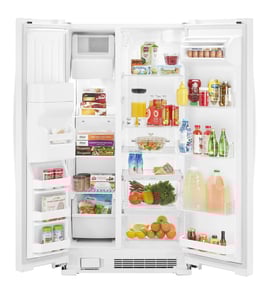


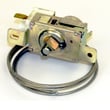
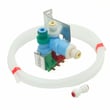
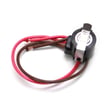
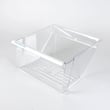
How big is the Whirlpool model ED5GVEXVD02?
The Whirlpool ED5GVEXVD02 is a full-size side-by-side refrigerator with 25.4 cu. ft. total capacity (15.02 cu. ft. fresh food plus 10.41 cu. ft. freezer). Its exterior size is 35-5/8 in. wide, 69-1/4 in. high (to top of case), and 34-5/8 in. deep (with handles); confirm fit details in the ED5GVEXVD02 owner's manual.
Key size specs for ED5GVEXVD02
Use these numbers when planning a kitchen cutout, delivery path, or replacement.
| Spec | Measurement |
|---|---|
| Total capacity | 25.4 cu. ft. |
| Refrigerator capacity | 15.02 cu. ft. |
| Freezer capacity | 10.41 cu. ft. |
| Width | 35-5/8 in. |
| Height (top of case) | 69-1/4 in. |
| Depth (with handles) | 34-5/8 in. |
How we recommend measuring your space
Even with the published dimensions, we recommend measuring your opening and pathways because trim, flooring, and door swing clearances affect fit.
- Measure the opening width at the front and back
- Measure height to the lowest cabinet or soffit point
- Measure depth to the front edge of surrounding cabinets
- Check door swing clearance so doors and bins open fully
- Measure delivery path (doorways, turns, stairwells)
What “big” means in real use
Capacity tells you storage volume, but exterior dimensions determine whether the refrigerator fits your cabinet opening and whether you can remove drawers, shelves, and the ice bin for service.
Quick comparison: capacity vs. fit
| If you are trying to… | Focus on… |
|---|---|
| Compare storage space | Capacity (cu. ft.) |
| Make sure it fits the cutout | Width, height, depth |
| Avoid door clearance issues | Door swing space |
Why it matters
Using the correct ED5GVEXVD02 dimensions prevents delivery problems, airflow restrictions, and door interference with walls or cabinets; it also helps when ordering shelves, bins, and door gaskets.
Last updated: February 2026
What is the most common problem with a whirlpool refrigerator?
Cooling problems are the most common issue we see with Whirlpool refrigerators like model ED5GVEXVD02. In most cases, the root cause is restricted airflow or heat removal (dirty condenser coils, blocked vents, frost buildup), which can also lead to warm temperatures, odd noises, and ice maker or dispenser complaints. For model-specific checks, use the ED5GVEXVD02 owner's manual.
Most common symptoms and what they usually point to
- Refrigerator or freezer not cold enough: dirty condenser coils, evaporator fan airflow issue, or defrost system problem
- Ice maker not making ice: water supply issue, frozen fill tube, or ice maker failure
- Water dispenser slow or not dispensing: clogged filter, air in the water line, or inlet valve problem
- Water leaking or puddles: clogged/iced defrost drain or loose water line connection
- Unusual noise: condenser fan area debris, evaporator fan blade rubbing, or normal compressor cycling sounds
Quick checks we recommend first (no parts guessing)
- Confirm controls are set correctly and doors close tightly.
- Clean condenser coils and make sure airflow around the cabinet is open.
- Check that interior vents are not blocked by food packages.
- If you recently changed the water filter, flush the water system and discard the first glass of water.
- If the unit will not run at all, verify the outlet works and the circuit breaker is not tripped (the manual’s troubleshooting section walks through these steps).
Common “problem to part” matches for this model
| Problem area | What fails most often | Example part for ED5GVEXVD02 |
|---|---|---|
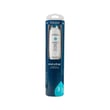
| Water flow to dispenser/ice maker | Clogged filter | Refrigerator water filter EDR3RXD1 |
| No water to ice maker/dispenser | Water inlet valve not opening | Refrigerator inlet valve W10408179 |
| Frost buildup, warm temps | Defrost heater not heating | Refrigerator heater WP2323198 |
| Noise or poor airflow | Fan blade damage/rubbing | Refrigerator evaporator fan blade WP2169142 |
Why it matters
A small airflow restriction can look like a “major cooling failure.” Cleaning coils, clearing vents, and addressing frost or water-flow restrictions early helps protect the compressor and keeps temperatures stable for safe food storage.
For display diagnostics and fault patterns, we also use the Whirlpool refrigerator error codes reference when applicable.
Last updated: February 2026
What's the average lifespan of a whirlpool refrigerator?
Most Whirlpool refrigerators last about 12 to 15 years on average. A Whirlpool ED5GVEXVD02 side-by-side can often reach that range (and sometimes longer) when the condenser coils stay clean, door gaskets seal tightly, and the cooling and defrost systems are kept in good working order; see the ED5GVEXVD02 owner's manual.
Typical lifespan and what changes it
A refrigerator’s life is mainly driven by compressor run time, airflow, and how well it can hold temperature.
- Maintenance: dirty coils and blocked vents shorten life
- Door sealing: warm air leaks force longer run times
- Water and ice system care: reduces leaks and valve strain
- Defrost performance: heavy frost can reduce cooling and overwork components
- Environment: hot garages and tight enclosures reduce lifespan
Quick maintenance checklist (best ROI)
- Vacuum and brush the condenser coil area regularly.
- Keep food from blocking interior air vents.
- Confirm doors close on their own and sit level.
- Clean and inspect door gaskets; replace if torn or warped.
- Replace the water filter on schedule to keep flow steady.
Common wear items vs. major components
| Item type | Examples on ED5GVEXVD02 | What it affects |
|---|---|---|
| Routine maintenance | Water filter, coil cleaning | Water flow, efficiency |
| Sealing and airflow | Door gasket, evaporator fan blade | Temperature stability |
| Cooling system | Compressor, condenser, evaporator | Core cooling performance |
If you’re maintaining water quality and flow, using the correct filter such as the refrigerator water filter EDR3RXD1 helps protect the dispenser and ice maker from restricted flow and nuisance issues.
Why it matters
A refrigerator that runs longer to maintain temperature uses more energy and puts extra wear on the compressor, fans, and defrost components. Simple upkeep often adds years of reliable service and helps prevent temperature swings that can spoil food.
Last updated: February 2026