Owner’s manual
 Error Codes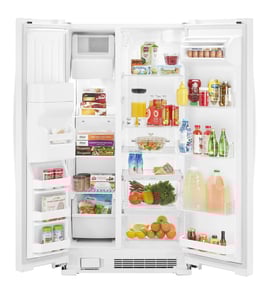


Are GE side by side refrigerators good?
GE side-by-side refrigerators like model GSH25JFTAWW are a solid choice for everyday use because they deliver consistent cooling, convenient ice and water features, and practical storage. Like any refrigerator, performance depends on correct setup, clean airflow, and keeping key wear parts maintained.
What “good” looks like in real use
We judge a side-by-side refrigerator by temperature stability, ice maker performance, noise level, and how easy it is to keep running efficiently.
- Holds steady fresh food and freezer temperatures when doors seal and airflow is clear
- Ice maker starts automatically once the freezer is cold enough (about 15°F / -9°C or below) and the ice maker switch is on
- Some operating noises are normal (compressor hum, whoosh when doors close, clicks/pops as it cools)
- Water and ice quality stays better when the filter is replaced on schedule
- Fewer “mystery” issues when sensors and defrost parts are working correctly
Common pros and tradeoffs (side-by-side style)
| Area | Typical advantage | Typical tradeoff |
|---|---|---|
| Layout | Easy access to freezer items at eye level | Narrower shelves for wide platters |
| Ice/water | Convenient dispenser | More parts to maintain (filter, valve, chute) |
| Cooling | Good airflow design | Fan or defrost issues can affect temps if neglected |
Maintenance that keeps a GE side-by-side performing well
These are the items we see most often tied to “good vs. frustrating” ownership.
- Replace the water filter regularly; a clogged filter can cause small or hollow ice cubes
- Keep doors closing fully; packages that hold the door open can slow ice freezing
- If the door doesn’t close smoothly, address gasket sticking or folding
- Expect normal sounds during operation; newer designs can sound different than older units
Helpful parts for this model
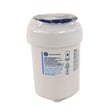
- Water filtration: GE refrigerator water filter MWFP
- Temperature feedback: refrigerator temperature sensor WR55X10025
- Door sealing: refrigerator door gasket WR24X10294
Why it matters
A side-by-side can seem “bad” when the root cause is maintenance related (restricted water flow, a door not sealing, or a cooling/defrost component drifting). Keeping the filter, seals, and temperature control system in good shape protects food quality and reduces run time.
For model-specific operating details and care guidance, use the GSH25JFTAWW manual. If you need to locate parts by diagram or order replacements, you can also search by model on Sears PartsDirect.
Last updated: February 2026
What is the average lifespan of a GE refrigerator?
A GE refrigerator typically lasts 12 to 16 years on average, and many run 10 to 20 years with normal use. For your GE GSH25JFTAWW side-by-side, steady temperatures, clean airflow, and routine filter changes are the biggest factors that help it reach the high end of that range.
Typical lifespan ranges (what to expect)
Most full-size refrigerators fall into these real-world ranges:
- 10 to 12 years: common when maintenance is minimal or the unit runs hot (dirty coils, poor ventilation)
- 12 to 16 years: typical average lifespan for many households
- 16 to 20 years: achievable with good airflow, stable power, and prompt repairs
Quick reference table
| Lifespan range | What it usually indicates | What to do |
|---|---|---|
| 10 to 12 years | Higher wear, warmer room, less maintenance | Improve ventilation, clean coils, keep doors sealed |
| 12 to 16 years | Normal use and care | Keep up with basic maintenance |
| 16 to 20 years | Strong maintenance habits, fewer chronic issues | Replace wear parts early (gaskets, sensors, valves) |
Maintenance that extends life on a side-by-side
These steps reduce compressor run time, prevent frost issues, and protect food temps:
- Keep condenser airflow clear (don’t block vents; keep the unit level)
- Maintain tight door seals; replace a worn gasket if you feel air leaks
- Replace the water filter on schedule if you use the dispenser
- Avoid overpacking; cold air must circulate through the freezer and fresh-food sections
- Address temperature swings early (often tied to sensors, fans, or defrost components)
If you’re doing routine care and need a filter for this model, use the GE refrigerator water filter MWFP.
Why it matters
A refrigerator that’s struggling to hold temperature runs longer and hotter. That extra run time increases wear on key components like the compressor, evaporator fan, and defrost system, which can shorten overall lifespan.
Helpful model-specific reference
For operating guidance and care steps (including normal sounds and basic maintenance), follow the GSH25JFTAWW owner's manual. If you’re ordering replacement parts for the GSH25JFTAWW, use the parts list for this model first, or search by model on Sears PartsDirect.
Last updated: February 2026
What is the most common problem with a GE refrigerator?
The most common issue we see with GE refrigerators like model GSH25JFTAWW is a cooling complaint (fresh food too warm, freezer not cold enough, or long run times). In many cases, the root cause is restricted airflow or a failed cooling-related component such as the evaporator fan motor or a temperature sensor.
Quick checks we recommend first
- Make sure air vents inside both compartments are not blocked by food packages.
- Confirm the doors close and seal fully; a door left slightly open can cause warm temps and slow ice freezing.
- Listen for normal operating sounds; newer-style compressors can run longer and sound different during normal operation.
- If ice cubes are small or hollow, replace the water filter.
- Unplug the refrigerator before cleaning or making repairs.
Most common causes and what they look like
| Symptom | Likely cause | What you can do next |
|---|---|---|
| Fresh food warm, freezer OK | Airflow problem or evaporator fan issue | Check for blocked vents; if the fan is not running, test/replace the evaporator motor WR60X10185. |
| Freezer warm, both sections struggling | Dirty condenser area or sealed-system issue | Clean condenser area; if cooling does not recover, service is typically needed. |
| Temps swing up and down | Sensor/control input problem | Check sensor connections; consider the refrigerator temperature sensor WR55X10025. |
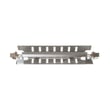
| Frost buildup, warming over time | Defrost system problem | Inspect defrost components; common parts include the refrigerator defrost heater WR51X10055 and defrost thermostat. |
| Small or hollow ice cubes, slow water | Clogged filter or low water pressure | Replace the GE refrigerator water filter MWFP; verify household water supply. |
Why it matters
Cooling problems are the most disruptive because they can affect food safety, ice production, and compressor run time. Catching airflow, filter, and defrost issues early often prevents bigger, more expensive failures.
Helpful model-specific reference
We recommend using the GSH25JFTAWW owner's manual for control settings, normal sound descriptions, and troubleshooting steps (including ice and door-closing guidance).
If you need parts beyond the items listed here, you can search by model number on Sears PartsDirect.
Last updated: February 2026