Installation guide
 Owner’s manual
 Error Codes



Are Electrolux appliances considered high end?
Yes. Electrolux is considered a premium (high-end) appliance brand, and the EFME627UTT1 dryer is positioned as a higher-tier option with a strong focus on design, performance, and long-term ownership support.
What “high end” means in practical terms
High-end usually comes down to build quality, feature set, and support over the life of the appliance. For Electrolux dryers like the EFME627UTT1, that typically shows up as:
- More refined controls and cycle options compared with basic dryers
- Better fit and finish (door, panels, drum alignment)
- Strong emphasis on care, cleaning, and maintenance guidance
- Clear installation and safety requirements for correct setup
- A parts ecosystem that supports repair instead of replacement
For model-specific operating and care details, use the EFME627UTT1 use & care guide.
How to compare Electrolux to “mainstream” brands
Here’s a quick way we recommend comparing brands when you are deciding if something is truly high end.
| What to compare | Mainstream dryers | Premium dryers (often Electrolux) |
|---|---|---|
| Controls and cycles | Basic, fewer options | More specialized cycles and settings |
| Noise and vibration | Acceptable | Typically more controlled with better drum support |
| Serviceability | Varies | Often better parts availability and repair paths |
| Ownership experience | Functional | More polished, feature-forward |
Why it matters
If you treat your dryer as a long-term appliance, “high end” matters because it usually means better performance consistency and a clearer path to maintenance and repair. For example, wear items like a belt or roller can be replaced when symptoms show up (squealing, thumping, drum not turning) instead of replacing the whole dryer.
Common repairable wear items on this model
- Drum drive belt (drum won’t tumble, burning rubber smell)
- Drum support rollers (thumping, rumbling)
- Door switch (won’t start when door is closed)
- Thermistor/thermal limiter (heat or drying performance issues)
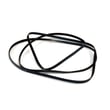
If you’re troubleshooting noise or a no-tumble symptom, the white-westinghouse dryer drum belt 134719300 is a common starting point for inspection and replacement.
Last updated: February 2026
How do you clean the sensor on Electrolux dryer?
On our Electrolux EFME627UTT1 dryer, we clean the moisture sensor bars by removing any waxy film that can build up from dryer sheets. Wash the sensor bars (and lint filter area) with warm, soapy water, dry everything thoroughly, then reinstall.
Quick steps (safe and effective)
- Unplug the dryer before cleaning inside surfaces.
- Remove the lint filter.
- Locate the moisture sensing bars (typically just inside the drum opening near the lint filter housing).
- Wash the sensing bars with warm, soapy water using a soft cloth.
- Rinse with a clean damp cloth, then dry completely.
- Reinstall the lint filter and run a normal cycle.
What to avoid
- Do not use spray cleaners inside the dryer.
- Do not use abrasive pads or gritty cleaners on the sensor bars.
- Do not run the dryer with the lint filter removed.
If drying is still inconsistent after cleaning
A dirty sensor is common, but airflow and temperature control matter too. Use this checklist:
| Symptom | Most common cause | What we do next |
|---|---|---|
| Clothes still damp on auto cycles | Sensor bars coated with residue | Clean sensor bars and lint filter thoroughly |
| Cycles take too long | Restricted airflow (lint buildup, venting) | Clean lint path and check venting |
| Dryer shuts off early or overheats | Temperature sensing or limit device issue | Check for error codes and inspect heating/airflow |
Helpful references:
Why it matters
When the moisture sensing bars are coated with fabric softener residue, the dryer can misread moisture levels. That leads to under-drying, longer run times, and wasted energy.
Last updated: February 2026
How to diagnose an Electrolux dryer?
To diagnose an Electrolux EFME627UTT1 dryer, we start with the basics (power, door switch, airflow) and then narrow it down by symptom (won’t start, no heat, long dry times, unusual noise). Use the built-in troubleshooting guidance in the EFME627UTT1 use & care guide.
Quick diagnostic checklist (most common fixes first)
- Confirm the dryer has power; reset the breaker (electric dryers typically use a 240V circuit).
- Make sure the door fully closes; a failed door switch can prevent starting.
- Clean the lint filter before every load; restricted airflow causes long dry times and overheating.
- Inspect the venting; the exhaust duct should be 4 inches in diameter and rigid or semi-rigid metal, and not exceed the allowed length.
- If the drum won’t turn or you hear squealing/thumping, inspect the belt and rollers.
- If the dryer runs but heat is inconsistent, check temperature-sensing and safety devices.
Symptom-to-part focus (what to check next)
| Symptom | What we check | Common related parts for this model |
|---|---|---|
| Won’t start | Power, door switch, control | Dryer door switch 134813663, electronic control board (if present) |
| Runs but no heat / shuts off | Airflow first, then heat safety devices | High-limit thermostat, thermal limiter |
| Takes too long to dry, cabinet feels hot | Lint filter, vent restriction, duct size/length | Blower wheel, lint chute, venting |
| Drum won’t tumble / loud squeal | Belt path, idler tension, rollers | White-westinghouse dryer drum belt 134719300, drum support roller |
Why airflow matters on this dryer
Your EFME627UTT1 can act like it has a heating problem when the real issue is restricted exhaust. The manual notes that a clogged lint filter or venting that does not meet requirements can make cycles take too long and make the outside of the dryer feel too hot.
Safe, practical steps before opening the cabinet
- Turn off power at the breaker/fuse box before servicing.
- Verify the vent hood outside opens freely and is not blocked.
- Check for crushed or excessively long duct runs.
- Run a timed dry test with a small load to see if heat and airflow are steady.
For deeper model-specific checks (including where to find the wiring diagram and tech sheet location), follow the EFME627UTT1 installation instructions.
Last updated: February 2026
How to fix E64 error on Electrolux dryer?
On an Electrolux EFME627UTT1 dryer, an E64 error typically points to a heating circuit problem. We fix it by safely disconnecting power, checking the heater circuit wiring and connectors for damage or looseness, then testing heat-related components and replacing the failed part.
Safety first (before any checks)
Dryer heating circuits use high voltage. Follow the electrical safety steps in the EFME627UTT1 installation guide before removing panels or touching wiring.
- Unplug the dryer (or switch off the breaker) before servicing
- Label wires before disconnecting anything
- Do not crimp, pinch, or sharply bend wiring at terminals
- Reinstall covers and strain reliefs correctly after inspection
- Verify proper operation after any repair
Step-by-step checks that usually clear E64
- Reset and confirm power: Power the dryer off, then back on. If the code returns, continue.
- Inspect the heater circuit wiring: Look for loose spade terminals, overheated connectors, rubbed-through insulation, or a wire pulled partly off a terminal.
- Check airflow restrictions: Poor airflow can overheat the heater housing and contribute to heat faults. Clean the lint screen and confirm the vent path is clear.
- Test heat-limit safety devices: A tripped or open high-limit device will stop heat and can trigger heat-related errors.
- Test the temperature sensor circuit: A failed thermistor or wiring issue can cause incorrect temperature feedback.
Parts that commonly solve heat-related faults
If testing shows a failed component, these model-compatible parts are common fixes:
| Symptom you notice | Most likely area | Example part to check/replace |
|---|---|---|
| Runs but no heat, code returns quickly | High-limit safety device | Dryer high-limit thermostat 3204267 |
| Heats briefly then stops, overheating signs | Inlet thermal protection | Dryer inlet thermal limiter 137032600 |
| Temperature seems erratic, cycles heat oddly | Temperature sensing | Dryer thermistor 5304513591 |
Why it matters
E64 is often a protection response to a heater circuit fault. Fixing the root cause (wiring, airflow, or a failed thermostat/thermistor) restores normal drying, prevents repeat shutdowns, and helps avoid overheating.
Helpful reference
If your dryer displays additional codes or you want code definitions and symptom mapping, use our Electrolux iq-touch dryer error codes guide alongside the troubleshooting steps in the EFME627UTT1 owner's manual.
Last updated: February 2026
What is the capacity of EFME627UTT1?
The Electrolux EFME627UTT1 dryer’s capacity is typically listed by Electrolux as about 8.0 cu. ft. (dryer drum volume). For the exact capacity rating for your specific configuration, confirm it in the EFME627UTT1 owner’s manual.
How to confirm the correct capacity for your dryer
Capacity can be shown in a few different places (and sometimes in different units), so we recommend checking more than one.
- Look for “capacity” or “drum volume” in the specifications section of the manual
- Check the model/serial tag on the cabinet opening for the exact model number (EFME627UTT1)
- If your unit is a steam model, note that steam plumbing affects installation depth, not drum capacity
- Use the installation specs to verify you are matching the correct dryer family and size
Capacity vs. dimensions (what’s different)
Capacity is the inside drum volume; dimensions are the outside cabinet measurements used for fit and venting.
| Spec type | What it tells you | Where you’ll use it |
|---|---|---|
| Capacity (cu. ft.) | How much laundry fits in the drum | Load sizing, cycle selection, drying performance |
| Dimensions (in.) | Outside size of the dryer | Closet fit, stacking, vent routing |
Why it matters
Using the right capacity helps prevent overloading (long dry times, wrinkles) and underloading (wasted energy). It also helps you match the dryer to your washer load size so a full wash load dries efficiently.
Related installation specs for EFME627UTT1
From the installation requirements, we commonly see these key fit numbers referenced for this platform:
- Width: 27.0 in.
- Height (freestanding): 38.0 in.
- Depth to front of closed door: 32.0 in.
- Clearance to open door: 53.5 in.
For operating details and specifications, use the EFME627UTT1 owner’s manual.
Last updated: February 2026
What is the life expectancy of an Electrolux dryer?
An Electrolux dryer typically lasts 10 to 15 years. For your Electrolux EFME627UTT1, lifespan depends most on airflow (venting and lint control), load size, and how often the dryer runs, plus routine care listed in the EFME627UTT1 use and care guide.
What affects dryer lifespan the most
- Vent restriction (long runs, crushed duct, clogged vent hood) increases heat and wear.
- Lint buildup in the lint screen area and blower housing reduces airflow.
- Overloading strains the drum belt, rollers, and motor.
- High heat cycles used constantly can shorten the life of thermostats and thermal limiters.
- Noisy drum support (rollers or idler issues) can accelerate belt wear.
Quick maintenance checklist (best ROI)
- Clean the lint screen every load.
- Inspect and clean the exhaust duct and outside vent hood regularly.
- Keep loads balanced; avoid packing the drum tight.
- Stop the cycle if you hear squealing, thumping, or grinding and address it early.
- Follow the cleaning and operating guidance in the EFME627UTT1 use and care guide.
Common wear parts and what they usually signal
| Symptom | Likely wear area | Example part for EFME627UTT1 |
|---|---|---|
| Drum won’t turn, motor runs | Belt or idler system | White-westinghouse dryer drum belt 134719300 |
| Thumping or rumbling | Drum support rollers | Dryer drum support roller 5304523152 |
| Overheating or shuts off | Airflow issue or safety thermostat/limiter | (Check venting first) |
Why it matters
A dryer that is starved for airflow runs hotter and longer, which increases stress on the heating system, controls, and drum support components. Keeping airflow strong is the simplest way to reach the full 10 to 15 year life range.
Last updated: February 2026