


Where to find model number on Craftsman tiller?
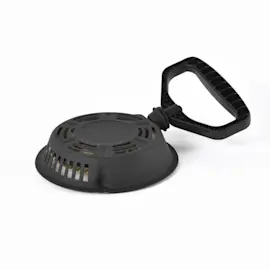
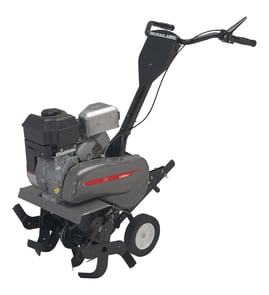
On a Craftsman front-tine tiller like model 917294580, you’ll usually find the model number on a label or stamped plate near the engine area, most often around the recoil starter housing, under the engine shroud, or near the spark plug.
Common places to check on a Craftsman tiller
Look for a sticker, metal tag, or stamped numbers in these spots:
- On or near the recoil starter (pull-start) housing
- Under the engine shroud or top cover (sheet metal around the engine)
- Near the muffler heat shield area
- Near the spark plug side of the engine
- On the frame rail close to the engine mount
- On the rear housing near the handlebar mounting points
What the model number label looks like
Most Craftsman tillers use a small label or plate that includes a few identifiers. Here is what you’ll typically see:
| Item on label | What it’s used for | Example |
|---|---|---|
| Model number | Identifies the exact tiller for parts lookup | 917294580 |
| Product number | Helps narrow down variations | Varies |
| Serial number | Identifies your specific unit | Varies |
Tips to find it faster
- Wipe dirt and oil off the engine shroud and frame with a rag first; labels are often hidden by grime.
- Use a flashlight and look for reflective silver or white stickers.
- If the label is missing, check for stamped numbers on the metal near the engine mounting area.
Why it matters
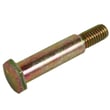
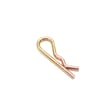
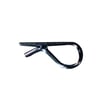
Using the exact model number (for example, 917294580) helps us match the correct Craftsman tiller parts and diagrams, so you get the right belts, tines, fasteners, and hardware the first time. If you’re ordering a small retaining or hitch-style clip part, match by model first, then confirm the part listing (for example, the spring retainer 532003146).
Last updated: February 2026
Can a front tine tiller break new ground?
Yes, a front-tine tiller like the Craftsman 917294580 can break new ground, but it is slower and more physically demanding than using a rear-tine tiller. For best results, we recommend shallow passes, removing debris first, and gradually working deeper as the soil loosens.
Best way to break new ground with a front-tine tiller
- Mow or knock down tall weeds first; vines and long grass can wrap around the tines.
- Mark and remove rocks, roots, wire, and landscape fabric before tilling.
- Start with a shallow depth (about 1 to 2 inches) and make 2 to 4 passes.
- Till in a crosshatch pattern (north-south, then east-west) to reduce bouncing.
- Add a little moisture if the soil is powder-dry; avoid muddy soil that clumps.
- If the tiller “walks” forward and skips, reduce depth and slow your forward push.
What to expect (front-tine vs rear-tine)
Front-tine machines pull themselves forward with the tines, so in hard, unbroken soil they can hop or “ride up” instead of digging in. Rear-tine tillers typically bite and drive more consistently in virgin ground.
| Task | Front-tine tiller (like 917294580) | Rear-tine tiller |
|---|---|---|
| Breaking new ground | Works, but takes multiple shallow passes | Best choice; faster and steadier |
| Working existing garden beds | Very good | Very good |
| Control in hard soil | More bouncing and operator effort | More stable, less effort |
Quick checks if the tiller won’t dig in
- Confirm the tines are installed correctly and not excessively worn.
- Check for wrapped debris around the tine shaft.
- Inspect the drive and tine engagement controls for full travel.
- Look for missing retaining hardware; a loose assembly can reduce digging action. If you need a replacement retainer, match your setup to the spring retainer 532003146.
Why it matters
Breaking new ground the right way protects the tine drive components, reduces vibration, and helps you get an even seedbed without overworking the engine or glazing the soil into hard clods.
Last updated: February 2026
How to lubricate a tiller?
For your Craftsman 917294580 front-tine tiller, lubricate the moving points regularly and keep the gear or chain drive properly greased so the tines and transmission parts do not wear prematurely. Use the correct grease or oil type for each location and wipe off excess to avoid attracting dirt.
What to lubricate on a front-tine tiller
Most front-tine tillers have several common lube points:
- Tine shaft and tine hubs: Light oil on exposed pivot points; avoid soaking belts.
- Wheel axles and height-adjust hardware: A few drops of oil to prevent rust and binding.
- Throttle linkage and control pivots: Light oil so controls move smoothly.
- Transmission/gearcase or chaincase: Grease or gear oil (depending on design); keep it at the proper level.
- Cables (if equipped): Light lubricant on cable ends and pivot points (do not flood the cable housing).
Basic lubrication steps (safe, repeatable routine)
- Shut the engine off, let it cool, and disconnect the spark plug wire.
- Brush or wipe off packed soil and debris before adding lubricant.
- Apply light oil to pivots and linkages; cycle the control a few times.
- For the gearcase/chaincase, open the fill/check point (if equipped) and add the specified lubricant until it reaches the correct level.
- Wipe away excess lubricant so it does not collect grit.
Quick guide: what to use where
| Location | Typical lubricant | What to avoid |
|---|---|---|
| Linkages, pivots, axles | Light machine oil | Heavy grease that traps dirt |
| Gearcase/chaincase | Multi-purpose grease or gear oil (by design) | Mixing unknown lubricants |
| Tine shaft/hubs | Light oil (thin coat) | Getting oil on belts or friction surfaces |
Why it matters
Proper lubrication reduces friction and heat in the drivetrain, prevents seized pivots, and helps your Craftsman tiller maintain consistent tine speed and depth control. It also lowers the chance of premature wear on retainers, pins, and rotating joints.
Parts that often get replaced during maintenance
If you find a missing or weak retainer while servicing the tine or hitch hardware, replace it with the exact match for this model: spring retainer 532003146.
Last updated: February 2026
Are Craftsman tillers any good?
Yes. Craftsman tillers are a solid choice for typical home garden work; they generally deliver good digging power and are easy to keep running with routine maintenance. For your Craftsman 917294580 front-tine tiller, long-term satisfaction comes down to using the right wear parts, keeping fasteners tight, and not overloading the machine in rocky soil.
What you can expect from a Craftsman tiller
Most owners choose Craftsman tillers because they balance performance and serviceability.
- Good for loosening and mixing soil in small to medium gardens
- Strong enough for compacted ground when you work in shallow passes
- Straightforward maintenance (belts, tines, hardware, lubrication)
- Parts support is typically the deciding factor for long-term value
- Like any tiller, durability depends heavily on soil conditions and operator technique
Common complaints (and what usually causes them)
When customers are unhappy with a tiller, it is usually tied to setup, wear, or pushing the machine beyond its intended use.
| Symptom | Common cause | Practical fix |
|---|---|---|
| Excess vibration or “wobble” | Loose hardware, worn retainers, bent tine | Re-torque fasteners; replace worn hardware |
| Poor digging in hard soil | Trying to cut too deep in one pass | Make multiple shallow passes; add weight if supported |
| Parts wearing quickly | Rocky soil, roots, high RPM impacts | Slow down; clear debris; inspect after each use |
Maintenance tips that make a big difference
- Check and tighten handle and tine fasteners before each use
- Inspect tines for bends, cracks, and uneven wear
- Keep the tine area clear of wire, roots, and stringy debris
- Use multiple shallow passes instead of forcing full depth at once
- Replace worn retaining hardware promptly to prevent secondary damage
If you are seeing hardware loosen or components not staying secured, replacing small retainers can prevent bigger failures; the spring retainer 532003146 is one example of a common retention-style part used to keep assemblies secured.
Why it matters
A tiller that is slightly loose or running with worn retention hardware can vibrate more, dig poorly, and accelerate wear on tines, shafts, and handles. Staying ahead of small issues is what keeps a Craftsman tiller “good” year after year.
Last updated: February 2026
What would cause a tiller to not start?
A Craftsman front-tine tiller model 917294580 won’t start when it’s missing spark, fuel, or air, or when a control (stop switch, choke, throttle) is set incorrectly. We troubleshoot in that order to find the single failure point fast.
Quick checks (fastest wins first)
- Set the engine stop switch to RUN/ON (if equipped).
- Use FULL choke for a cold start; move toward OPEN as it warms.
- Drain and refill with fresh gasoline; open the fuel shutoff (if present).
- Push the spark plug wire fully onto the plug.
- Check the air filter; replace if oil-soaked or packed with dirt.
Spark, fuel, air: what to test next
- Spark: Pull the plug, ground it to bare metal, pull the starter; look for a strong blue spark.
- Fuel: Confirm fuel flows from tank through the fuel line; a restriction stops starting.
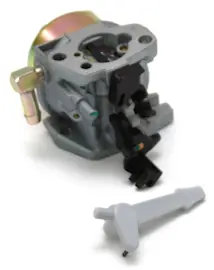
- Carburetor: If it fires briefly on a small amount of fuel added to the cylinder, the carburetor isn’t metering fuel.
Symptom guide
| Symptom | Most likely cause | Next step |
|---|---|---|
| No pop or sputter | No spark or kill circuit grounded | Test spark; inspect stop-switch wiring |
| Starts then dies | Fuel restriction or carb issue | Check fuel flow; clean carb passages |
| Wet plug, fuel smell | Flooded engine | Open choke, hold throttle open, pull to clear |
Why it matters
A no-start diagnosis prevents replacing good parts and gets the tiller running sooner.
If you need help confirming the correct model number for parts lookup, use how to find your appliance model number (and what it means for parts).
Last updated: February 2026