Installation guide
 Owner’s manual
 Error Codes


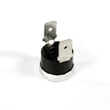
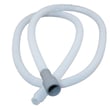
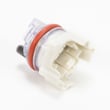
How do I know if the pump is bad on my dishwasher?
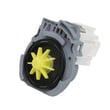
On a KitchenAid KUDL03IVBL3 dishwasher, a bad pump usually shows up as standing water after a cycle, weak wash action, or loud grinding or buzzing during drain or wash. We confirm it by checking for clogs first, then testing the pump circuit and motor with the procedures in the KUDL03IVBL3 owner’s manual.
Quick symptoms checklist
- Water left in the bottom of the tub after the cycle ends
- Dishwasher drains slowly or only drains sometimes
- Grinding, rattling, or loud buzzing from the sump area
- Dishes come out dirty because water is not circulating strongly
- You hear the motor hum but water does not move
Rule out the common non-pump causes first
Before replacing parts, we recommend these fast checks because a restriction can mimic a failed pump:
- Clean the drain air gap (if your installation has one)
- Check the sink drain or garbage disposer inlet for blockage
- Inspect the drain hose for kinks, crushing, or a low loop problem
- Make sure the dishwasher is actually filling with water early in the cycle
- Verify the door is fully latched and power is stable
What “normal fill” looks like
During an initial check cycle, you should see water in the bottom of the tub shortly after starting. If there is no water, a “bad pump” symptom can actually be a fill problem.
Test and replace guidance (most common parts)
If the drain path is clear and the unit fills but still will not drain, the drain pump is the most likely suspect.
| Symptom | Most likely area | Common part to check on KUDL03IVBL3 |
|---|---|---|
| Standing water, no drain sound | Drain system | Dishwasher drain pump WPW10348269 |
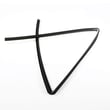
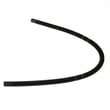
| Standing water, pump runs but weak flow | Drain restriction or hose | Dishwasher drain hose 8269144A |
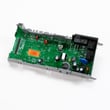
| Poor cleaning, weak spray | Wash circulation | Dishwasher sump and motor assembly WPW10780877 |
Why it matters
A failing pump can leave dirty water in the tub, cause odors, and lead to poor cleaning performance. Catching it early also helps prevent repeated cycle interruptions and unnecessary part replacements.
Last updated: February 2026
What's the average lifespan of a KitchenAid dishwasher?
A KitchenAid undercounter dishwasher like model KUDL03IVBL3 typically lasts 10 to 14 years with normal household use. Consistent cleaning, correct loading, and fixing small issues early (drain problems, heating issues, door leaks) are what most often push lifespan toward the high end.
What affects dishwasher lifespan the most
- Water quality (hard water speeds up mineral buildup)
- How often you run it (daily use wears pumps and seals faster)
- Cleaning and maintenance (filter area, spray arms, interior)
- Detergent and rinse aid habits (too much detergent can leave residue)
- Quick response to symptoms (standing water, poor drying, leaks)
Maintenance that helps you reach 10 to 14 years
The user instructions for this KitchenAid dishwasher include routine care steps and troubleshooting guidance in the KUDL03IVBL3 owner’s manual. A simple, effective maintenance routine is:
- Run a cleaning cycle with 2 cups of white vinegar in a dishwasher-safe cup on the bottom rack (no detergent)
- Keep spray paths clear; avoid blocking spray arms and the rear wash area
- Load dishes so they do not strike each other during washing
- If storing seasonally, shut off water and power; winterize in freezing conditions
Common “end-of-life” parts and what they look like
| Symptom | Most likely system | Example part for KUDL03IVBL3 |
|---|---|---|
| Won’t drain, water left in tub | Drain system | Dishwasher drain pump WPW10348269 or drain hose |
| Poor wash, weak spray | Wash motor/sump | Sump and motor assembly |
| Leaks at the door | Door sealing | Door seal |
| No heat, poor drying | Heating circuit | Heater element |
Why it matters
Knowing the typical lifespan helps you decide whether to repair or replace. If your KUDL03IVBL3 is within the 10 to 14 year range, replacing a wear item (like a drain pump or door seal) often restores reliable performance for years.
Last updated: February 2026
What is the most common problem with a KitchenAid dishwasher?
For the KitchenAid KUDL03IVBL3 dishwasher, the most common problems we see are poor cleaning (food left on dishes) and drainage trouble (standing water). These issues usually trace back to loading/soil buildup, a restricted drain path, or a wash system component that is not moving water correctly; our KUDL03IVBL3 owner's manual troubleshooting section walks through the first checks.
Most common symptoms and what they usually mean
- Dishes still dirty: spray arm holes blocked, filter/sump area dirty, or wash pump not circulating strongly.
- Water left in the tub: drain hose restriction, air gap/disposer blockage, or a weak drain pump.
- Won’t start or stops mid-cycle: door not fully latched, power issue, or a blown fuse/circuit problem.
- Won’t fill: overfill float stuck up, or water supply valve closed.
- Runs a long time: incoming water temperature low or heavy soil load (cycle adds time/heat).
Quick checks we recommend first (no parts swapping)
- Confirm the door is fully closed and latched (a loose latch can stop a cycle).
- Check power: breaker, outlet, and household fuse (the manual calls this out as a first step).
- Inspect the overfill float inside the tub; it must move freely up and down.
- Clean the wash system basics: clear debris from the sump area and rinse spray arm ports.
- Improve loading: avoid nesting and blocking spray arms; use the PROSCRUB area correctly if equipped.
When a part is the likely fix
If the basic checks do not change anything, these parts commonly match the symptom:
| Symptom | Most likely system | Example part for KUDL03IVBL3 |
|---|---|---|
| Standing water after cycle | Drain system | Dishwasher drain pump WPW10348269 or drain hose routing/clog |
| Poor wash action | Circulation/wash system | Sump and motor assembly, spray arm, or internal blockage |
| No power/no run | Electrical protection | Fuse W10258275 (after confirming supply power) |
Why it matters
Cleaning and draining problems often get worse over time; a restricted spray arm or drain path can cause repeat poor results, longer cycles, and odors. Starting with the manual’s troubleshooting steps prevents unnecessary part replacement.
Last updated: February 2026
Which is quieter, 39 or 42 DBA?
39 dBA is quieter than 42 dBA; decibels are a logarithmic scale, so a 3 dBA drop represents a noticeable reduction in sound energy. In real kitchens, both are considered very quiet, but 39 dBA will be the softer-running option.
What the numbers mean (in plain terms)
Dishwasher sound ratings are measured in dBA (A-weighted decibels), which roughly track how we hear noise.
- Lower dBA = quieter operation
- A 3 dBA difference (42 to 39) equals about half the sound energy
- Perceived loudness changes are smaller than the energy change, but you can still notice it in a quiet home
- Other noises (disposer, HVAC, kids, TV) can mask small differences
What to expect in a KitchenAid dishwasher like model KUDL03IVBL3
Even if your KitchenAid KUDL03IVBL3 is rated in the low-40s or high-30s, installation and condition often determine what you actually hear.
- A loose toe-kick or sound barrier can rattle
- Dishes touching can create clinks that seem louder than the motor
- A worn wash system can add grinding or growling sounds
- Drain noise is often more noticeable than wash noise
Quick comparison
| Rating | Which is quieter? | What you typically notice |
|---|---|---|
| 39 dBA | Quietest | Softer background “whoosh” during wash |
| 42 dBA | Very quiet | Slightly more audible wash and drain sounds |
Why it matters
If your dishwasher runs near an open kitchen or you run cycles overnight, the 39 dBA unit is the better pick. If price, racks, or cleaning performance differ, those features often matter more than a 3 dBA gap.
For model-specific operating guidance and noise-related checks (loading, leveling, panel fit), use the KUDL03IVBL3 owner’s manual.
Last updated: February 2026
How to reset error code on kitchenaid dishwasher?
On the KitchenAid KUDL03IVBL3 dishwasher, most “error” situations clear by canceling the cycle and letting the dishwasher complete its built-in drain and brief reset routine. Close the door firmly, cancel the cycle, and allow the unit to finish the drain before restarting a new cycle.
Quick reset steps (safe, no tools)
- Press Cancel/Drain (or the model’s cancel function) once.
- Close the door firmly so the dishwasher can run the cancel routine.
- Let it run the drain cycle (about 2 minutes if needed).
- When the drain stops, wait another 1 to 2 minutes.
- Select a normal wash cycle and press Start/Resume.
If the code or lights come back
These checks resolve the most common causes of recurring error indications on KUDL03IVBL3:
- Confirm the door is fully latched.
- Check house power: a tripped breaker or blown fuse can trigger repeated stoppages.
- If the motor overloaded, allow a few minutes; the motor can reset itself after cooling.
- Make sure the water shutoff valve (if installed) is turned on.
- If the dishwasher will not fill, press the overfill float down to ensure it moves freely.
What different symptoms usually mean
| Symptom you see | What to do first | What it points to |
|---|---|---|
| Cycle stops mid-wash | Cancel/Drain, then restart | Door latch, power interruption, overload reset |
| Won’t fill | Check shutoff valve and float | Water supply or float stuck |
| “Clean” light flashing | Stop using and schedule service | Service-needed condition |
Why it matters
Resetting the control by canceling and completing the drain clears many temporary faults, and it also prevents standing water in the sump that can cause odors or poor wash performance.
Helpful references for KUDL03IVBL3
- Use the troubleshooting and control instructions in the KUDL03IVBL3 owner’s manual.
- If you suspect a drain problem after resetting (water left in the tub), inspect the drain path and consider the dishwasher drain pump WPW10348269 if the pump is not running or is noisy.
Last updated: February 2026
Where are KitchenAid dishwasher parts made?
KitchenAid dishwasher parts for model KUDL03IVBL3 are sourced from multiple manufacturing locations, and the country of origin varies by the specific component and supplier. For the most accurate origin details, match the exact part number to the labeling on the part or its packaging and cross-check the parts list in the KUDL03IVBL3 owner’s manual.
How to check where a specific part was made
Country-of-origin details are typically tied to the individual part, not the dishwasher model as a whole.
- Look for a “Made in …” or “Country of origin” mark on the part body (common on pumps, valves, and harnesses)
- Check the original packaging label (often more detailed than the part stamping)
- Compare the part ID and part number to your records before ordering
- If the part is installed inside the tub area, check it during a planned repair to avoid extra disassembly
- Use the model and serial label inside the door to confirm you are shopping the correct model family
Common examples for this KitchenAid model
Here are a few KUDL03IVBL3 parts customers often replace; each can have different origins depending on production runs.
| Part type | Example part for KUDL03IVBL3 | What it does |
|---|---|---|
| Drain system | Dishwasher drain pump WPW10348269 | Pumps water out during drain portions of the cycle |
| Fill system | Dishwasher water inlet valve W10648041 | Opens to let water into the dishwasher |
| Heating | Dishwasher heater element WPW10082892 | Heats water and supports drying performance |
| Door sealing | Dishwasher door seal W11196317 | Helps prevent leaks around the door perimeter |
Why it matters
Knowing where a part was made is most useful for confirming you have the exact replacement you want and for comparing suppliers. Functionally, the best fit and performance come from matching the correct KitchenAid part ID, part number, and compatibility with your undercounter dishwasher model.
Last updated: February 2026
How to fix rubber seal on KitchenAid dishwasher?
On the KitchenAid KUDL03IVBL3 dishwasher, a “rubber seal” problem is usually the door seal that has slipped out of its channel or is torn. We fix it by cleaning the channel, pressing the seal in evenly all the way around, then closing and latching the door so the gasket seats flat.
Before you start (safety and access)
- Turn off power at the breaker before working around the door and inner panel.
- Let the unit cool; the manual warns not to touch the heating element during or right after use.
- Remove sharp items from the racks; sharp edges can damage the door seal.
- Wipe up standing water so you can spot leaks accurately.
For model-specific diagrams and door area details, use the KUDL03IVBL3 owner’s manual.
Reseating the door seal (most common fix)
- Open the door and inspect the full perimeter of the tub opening.
- Clean the seal channel with warm water and a mild detergent; remove grease and grit.
- Starting at the top center, press the seal into the channel using your fingers.
- Work down both sides evenly; avoid stretching the gasket.
- Close the door firmly and latch it; keep it closed for several hours so the seal “sets” in the channel.
Quick checks while you’re there
- Look for twists, waves, or sections that pop back out.
- Check for cuts, hardened spots, or flattened areas.
- Confirm racks and tall items are not pushing against the door.
When the seal needs replacement
If the gasket is torn, permanently flattened, or won’t stay seated, replacement is the reliable fix. On this model, also inspect the door balance system because a door that drops or won’t stay aligned can prevent a good seal.
| Symptom | Likely cause | What to do |
|---|---|---|
| Drips at bottom corners | Seal not fully seated | Reseat and latch door for several hours |
| Leak along one side | Door not closing square | Check hinges and balance link |
| Seal looks cracked or stiff | Worn gasket | Replace the door seal |
Related part to check if the door feels “heavy” or slams: dishwasher door balance link 8194001.
Why it matters
A properly seated door seal keeps wash water inside the tub, protects the control area from moisture, and helps the dishwasher maintain correct wash pressure for better cleaning.
Last updated: February 2026
How much does it cost to replace a dishwasher pump?
Replacing a dishwasher pump on a KitchenAid KUDL03IVBL3 typically costs $150 to $400 total (parts plus labor). If you do the repair yourself, you often pay mainly for the part, such as a drain pump, plus basic supplies.
What you’re paying for
Pump replacement cost usually breaks down into a few predictable buckets:
- Part cost (drain pump or circulation pump motor)
- Labor (service call, diagnosis, installation)
- Trip/diagnostic fee (sometimes applied toward the repair)
- Related parts (hose, seal, clamps) if they’re worn or leaking
- Access time (built-in/undercounter installs can take longer)
Typical cost ranges (parts and labor)
| Repair scenario | What’s included | Typical total cost |
|---|---|---|
| Drain pump replacement | Drain pump, labor | $150 to $400 |
| Circulation pump/motor repair | Pump motor or pump assembly, labor | $250 to $600 |
| DIY drain pump swap | Part only (plus supplies) | $50 to $150 |
If you want model-specific installation and access notes for an undercounter unit, use the KUDL03IVBL3 installation guide.
How to tell which “pump” is the problem
Dishwashers commonly have two different pump functions, and the symptoms help narrow it down:
- Not draining, standing water: drain pump or drain hose restriction
- Poor wash pressure, gritty dishes: circulation pump/motor, sump, or spray arm issue
- Intermittent operation: wiring connection, control issue, or a failing motor
For cleaning and performance checks (loading, water temp, detergent, pressure), follow the troubleshooting steps in the KUDL03IVBL3 owner’s manual.
Parts that commonly get replaced with a pump
If your KUDL03IVBL3 is not draining, these are common companion parts to inspect:
- Dishwasher drain pump WPW10348269 (drain-out function)
- Dishwasher drain hose (kinks, clogs, improper routing)
- Door seal or sump seal (leaks that mimic pump problems)
Why it matters
A failing pump can leave dirty water in the tub, reduce cleaning performance, and strain the motor. Catching it early can keep the repair limited to a single part instead of a larger sump and motor assembly.
Last updated: February 2026