Installation guide
 Owner’s manual
 Error Codes



How do I tell what model Kenmore stove I have?
On Kenmore electric range model 79097423901, the model and serial number are printed on the appliance identification plate. For this model, the plate is on the right side of the oven front frame inside the storage drawer or warmer drawer compartment; open the drawer and read the label.
Check these spots in order:
- Open the storage drawer or warmer drawer and look on the right side of the oven front frame
- Look for a metal plate or label that lists Model No. and Serial No.
- Clean the area with a damp cloth so the print is readable
- Copy the model number exactly, including all digits (example: 79097423901)
- Record the serial number too; it helps with service and parts compatibility
Most Kenmore range ID plates include:
- Model No.
- Serial No.
- Electrical ratings (volts/amps)
- Sometimes a manufacturing date code
| Item to copy | What it’s used for | Example |
|---|---|---|
| Model number | Matching parts diagrams and replacement parts | 79097423901 |
| Serial number | Identifying production details for service | Letters and numbers |
Kenmore ranges can look similar across many model numbers. Using the exact model number helps ensure you order the correct parts, such as an oven temperature sensor, bake element, surface element switch, or oven door seal.
Try these next:
- Check the back of the range near the power cord cover
- Look along the lower front frame edges for a secondary label
- Use the diagrams and product record guidance in the 79097423901 manual
Last updated: February 2026
What is the average lifespan of 79097423901?
A Kenmore electric range like model 79097423901 typically lasts 13 to 15 years with normal home use and basic maintenance (keeping the oven door seal tight, not overheating wiring, and replacing wear parts like elements when they fail). For care and operating tips, use the 79097423901 owner's manual.
- Heavy high-heat cooking (frequent broiling, self-clean cycles)
- Power-supply issues (loose terminal block connections, voltage problems)
- Worn heating components (bake, broil, convection elements)
- Heat leaks from a damaged door gasket
- Control and switch wear from daily knob use
| Symptom | Most common cause | Typical fix |
|---|---|---|
| Oven won’t heat or heats unevenly | Failed bake element or sensor issue | Replace element or test/replace sensor |
| Oven temperature swings widely | Temperature sensor drifting | Replace sensor |
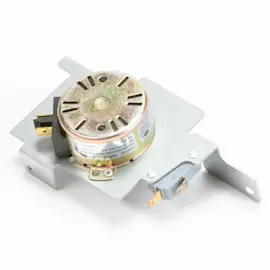
| Door won’t lock/unlock for self-clean | Door lock motor/latch problem | Replace lock assembly or latch |
| Surface element stuck on or won’t heat | Infinite switch failure | Replace the correct control switch |
Knowing the typical 13 to 15 year lifespan helps you decide whether to repair or refresh key components. On a range, replacing a failed element, sensor, or switch often restores full performance without replacing the whole appliance.
Last updated: March 2026
What replacement parts are most commonly needed for the 79097423901?
For Kenmore electric range model 79097423901, the most commonly replaced parts are the heating components and wear items: bake and broil elements, the oven temperature sensor, surface element control switches, and oven light parts. Use the 79097423901 installation guide for safe access and installation basics.
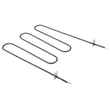
- Frigidaire range bake element 316563600 (oven won’t bake or takes too long to preheat)
- Frigidaire range broil element 316203301 (no broil heat or weak broil)
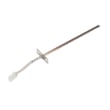
- Frigidaire range oven temperature sensor 316490000 (inaccurate oven temperature)
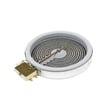
- Frigidaire range small surface element control switch 316436000 (burner won’t regulate heat)
- Range dual surface element control switch 316530100 (dual burner not switching or regulating)
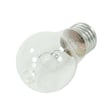
- Appliance light bulb, 40-watt 316538904 and range light socket 316116400 (oven light issues)
- Frigidaire range oven door seal 316405000 (heat leaking, longer cook times)
| Problem you notice | Part to check first | Why |
|---|---|---|
| Oven not heating in Bake | Bake element | Most common oven heat failure point |
| Food burning or undercooking | Temperature sensor | Controls temperature feedback |
| Burner stuck on high | Surface element control switch | Switch can weld contacts closed |
| Oven light not working | Bulb, then socket | Bulb fails first; socket can overheat |
Starting with the most common wear parts saves time and prevents repeat repairs. For example, a weak bake element can look like a control problem, and a drifting sensor can mimic “calibration” issues.
Last updated: March 2026