Owner’s manual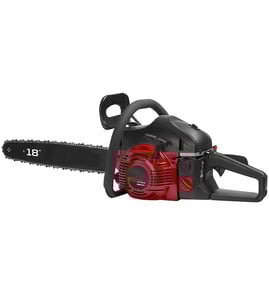



Can I scrap a chainsaw?
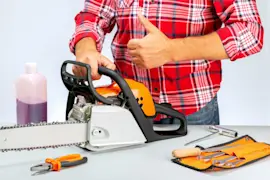
Yes, you can scrap a Craftsman gas chainsaw model 316380160. Most scrap yards accept the metal components (bar, chain, engine housing) as scrap metal; drain fuel and bar oil first, then separate plastic and rubber pieces for proper disposal per local rules.
Safe prep before you scrap it
Before you transport or dismantle the saw, we recommend these basics from the 316380160 owner's manual safety guidance:
- Let the engine and muffler cool completely before handling.
- Wear heavy-duty gloves; the chain is extremely sharp.
- Wear eye protection and sturdy footwear.
- Keep the chain from contacting anything while you move the saw.
- Work in a well-ventilated area away from flames or sparks.
What to remove and how to sort it
Most facilities want liquids removed and materials separated.
- Drain and contain fluids: empty the fuel tank and bar-and-chain oil tank into approved containers.
- Remove the cutting gear: take off the guide bar and chain so it is safer to handle.
- Sort by material: metal parts to scrap; plastics, rubber, and mixed materials to trash or specialty recycling.
- Handle sharp parts safely: wrap the chain and bar in cardboard or heavy material for transport.
Typical sorting guide
| Item | What it’s mostly made of | Common handling |
|---|---|---|
| Guide bar and chain | Steel | Scrap metal (wrap for safety) |
| Engine/crankcase parts | Aluminum/steel | Scrap metal |
| Handles, covers | Plastic | Trash or plastics recycling (varies) |
| Fuel lines, primer parts | Rubber/plastic | Trash (varies) |
Why it matters
Draining fuel and oil reduces fire risk and prevents spills. Separating metal from plastic also helps the scrap yard process your chainsaw faster and can improve what they accept.
Last updated: February 2026
Where to find model number on Craftsman chainsaw?
On the Craftsman gas chainsaw model 316380160, the model number is printed on the product identification label. We most often see that label on the engine/motor housing area; check the sides first, then the back and underside. Confirm every character before ordering parts.
Common places to check
- Side of the motor/engine casing (most common)
- Rear of the saw body near the handle
- Underside of the housing (flip the saw over with the engine off and cool)
- Near the starter/recoil housing area
- On or near the air filter cover area
What the label should look like
Your operator documentation lists the model as 316.380160 (sometimes shown with a dot), which matches 316380160 for parts lookup.
| You might see it printed as | Use this for parts search | Why it’s different |
|---|---|---|
| 316.380160 | 316380160 | Some labels/manuals include punctuation |
| 316380160 | 316380160 | Same model number, no punctuation |
Tips to avoid ordering the wrong parts
- Write the model number exactly as shown (including any letters if present)
- Take a clear photo of the label before you start shopping
- If the label is dirty, wipe it gently so the digits are readable
- Match the model number first, then confirm the part number
Why it matters
Craftsman chainsaw parts like the bar, chain, carburetor, and ignition module can vary by model and production run. Using the correct model number ensures you get the right fit and safe operation. For model-specific identification details and diagrams, use the 316380160 operator’s manual.
Last updated: February 2026
How to adjust a Craftsman chainsaw?
On the Craftsman 316380160 gas chainsaw, the most common “adjustment” is setting the saw chain tension: loosen the bar nuts slightly, turn the chain-tensioning screw until the chain fits snug to the bar (no sag), then tighten the bar nuts securely while holding the bar tip up. See the 316380160 owner's manual.
How to adjust (tension) the chain
Steps
- Engage safe handling first: wear heavy-duty gloves and keep the engine off.
- Make sure the chain brake is disengaged before adjusting.
- Slightly loosen the bar-retaining nuts (do not remove them).
- Hold the guide bar tip up.
- Turn the chain-tensioning screw:
- Clockwise: tightens the chain
- Counterclockwise: loosens the chain
- Recheck that the chain sits in the bar groove, then tighten the bar-retaining nuts securely (still holding the bar tip up).
What “correct” tension looks like
| Chain condition | What you should see | What to do |
|---|---|---|
| Cold chain | Snug against underside of bar; no sag | Adjust until snug |
| Warm chain (after cutting) | Chain expands; may need a small retighten | Recheck and adjust |
| Too loose | Drive links or “flats” hang out of the bar groove | Tighten immediately |
When to re-adjust during use
A new chain stretches quickly during break-in and often needs readjustment after the first few cuts. We recommend checking tension:
- Before starting work
- After the first few cuts with a new chain
- Any time cutting performance changes or the chain looks loose
Why it matters
Correct chain tension helps the bar and chain oiling work properly, reduces premature wear on the guide bar and drive sprocket, and lowers the risk of the chain derailing or increasing kickback potential.
Last updated: February 2026
What model number is a Craftsman 16 36cc chainsaw?
For the Craftsman 16-inch, 36cc gas chainsaw shown on this page, the model number is 316.380160 (often written without the dot as 316380160). You’ll see this model number on the product label and in the 316380160 operator’s manual.
Where to find the model number on the saw
Check these common locations on Craftsman gas chainsaws:
- On a decal or plate on the rear handle area
- On the starter housing (recoil cover) side
- Near the fuel tank or oil tank area
- In the operator’s manual cover page
- On the original carton (if you still have it)
16-inch and 36cc can match multiple models
“16-inch” (guide bar length) and “36cc” (engine size) describe the saw’s size class, not a unique identifier. Craftsman has produced multiple 16-inch, 36cc chainsaws over time, so the model number is what ensures you get the right parts and specs.
Quick ID checklist
| What you have | What it tells you | What to use for parts |
|---|---|---|
| 16-inch bar | Cutting setup size | Model number + bar/chain specs |
| 36cc engine | Power class | Model number |
| Model 316.380160 | Exact product identity | Correct match |
Why it matters
Using the exact model number helps you match critical fit items like the guide bar and chain (this model uses a 16-inch bar and common chain specs such as 3/8-inch pitch and 0.050-inch gauge). It also prevents ordering the wrong ignition, fuel, or carburetor parts.
Parts examples for model 316380160
These are common maintenance and repair items for this model:
- Air filter 753-08134 for airflow and engine protection
- Spark plug 753-08107 for ignition and starting
- Chainsaw carburetor assembly 753-08219 for fuel metering issues
Last updated: February 2026
Who makes Craftsman chainsaws now?
Craftsman chainsaws are built by different manufacturers depending on the model and production era. For the Craftsman gas chainsaw model 316380160, the design and parts sourcing align with MTD-built platforms used for many Craftsman outdoor power tools; your best confirmation point is the product identification details in the 316380160 operator’s manual.
What “who makes it” means for parts and service
Craftsman is the brand on the saw, but the actual manufacturer can vary by model number. That matters because the correct bar, chain, carburetor, and ignition parts are tied to the platform used for your specific model.
- Use the full model number 316380160 when ordering parts.
- Match parts by exact part number, not by “Craftsman chainsaw” alone.
- Follow the manufacturer-specified bar and chain guidance to maintain kickback protection.
- Use only equivalent replacement bars and chains specified for the saw.
- Keep your manual handy for maintenance intervals and safety rules.
Quick ways to identify the manufacturer for your specific saw
These checks work well for the 316-series Craftsman saws and similar gas chainsaws.
| What to check | Where to look | What it tells you |
|---|---|---|
| Model number format | ID label and manual cover | Platform family (for example, 316.xxxxx) |
| Manual document code/date | First pages of the manual | Production timeframe and documentation source |
| Parts cross-references | Parts list and diagrams | Which supplier ecosystem the saw uses |
Why it matters (compatibility and safety)
Bars and chains are not universal. The operator’s manual for this model emphasizes using only specified or equivalent replacement bars and chains and using kickback-reduction devices (low-kickback chain, chain brake, low-kickback guide bar). Using mismatched cutting components can increase kickback risk and cause poor cutting performance.
Parts that commonly differ by manufacturer platform
If you are troubleshooting hard starting, rough running, or poor power, these platform-specific parts are often involved:
- Air filter (example: [air filter 753-08134])
- Fuel filter
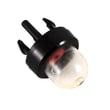
- Primer bulb
- Carburetor and fuel lines
- Ignition module and spark plug
For symptom-based help, we use the same troubleshooting flow found in resources like tips for a hard to start chainsaw.
Last updated: February 2026
Is 40 1 or 50 1 better for chainsaws?
For the Craftsman 316380160 gas chainsaw, 40:1 is the better choice because it is the specified fuel/oil ratio for this model. Using 50:1 in a saw designed for 40:1 reduces lubrication and can accelerate wear; mixing at 40:1 protects the engine under normal and heavy cutting.
What to use for model 316380160
Follow the fuel mix ratio listed in the 316380160 operator’s manual. This model calls for 40:1 (gasoline to 2-cycle oil).
- Use fresh, unleaded gasoline and quality 2-cycle oil intended for air-cooled engines.
- Mix fuel in an approved fuel container; do not mix in the saw’s fuel tank.
- Shake the container before each refuel to re-blend the oil.
- Only mix what you will use soon; old fuel is a top cause of hard starting and rough running.
- If the saw starts getting smoky or loses power, check for an over-rich mix, a dirty air filter, or a restricted muffler screen.
Quick mix chart (40:1 vs 50:1)
| Mix ratio | Oil per 1 gallon gas | What it means |
|---|---|---|
| 40:1 | 3.2 fl oz | More oil, more lubrication (correct for this model) |
| 50:1 | 2.6 fl oz | Less oil, less lubrication (not recommended for this model) |
Why the ratio matters
Two-stroke engines rely on oil in the fuel for crankshaft, piston, and cylinder lubrication. Running lean on oil (such as 50:1 in a 40:1 design) increases friction and heat, which shortens engine life and can lead to scoring.
Related maintenance that supports good running
A correct mix works best when the air and fuel systems are clean.
- Replace a clogged air filter with air filter 753-08134.
- If fuel delivery seems weak, inspect the in-tank filter and lines; replace the fuel filter if restricted.
- If it still runs rough after fresh fuel, the carburetor may need service; use our tips for a hard to start chainsaw troubleshooting steps.
Last updated: February 2026
What is the Craftsman 316380160 42 cc 2 cycle gas 18 chainsaw?
The Craftsman 316380160 is a 2-cycle gas chainsaw with a 42 cc air-cooled engine designed for homeowner cutting tasks like limbing and bucking. It uses bar and chain oil for lubrication and runs a 40:1 fuel-to-oil mix; see the 316380160 operator’s manual for safety, operation, and maintenance details.
Key specs for model 316380160
- Engine type: air-cooled, 2-cycle
- Displacement: 42 cc (2.56 cu. in.)
- Fuel/oil mix ratio: 40:1
- Fuel tank capacity: 22 oz (650 mL)
- Spark plug gap: 0.025 in (0.635 mm)
What it’s used for (and why that matters)
A 42 cc 2-cycle chainsaw is a solid fit for typical yard work because it balances cutting power with manageable weight and maintenance. Using the correct fuel mix and bar oil helps prevent hard starting, poor performance, and premature engine wear.
Quick reference table
| Item | What to use | Why |
|---|---|---|
| Fuel | Gas mixed with 2-cycle oil at 40:1 | Protects the engine from scoring and overheating |
| Lubrication | Bar and chain oil | Reduces bar and chain wear |
| Spark plug gap | 0.025 in | Helps the engine start and run smoothly |
Common maintenance parts owners replace
If your saw starts running rough or becomes harder to start, these are common wear items to check first:
- Air filter 753-08134 (dirty filter can choke airflow)
- Spark plug 753-08107 (worn plug can cause weak spark)
- Fuel filter (in-tank filter can clog over time)
Why it matters: Keeping the air, fuel, and ignition systems in good shape is the fastest way to restore performance on a 2-cycle chainsaw.
Last updated: February 2026