Owner’s manual


What is the most common problem with a Maytag washer?
For a Maytag top-load washer like model MVW6230HC1, the most common service issues are “won’t drain” and “won’t spin.” These problems usually trace back to a drain restriction, a lid lock/strike issue, or a drive system fault that prevents the basket from reaching spin speed.
- Washer won’t drain or drains slowly: drain hose kinked, drain path restricted, or a failing drain pump.
- Washer won’t spin: lid not locking, lid strike not engaging, or a drive/shift problem.
- Stops mid-cycle: lid lock not confirming closed, or control sensing an out-of-balance condition.
- No/low fill: water supply valves not fully open, inlet screens restricted, or inlet valve issue.
- Loud noise or burning rubber smell: drive pulley or drive components slipping.
- Confirm the lid closes firmly and nothing is preventing the lock from engaging.
- Check the drain hose routing: no kinks, no crushed sections, and the standpipe height and setup match the owner's manual.
- Verify water supply: both faucets fully open and household water pressure is in the typical 20 to 100 psi range.
- Reduce oversudsing: use HE detergent and measure carefully; too many suds can interfere with drain and spin.
- Power reset: unplug for 1 minute, then retry a Drain/Spin cycle.
| Symptom | Common cause | Part to check on this model |
|---|---|---|
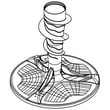
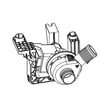
| Won’t drain / water left in tub | Weak or jammed pump | Pump assembly, drain W11399437 |
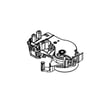
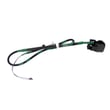
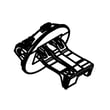
| Won’t spin / lid error behavior | Lid not locking | Lid lock-sol W11700916 |
| Lid closes but won’t start/spin | Strike not aligning | Washer lid strike W11457841 |
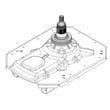
| Agitates but won’t shift to spin | Shift mechanism issue | Actuator, shift W11481722 |
Drain and spin problems are “cycle-stoppers.” The washer control will often prevent high-speed spin if it cannot confirm a locked lid, detect proper draining, or sense the drive system shifting correctly. Fixing the root cause protects the motor, control, and tub from extra strain.
Last updated: February 2026
Can a clogged drain cause the F9E1 error?
Yes. On the Maytag MVW6230HC1 washer, the F9E1 (long drain) condition happens when water cannot leave the tub fast enough; a clogged standpipe, kinked drain hose, or blockage at the drain pump is a primary cause. For drain setup limits, use the owner's manual.
- Cancel the cycle and unplug the washer for safety.
- Verify the household standpipe is not slow or backing up (run water into it briefly).
- Inspect the drain hose for kinks, crushing, or a tight bend behind the washer.
- Confirm the drain hose is installed correctly in the standpipe (do not shove it too far in).
- Make sure the standpipe height is within the normal installation range.
The MVW6230HC1 installation guidance is designed to prevent siphoning and restrictions that can trigger long-drain errors.
| Item to verify | Target setup | Why it matters |
|---|---|---|
| Standpipe diameter | Minimum 2 in. (51 mm) | Too small restricts flow |
| Standpipe height | 39 in. to 96 in. from washer bottom | Too low can siphon; too high strains pumping |
| Hose insertion depth | No more than 4.5 in. (114 mm) into standpipe | Too deep can cause siphoning or poor air gap |
If the hose and standpipe are correct but the washer still drains slowly, the restriction is usually at the drain pump area (lint, coins, small socks) or the pump is failing.
Common symptoms that point to the pump path:
- Standing water left in the tub after the drain portion of the cycle
- A humming sound with little or no water movement
- Intermittent draining (works sometimes, fails other times)
If you’re replacing the pump for a confirmed drain failure, use the model-correct pump assembly, drain W11399437.
A long-drain condition can stop the cycle, leave clothes soaking wet, and put extra load on the drive system. Correcting the drain setup and clearing restrictions restores normal drain time and helps prevent repeat F9E1 events.
Last updated: February 2026
What's the average lifespan of a Maytag washer?
Maytag washers typically last 10 to 13 years with normal household use. For your Maytag MVW6230HC1 top-load washer, consistent maintenance (proper detergent, correct loading, and timely part replacement) is what most often determines whether you land closer to 10 years or push beyond it; see the owner's manual for care steps.
- Load size and balance: frequent overloading or unbalanced loads increase wear on the drive system and suspension.
- Detergent choice: using HE detergent and the right amount helps prevent residue and performance issues.
- Water quality and pressure: hard water and debris can stress fill components.
- Drain performance: slow draining makes the pump work harder and can shorten its life.
- Installation and leveling: a solid, level floor reduces vibration and “washer walk.”
Use these as a simple routine for MVW6230HC1:
- Keep the washer level and re-check if it starts vibrating more than usual.
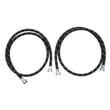
- Inspect hoses regularly; replace inlet hoses on a 5-year schedule.
- Run periodic cleaning cycles and wipe the lid and top surfaces dry.
- Avoid packing the basket tight; allow items to move for proper wash action.
- Address small symptoms early (new noises, slow fill, slow drain) before they become major failures.
| Symptom | Common area involved | Example part on this model |
|---|---|---|
| Won’t start or lid won’t lock | Lid lock/strike | Lid lock-sol W11700916 |
| Won’t fill or fills slowly | Water inlet valve | Washer water inlet valve W11220230 |
| Won’t drain or drains slowly | Drain pump | Pump assembly, drain W11399437 |
A washer that is kept level, cleaned, and repaired promptly typically avoids the high-stress conditions (excess vibration, restricted filling, restricted draining) that shorten motor, control, and drive component life.
Last updated: February 2026
Is there a way to bypass the lid lock on a Maytag washer?
No. On the Maytag MVW6230HC1 washer, we do not recommend bypassing the lid lock; it is a built-in safety device that helps prevent injury during agitation and spin. If the washer will not run because it “thinks” the lid is open or locked, the reliable fix is troubleshooting the lid-lock system and replacing failed parts.
Before replacing parts, we use these quick steps to rule out common causes:
- Unplug the washer for 1 minute, then plug it back in (resets some control logic).
- Confirm the lid closes fully and nothing is caught between the lid and top.
- Check the lid strike for cracks, looseness, or misalignment.
- Look for detergent residue or debris around the lid-lock area.
- If the washer is mid-cycle and stuck, press POWER to stop the cycle, then restart.
For model-specific operating and care steps, follow the owner's manual.
If the lid will not lock, will not unlock, or the washer will not start, these parts are the most common culprits on this style of Maytag top-load washer:
- Lid lock assembly: lid lock-sol W11700916
- Lid strike (the plastic catch the lock grabs): washer lid strike W11457841
- Main control (if the lock and strike test good but the lock never gets power): control unit assembly, machine and motor W11543994
| Symptom | Most likely cause | What we do next |
|---|---|---|
| Lid will not lock and cycle will not start | Lid lock or lid strike | Inspect strike; replace lock if it does not actuate |
| Lid locks but will not unlock at end | Lid lock | Power reset; replace lock if it stays stuck |
| Intermittent “lid” errors, starts then stops | Loose strike, failing lock, wiring | Reseat connections; replace lock/strike as needed |
Bypassing the lid lock can allow the basket to spin with the lid open, which increases the risk of injury and can also lead to additional damage (for example, a broken strike or repeated control faults). Fixing the root cause restores normal operation and keeps the washer’s safety features working.
Last updated: February 2026