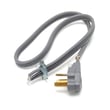
Installation guide
 Owner’s manual
 Error Codes


How do I fix error F01 on my dryer?
On a Whirlpool WED9550WL1 dryer, an F01 error typically points to an electronic control problem. Start with a simple power reset; if the code returns, focus on power quality and wiring checks, then plan for control-related service.
Step-by-step fixes to try first
- Unplug the dryer (or switch the breaker off) for 5 minutes, then restore power and try a cycle.
- Press and hold START to restart if the display indicates a power interruption.
- Verify the dryer is plugged into a grounded 3-prong outlet and the cord connection is secure.
- Check your home electrical supply; many electric dryers use two fuses/breakers, and one can trip while the drum still turns.
- Run a Timed Dry heated cycle for a quick heat test.
Power and code checks that matter on this model
Your documentation calls out power-related messages such as PF (power failure) and L2 (low or no line voltage). Those conditions can cause odd behavior and should be corrected before replacing parts. See the electrical and troubleshooting sections in the installation guide.
Quick reference
| Display message | What it usually means | What to do next |
|---|---|---|
| PF | Cycle interrupted by power loss | Press and hold START; check outlet/breaker |
| L2 | Low/no line voltage; heater may not turn on | Check both breakers/fuses; confirm cord install |
| F01 | Control/electronics fault | Reset power; inspect connections; service control |
When parts are commonly involved
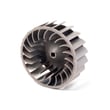
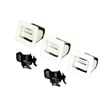
If the dryer runs but heats inconsistently or shuts down, a failed temperature-sensing or safety component can contribute to control faults. Common items to check or replace during diagnosis include:
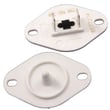
- Dryer thermistor WP8577274 (temperature sensing)
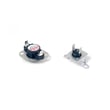
- Dryer thermal cut-off fuse kit 279973 (overheat protection)
- Dryer heating element WP8544771 (electric heat source)
Why it matters
An F01 can be triggered by unstable power, loose connections, or a failing control. Confirming correct voltage and safe airflow first helps prevent repeat failures and protects components like the heating element and thermal cut-off.
Last updated: February 2026
How do I reset a Whirlpool WED9550WL1 dryer?
To reset your Whirlpool WED9550WL1 dryer, we recommend a simple power reset: turn the dryer off and unplug it (or switch off the breaker) for about 5 minutes, then restore power and press Power. If a cycle is stuck, you can also end it by pressing PAUSE/CANCEL twice.
Quick reset options (most common)
- Hard reset (best first step): Unplug the dryer for ~5 minutes, then plug it back in and press Power.
- Cancel and restart a cycle: Press PAUSE/CANCEL twice to end the current cycle; reselect the cycle and press and hold START.
- Clear a power failure message (PF): Press and hold START to restart after a power interruption.
- Unlock the controls (Control Lock): Press and hold CONTROL LOCK/UNLOCK for 3 seconds to toggle the lock off.
What to do if it still will not start after a reset
- Confirm the door is fully closed and latched.
- Verify the dryer has full power. Electric dryers typically need two household fuses or breakers; the drum can turn even when heat will not work if one side is tripped.
- If you see L2 (low/no line voltage), check the breaker/fuses and confirm the power cord is installed correctly.
- If the dryer stops but will not restart while Control Lock is on, unlock the controls first.
Common “reset-related” symptoms and what they usually mean
| Symptom on display | What it points to | Best next step |
|---|---|---|
| PF | Power interruption | Press and hold START |
| L2 | Low/no line voltage | Reset both breakers/check both fuses |
| Buttons do not respond | Control Lock enabled | Hold CONTROL LOCK/UNLOCK 3 seconds |
| Cycle will not change | Cycle already started | Press PAUSE/CANCEL twice, then reselect |
Why it matters
A reset clears temporary control glitches, but many “needs a reset” complaints are actually caused by power supply issues (L2), Control Lock being enabled, or a cycle that needs to be canceled and restarted. Following the correct reset method prevents unnecessary part replacement.
For model-specific button locations and cycle steps, follow the owner's manual.
Last updated: February 2026
How many years should a whirlpool dryer last?
A Whirlpool dryer like model WED9550WL1 typically lasts 10 to 13 years. With consistent maintenance (especially lint and vent cleaning) and avoiding chronic overheating, it commonly reaches 15 years of service.
Typical lifespan at a glance
| Dryer type | Typical lifespan | What most affects it |
|---|---|---|
| Whirlpool electric dryer (like WED9550WL1) | 10 to 13 years | Venting, heat stress, load size |
| Well-maintained dryer | Up to 15 years | Regular cleaning and timely part replacement |
Maintenance that extends dryer life
The WED9550WL1 manual calls out routine lint and vent cleaning because airflow restrictions increase drying time and heat stress.
- Clean the lint screen every load; wash the screen periodically if residue builds up (a nylon brush every 6 months is a good routine)
- Remove lint from the exhaust vent about every 2 years (more often with heavy use)
- Have lint removed from inside the dryer cabinet about every 2 years (this is typically done by a qualified person)
- Avoid overloading; heavy loads strain the drive system and reduce airflow
- Stop using the dryer if you smell burning or notice extreme heat; correct airflow issues before continuing
Parts that commonly wear as a dryer ages
If your dryer is otherwise in good shape, replacing common wear items can be a cost-effective way to extend its life.
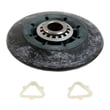
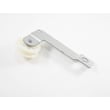
- Drum support rollers: support WPW10314173
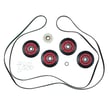
- Belt and idler wear items (often replaced together): dryer repair kit 4392067
- Heating performance issues (electric models): dryer heating element WP8544771
- Temperature sensing problems: dryer thermistor WP8577274
Why it matters
A dryer that takes longer to dry is not just inconvenient; restricted airflow and overheating can shorten the life of the heating system, motor, and drum support components.
For model-specific care intervals and safety steps (like disconnecting power before servicing), follow the owner's manual.
Last updated: February 2026