Owner’s manual
 Error Codes


What is the capacity of LFXC24726S?
The LG LFXC24726S bottom-mount refrigerator has a total capacity of 23.7 cu. ft. For storage planning, use this number to estimate how much fresh-food and freezer space you have, then confirm shelf and bin configurations in the LFXC24726S owner's manual.
What “23.7 cu. ft.” means for everyday use
Capacity is the total interior volume of the refrigerator and freezer compartments combined. It helps when you are comparing models, planning grocery loads, or deciding whether you need more freezer space.
Quick planning tips
- Leave airflow space around vents; packed shelves can reduce cooling performance.
- Use the crisper and deli zones for items that benefit from steadier humidity and temperature.
- Keep the freezer drawer organized so the door closes fully and seals tightly.
- If odors build up faster than expected, replace the air filter on schedule.
Helpful reference table
| Spec | Value | Why it matters |
|---|---|---|
| Total capacity | 23.7 cu. ft. | Overall storage volume for fridge + freezer |
| Best use | Family grocery storage | Helps plan weekly shopping and meal prep |
Why it matters
Knowing the capacity helps us choose the right storage strategy (shelf layout, bin usage, and airflow) so the refrigerator cools evenly and runs efficiently over time.
Last updated: February 2026
How to reset LG lower ice maker?
To reset the lower ice maker on your LG LFXC24726S, use the ice maker’s reset/test button and let the unit complete its full reset cycle before reinstalling the ice bin. This restores the harvest cycle and helps clear minor control glitches.
Quick reset steps (lower ice maker)
- Make sure the ice bin is seated correctly and not overfilled.
- Open the freezer drawer and locate the lower ice maker.
- Press and hold the ice maker reset/test button until you hear a chime or the mechanism starts moving.
- Close the drawer and wait for the reset cycle to finish (movement stops and the unit goes idle).
- Reinstall the bin fully and squarely so it aligns with the auger and chute.
What to check if it still will not make ice
- Ice maker is turned on (some models have an on/off switch or setting).
- Freezer temperature is cold enough (target is typically 0°F).
- Ice bin alignment: a crooked bin can prevent proper dispensing or sensing.
- Water supply: confirm the shutoff valve is open and the water line is not kinked.
- Air in the water line after a filter change: purge the dispenser to restore steady flow.
Common symptoms and likely causes
| Symptom | What it usually points to | What we recommend |
|---|---|---|
| No ice production after reset | Water supply or temperature issue | Verify 0°F target; check water flow |
| Small or hollow cubes | Low water flow | Diagnose the inlet valve; purge air |
| Ice clumps or jams | Bin not seated, warm air leaks | Reseat bin; inspect door gaskets |
| Dispenser works but ice maker does not | Ice maker module or fill issue | Check for error codes; inspect valve |
Parts that commonly relate to ice and water issues
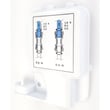
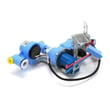
If you confirm the freezer is cold but the ice maker is not filling, the inlet valve is a common next check.
Why it matters
A proper reset clears the ice maker’s internal cycle state. Waiting for the full reset cycle and reinstalling the bin correctly prevents false “bin full” sensing, jams, and missed harvests.
For model-specific control locations and indicator meanings, use the LFXC24726S owner's manual.
Last updated: February 2026
What are common LG freezer problems?
Common freezer problems on the LG LFXC24726S bottom-mount refrigerator include weak or no freezing, frost buildup, warm freezer with a cold fresh-food section, water leaking then freezing on the freezer floor, and ice maker issues. We use the freezer symptoms to narrow the cause and the right repair path; see the owner's manual for model-specific checks and settings.
Most common symptoms and what they usually mean
- Freezer not freezing but fridge is cold: airflow problem, defrost problem, or a sealed-system/compressor issue
- Heavy frost on back wall: defrost sensor/heater/control problem
- Freezer temperature swings: sensor issue, door not sealing, or airflow restriction
- Ice maker not making ice: water supply issue, inlet valve issue, or ice maker fault
- Water under crisper or ice on freezer floor: clogged/iced drain path
Quick checks we recommend first
- Confirm the freezer is set near 0°F and the fridge near 37°F (typical targets).
- Make sure vents are not blocked by food packages.
- Check door closing and gasket contact all the way around.
- Listen for the evaporator fan; a failed fan can cause warm freezer temps.
- If you see frost buildup, unplug the refrigerator and do a full manual defrost, then monitor for return of frost.
Parts that commonly relate to freezer complaints on this model
| Symptom | Common suspect | Example part on this model |
|---|---|---|
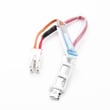
| Frost buildup, warm freezer | Defrost sensing issue | Refrigerator defrost sensor assembly 6615JB2005R |
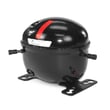
| Warm temps, poor cooling | Compressor or sealed system | Refrigerator compressor TCA38091801 |
| Ice maker or dispenser issues | Water supply control | LG refrigerator water inlet valve AJU72992603 |
| Door not sealing, frost/ice | Door gasket | Refrigerator door gasket, left ADX72930460 |
Why it matters
A freezer that is even 5 to 10 degrees too warm can soften ice cream, cause thaw-refreeze cycles, and create frost that blocks airflow. Catching a door seal, defrost, or airflow problem early often prevents bigger cooling failures.
Last updated: February 2026
Why is my LG refrigerator leaking from the bottom?
A bottom leak on your LG LFXC24726S bottom-mount refrigerator is most often caused by a clogged or frozen defrost drain that overflows into the base, or a slow leak in the water supply to the ice maker or dispenser. Use the LFXC24726S owner's manual to locate access panels and drain areas.
Quick checks (fastest to confirm)
- Look for water under the crisper drawers; this points to a defrost drain issue.
- Check for ice buildup on the freezer floor; meltwater can run forward and leak out.
- Inspect the floor behind the refrigerator for drips from the water line connection.
- Look for moisture or mineral tracks around the inlet valve and tubing.
- Check door gaskets for gaps, tears, or areas that do not seal.
Most common causes and what to do
1) Clogged or frozen defrost drain
Defrost water should flow through the drain to the drain pan. When the drain clogs, water backs up into the cabinet and leaks out.
- Unplug the refrigerator.
- Remove drawers and check for ice at the drain opening.
- Flush the drain with warm water (not boiling) until it flows freely.
- If the drain tube is split or won’t clear, replace the refrigerator drain tube 5251JA3003D.
2) Water inlet valve or supply line seepage
A small leak at the valve, fittings, or tubing can drip down the back and show up as a “bottom leak.”
- Tighten the compression fitting at the house supply line.
- Inspect tubing for kinks, rub marks, or cracks.
- If the valve body is wet or stained, replace the LG refrigerator water inlet valve AJU72992603.
3) Door gasket not sealing
Warm air leaks create excess condensation that can collect and run down to the bottom.
Symptom-to-cause guide
| What you see | Most likely cause | Best next step |
|---|---|---|
| Water under crispers | Defrost drain clogged/frozen | Clear drain; inspect drain tube |
| Drips behind unit | Water line/valve leak | Inspect fittings; check valve |
| Ice on freezer floor | Drain issue or air leak | Clear drain; check gasket seal |
Why it matters
Stopping the leak prevents floor damage and reduces ice buildup and temperature swings that can strain cooling components.
Last updated: February 2026